Carcassonne Citadel: Uncovering the Medieval Fortress’s 2000-Year History and Restoration
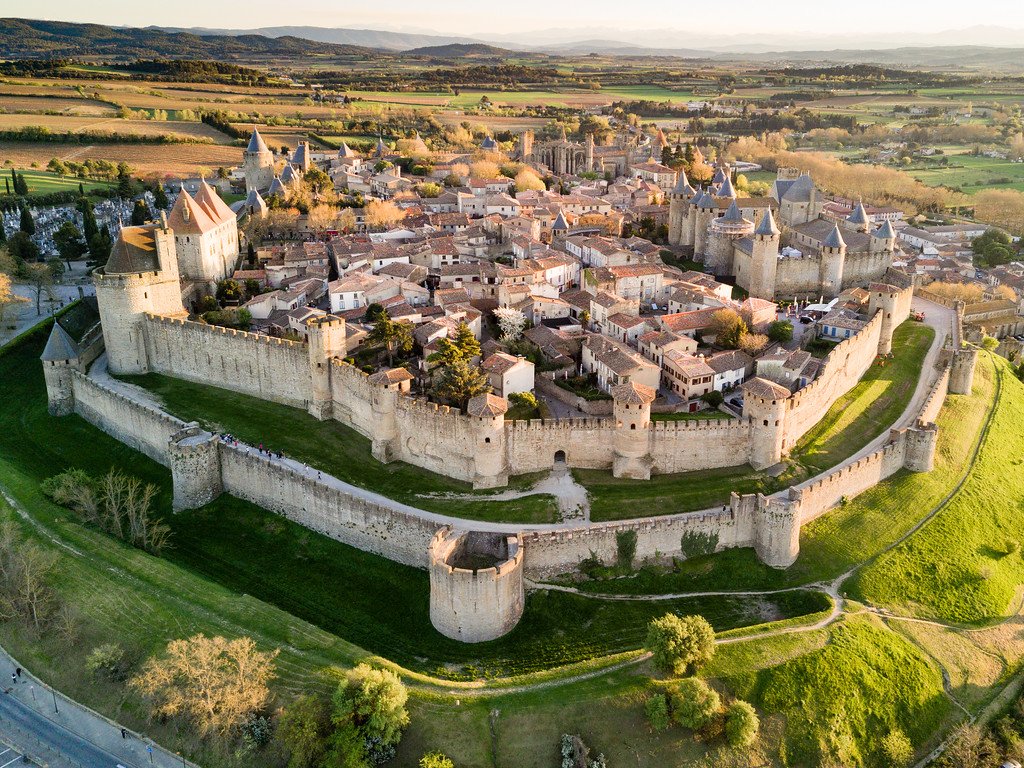
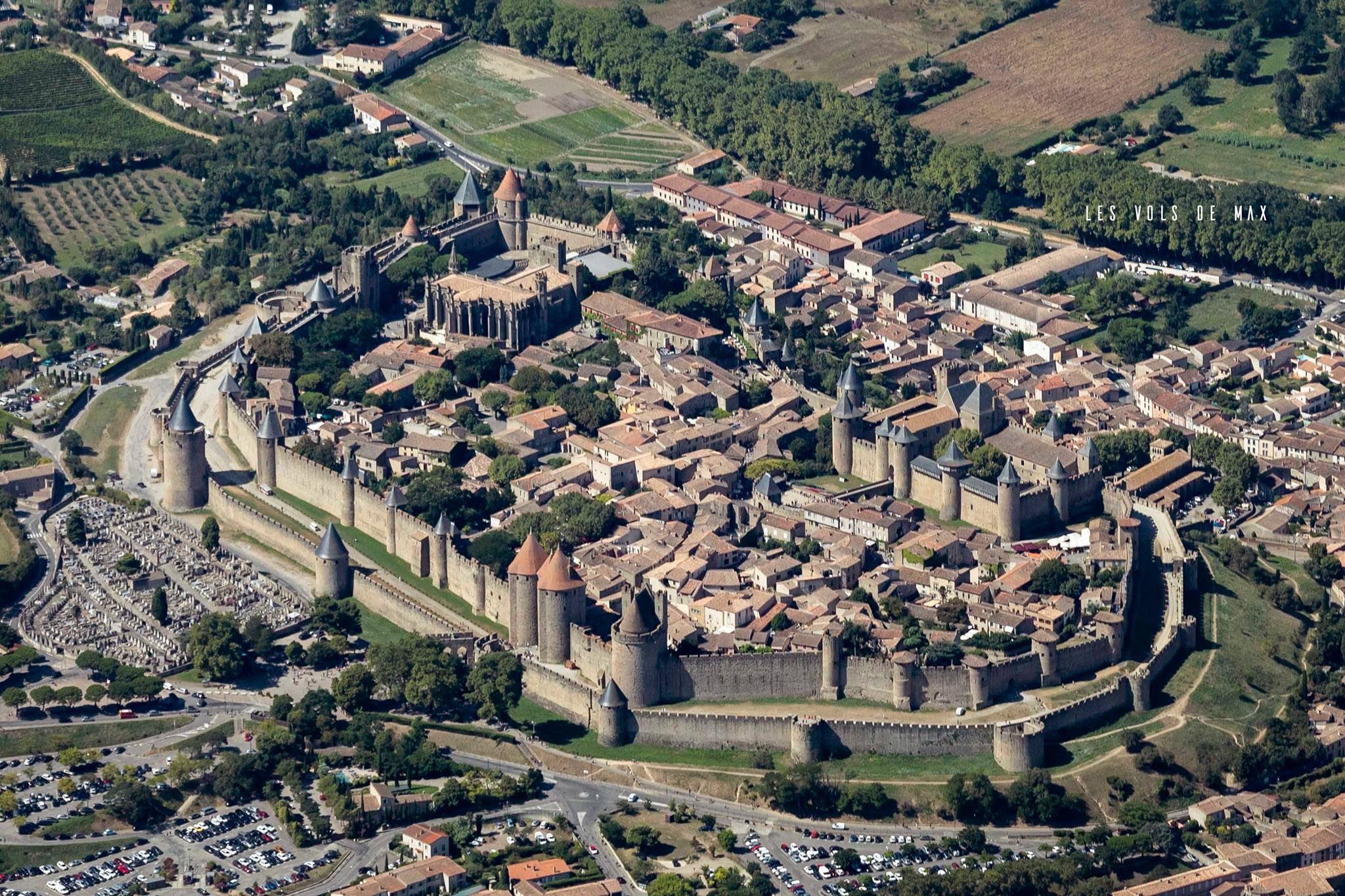
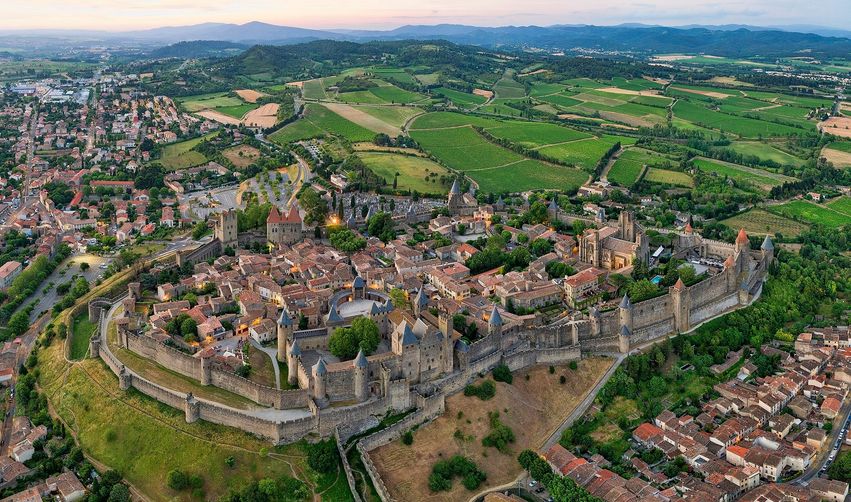
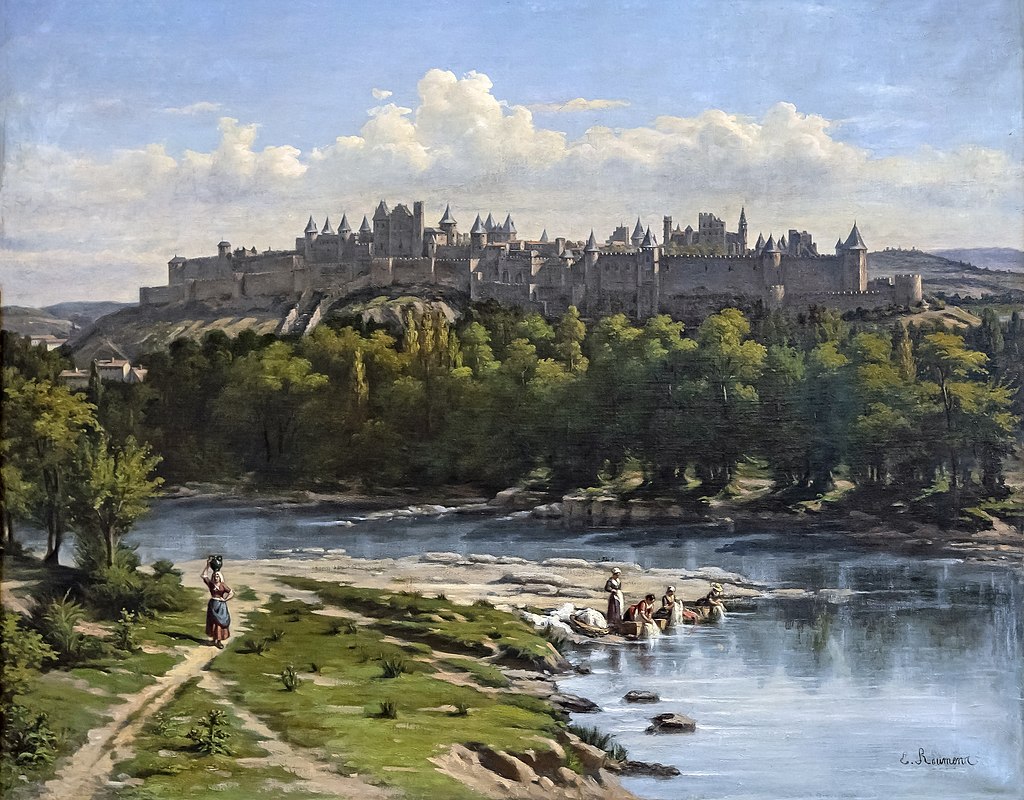
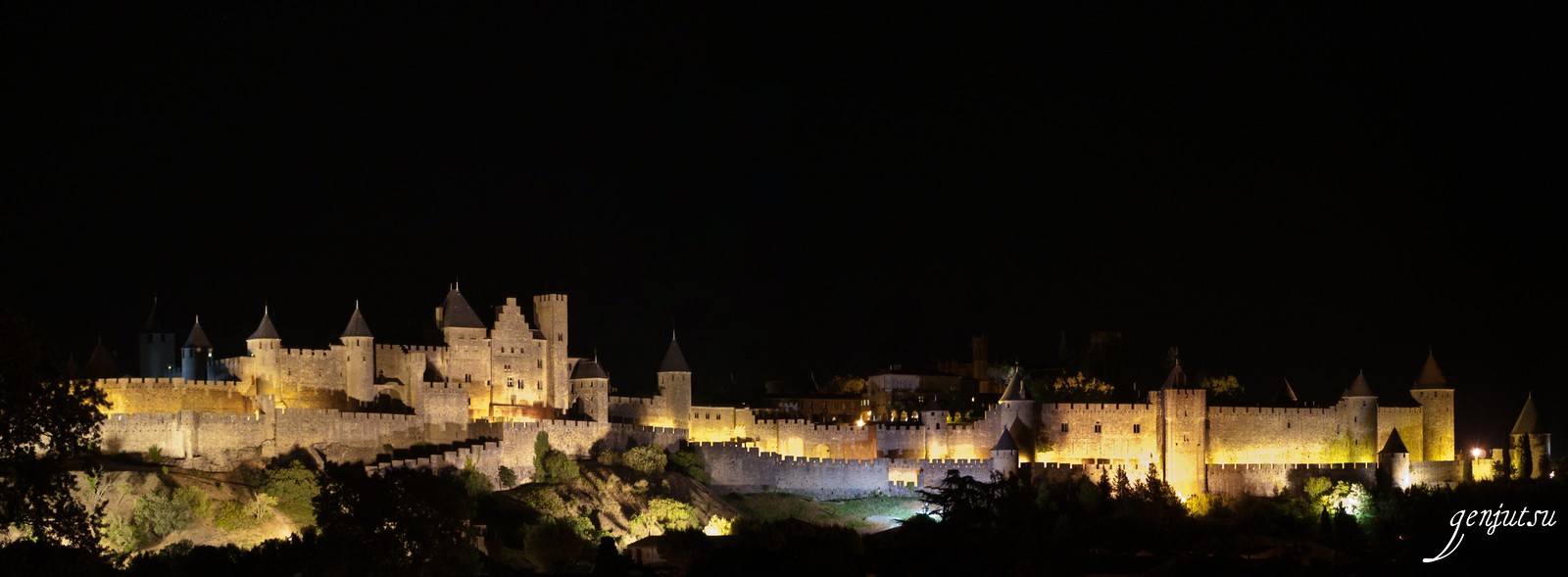
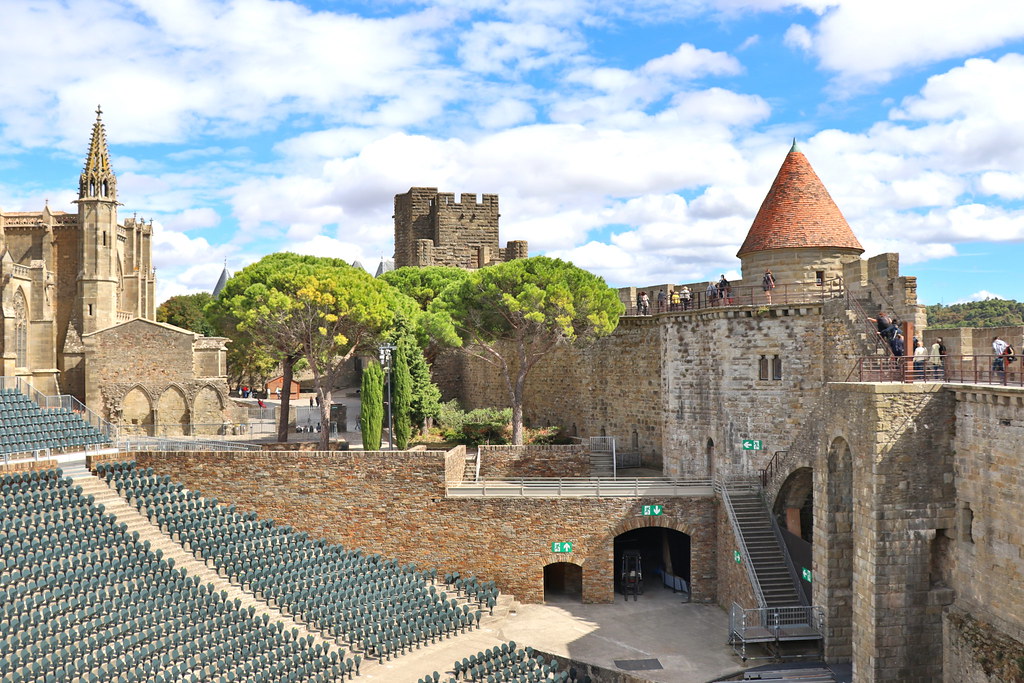
The Cité de Carcassonne is a fairytale citadel, a sprawling, double-walled fortification that stands proudly above the Aude river plain in the south of France. Its imposing silhouette, a collection of turrets and ramparts, is not merely a sight to behold but a tangible link to over two millennia of European history. From its earliest Roman roots to its dramatic decline and subsequent rebirth, the story of Carcassonne is one of strategic importance, siege, and spectacular architectural revival.
From Oppidum to Roman Citadel
The history of this monumental site begins far earlier than its medieval zenith. Archaeological evidence points to a habitat established around 800 BCE on the Carsac site, southwest of the current city. By 550 BCE, this settlement evolved into the oppidum of Carcaso, strategically positioned to offer a clear view of the Aude river and the surrounding plain, an ideal defensive location.
Carcaso soon became a critical stop on the trade route connecting Narbonne and Bordeaux. The city was conquered by the Romans in 122 BCE and flourished, largely thanks to the wine trade. Vestiges of Etruscan and Greek pottery confirm its pivotal role as a Gallo-Roman city at the heart of regional commercial exchange.
The stability of the Roman Empire began to waver in the 3rd and 4th centuries CE under a wave of Germanic invasions. This threat prompted Carcaso to build its first enclosure, a 1,200-meter-long wall. The city faced subsequent attacks, including a siege by the Visigoths in the 5th century, who established the Visigothic Kingdom of Aquitaine. The citadel’s strategic importance persisted, as evidenced by further attacks in 725 CE by the Umayyads and in 759 CE by the Franks, an episode that gave rise to the enduring legend of Dame Carcas, the city's heroic defender.
The Rise of the Trencavel Dynasty
The end of the Carolingian Empire in 888 CE led to the ascendancy of local lords. In 1067, the County of Carcassonne passed into the hands of Raimond-Bernard Trencavel, Viscount of Albi and Nîmes, marking the beginning of a powerful local dynasty.
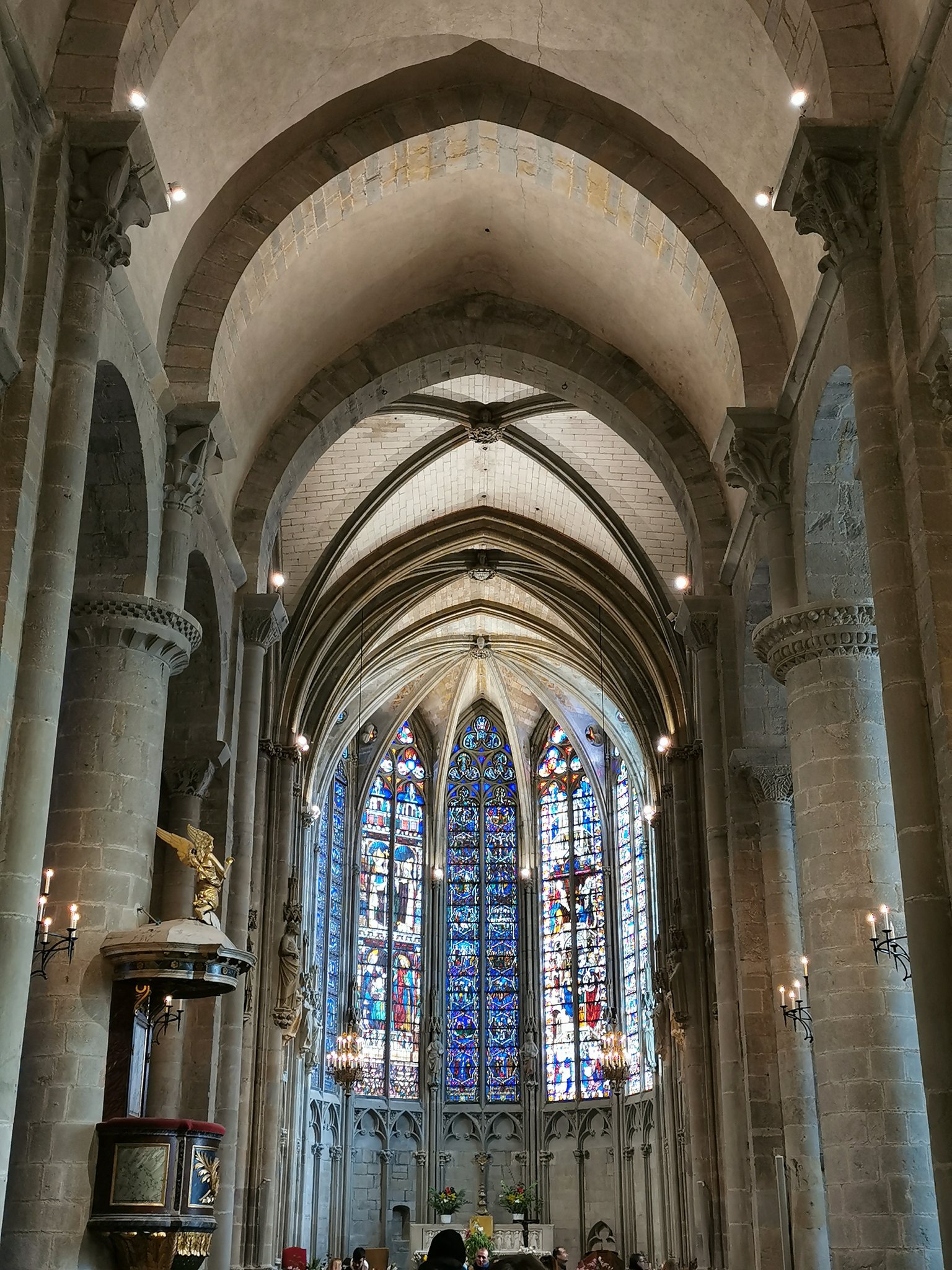
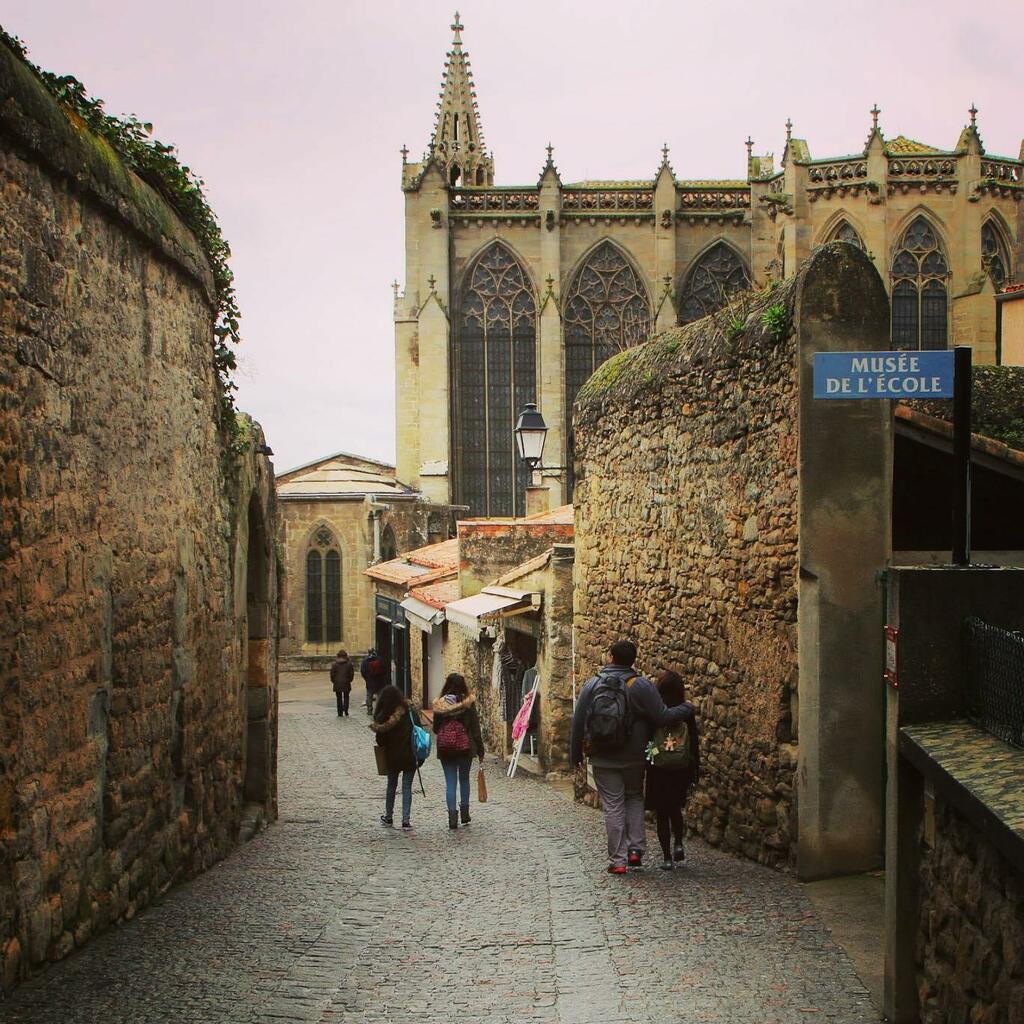
The Trencavel family, especially Raimond-Bernard’s son, Bernard Aton IV, consolidated their territories, coming to dominate the Bas Languedoc region. This era saw a period of significant expansion and construction within Carcassonne. Around 1096, the Trencavels commissioned the building of the Basilica of Saint-Nazaire and Saint-Celse. They also erected a palatium around 1130, which served as their stately residence and would eventually form the basis of the future Château Comtal (Count’s Castle).
The 12th century was a time of wealth and independence for the city, with the Trencavels successfully asserting their power against their powerful neighbours, the Counts of Toulouse and Barcelona. The palatium was a true urban palace, expanded over time to include the Chapel of Sainte-Marie and various wings. It was both the seat and the ultimate symbol of their feudal power. To further assert their dominance, the Trencavels fortified their residence during this time, adding battlements to the roofs and raising the Tour Pinte, which became the highest tower in the fortress, to better survey the surroundings.
The Cathar Crusade and Royal Annexation
This era of Trencavel independence ended abruptly with the Albigensian Crusade. To understand this conflict, one must consider Catharism, a Christian movement that emerged in Europe during the 12th century. The Cathars, or "Albigensians," rejected the Roman Church, viewing it as corrupt and materialistic. The doctrine found a significant following in the South of France, with four key strongholds: Albi, Val d’Aran, Toulouse, and Carcassonne.
In 1209, Pope Innocent III, with the backing of King Louis VIII, launched a crusade against these "heretics." The formidable city of Carcassonne fell after a brief but intense 15-day siege on August 15, 1209. The Viscount Raimond Trencavel was defeated by Simon de Montfort, the military leader of the expedition, who seized control of the citadel.
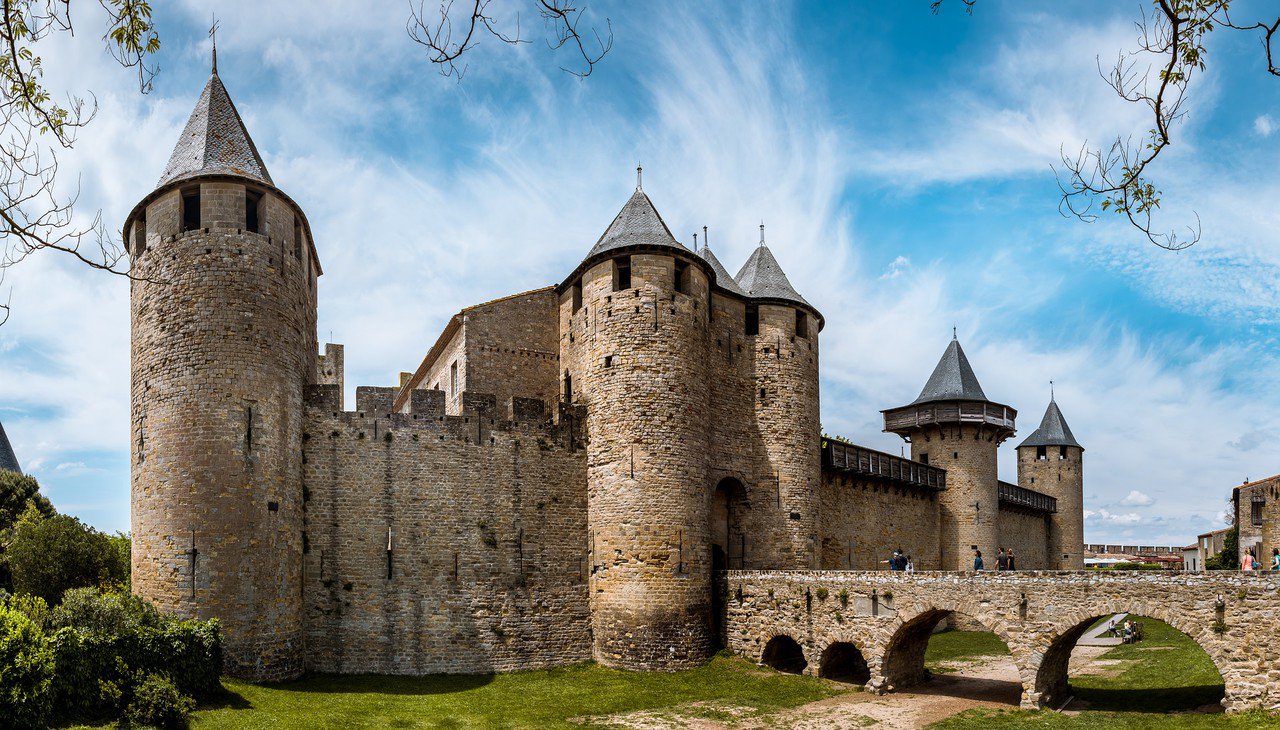
Following the crusade, Carcassonne was officially attached to the French royal domain in 1226, though the wider conflict continued until 1229. The initial palatium was transformed into the Château Comtal, serving as the residence for the King’s representative, the sénéchal.
An Exceptional Defensive System
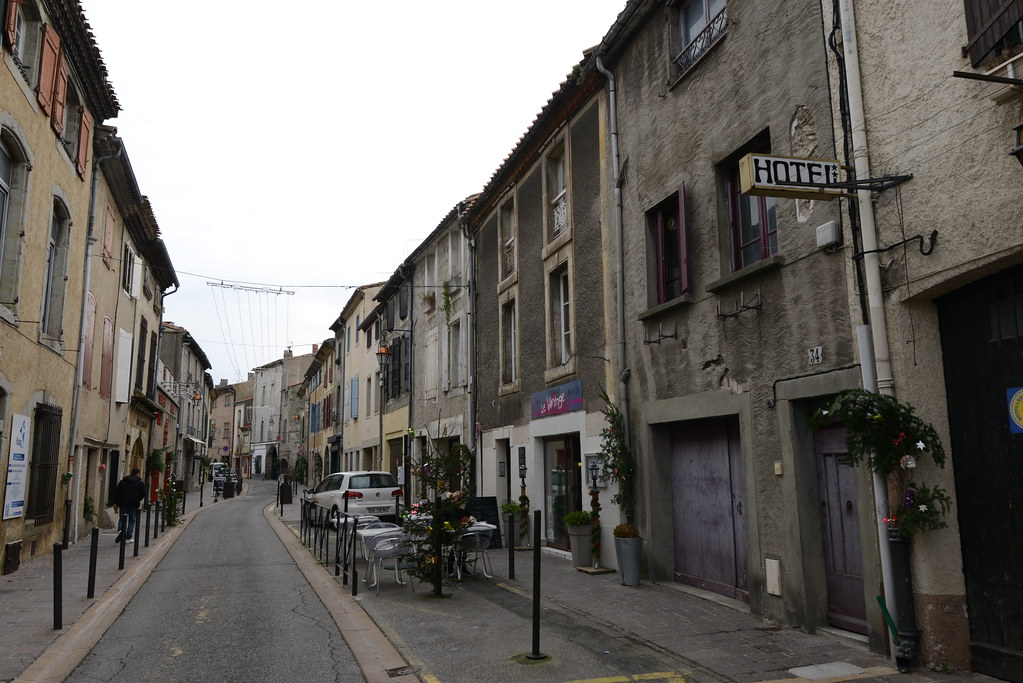
After an unsuccessful attempt by Raimond Trencavel to retake his lands in 1240, King Louis IX ordered the destruction of the houses belonging to the "traitors." These displaced inhabitants were forced to settle on the other side of the Aude, leading to the creation of the Bastide Saint-Louis and the city's effective division into two parts: the medieval Cité and the new borough.
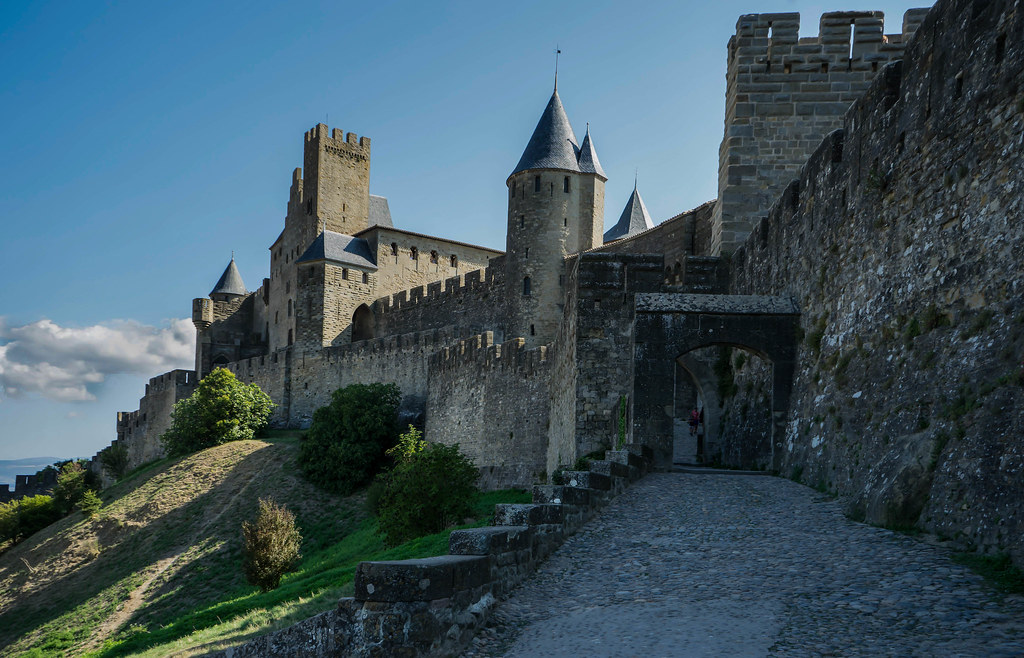
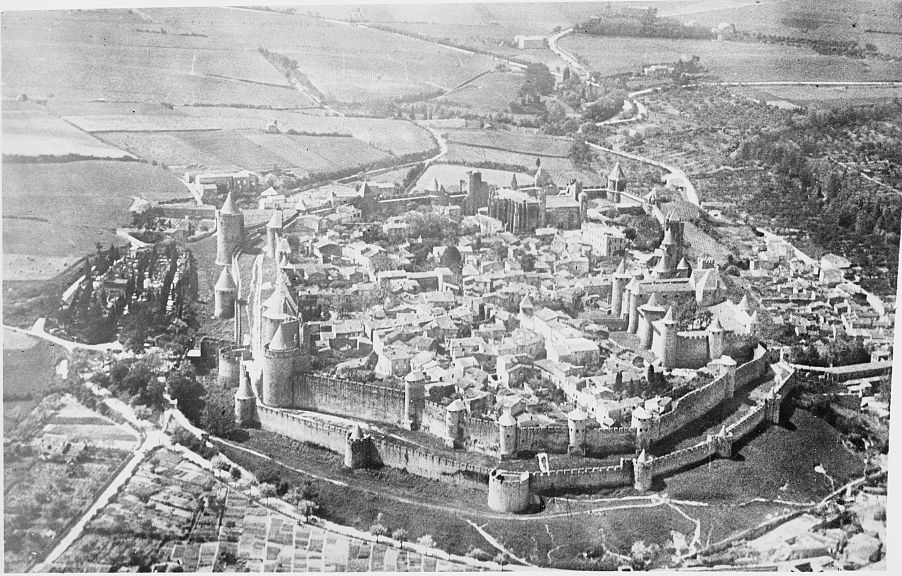
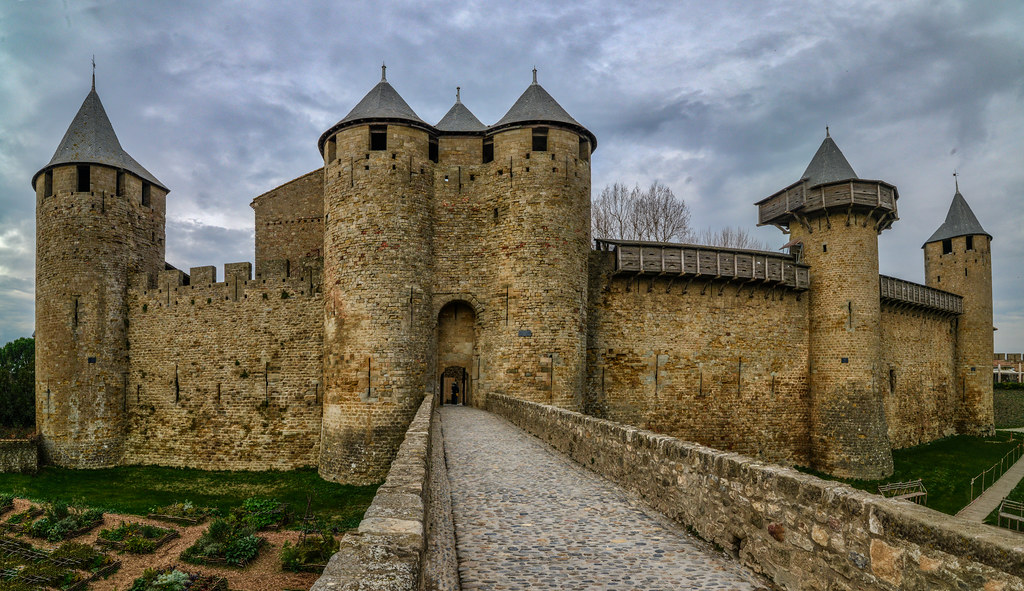
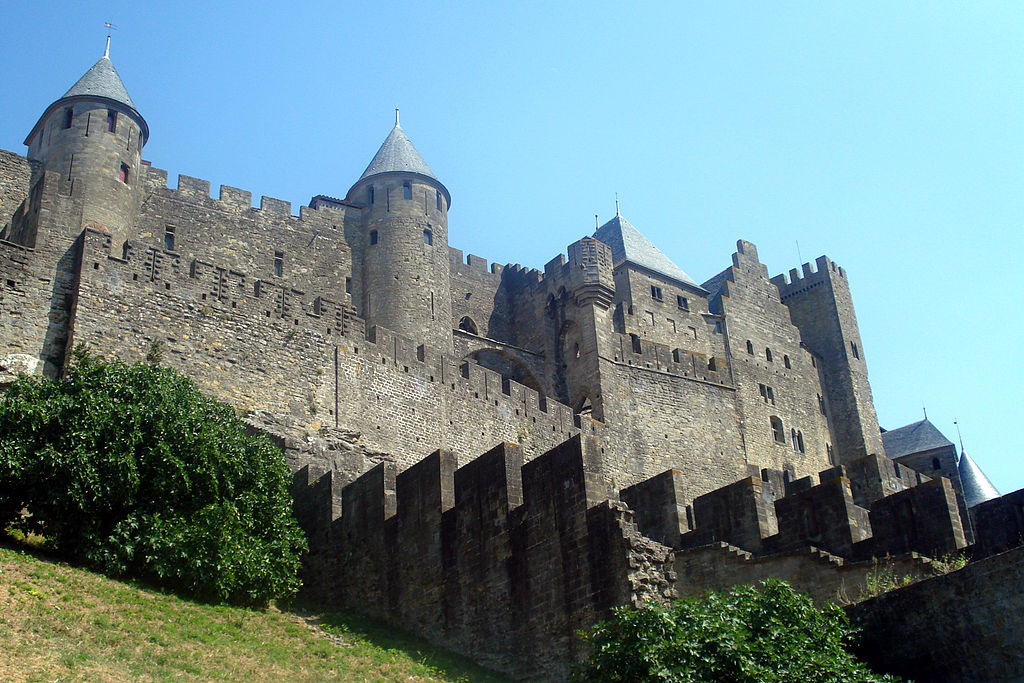
The 13th century marked the period when the Cité took on the appearance we recognize today. The original Gallo-Roman wall was reinforced by a second, 1,600-meter-long outer enclosure. Under the reigns of Philip III the Bold and Philip IV the Fair, the fortifications were meticulously modernized. The ramparts were equipped with arrow slits for crossbow fire, and impressive new gates, including the monumental Porte Narbonnaise, were erected. Carcassonne, strategically positioned near the border established by the 1258 Treaty of Corbeil between France and Aragon, became renowned as an impregnable fortress.
The castle itself was also extensively renovated, taking on a defensive, military, political, and residential role. At the beginning of the 14th century, new buildings were constructed, featuring large halls with Gothic windows and fireplaces, demonstrating the château's evolving function as a centre of royal authority.
Decline and the Grand Restoration
Carcassonne’s privileged strategic status was lost in 1659 with the signing of the Treaty of the Pyrenees, which ended the Franco-Spanish War (begun in 1635) and shifted the border further south. This marked the beginning of a long decline. The city’s military and political importance waned, and the medieval Cité began to depopulate in favour of the Bastide Saint-Louis. By the 19th century, its former glory was a distant memory. Napoleon even ordered it removed from the list of fortresses in 1804. The lices (the space between the two walls) were overrun by poor dwellings, and its majestic walls were being systematically dismantled and sold off as building stone to local masons.
Salvation arrived in the mid-19th century. In 1840, local historian and archaeologist Jean-Pierre Cros-Mayrevieille successfully campaigned to have the Basilica of Saint-Nazaire classified as a historical monument. Soon after, Prosper Mérimée, the national inspector of historical monuments, visited the site and was so struck by its magnificence and decay that he entrusted the necessary restoration work to the renowned architect, Eugène Viollet-le-Duc.
Viollet-le-Duc, an enthusiast of Gothic architecture, began his monumental task by restoring the Basilica of Saint-Nazaire, famed for its flamboyant stained-glass windows. His work, however, extended far beyond the basilica. Starting in 1852, he oversaw the clearance of the houses built within the lices and began consolidating the high sections of the Gallo-Roman and medieval architecture. The restoration spanned decades, with different sections—the inner enclosure, the towers, the Porte Narbonnaise, the outer enclosure, and the Roman towers—addressed in phases.
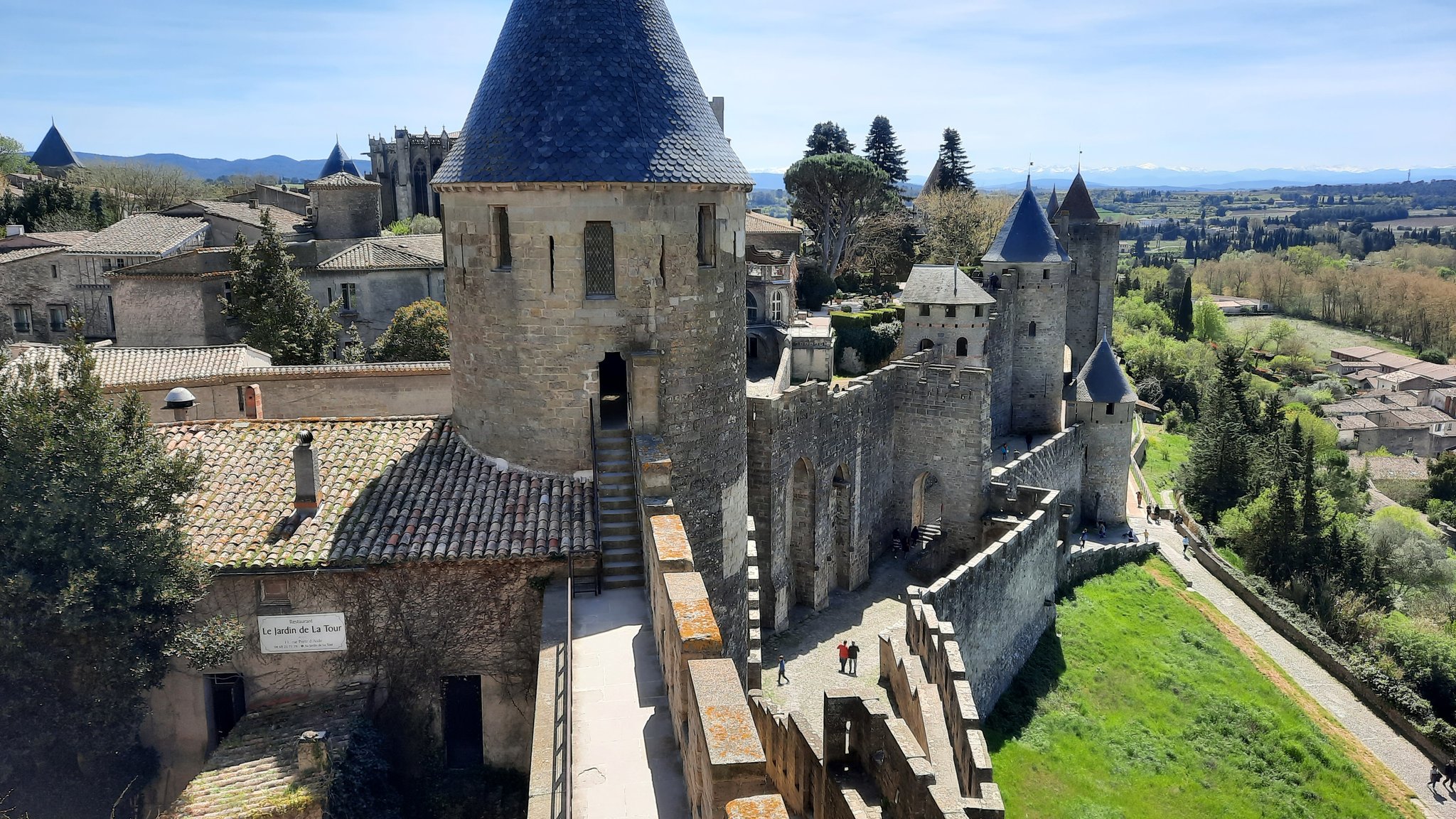
Viollet-le-Duc’s approach was famously summarized by his own words: "To restore a building is not to maintain it, repair it, or rebuild it, but to re-establish it in a complete state which may never have existed at a given moment." He aimed to restore the Cité to its supposed state at the end of the 13th century. This philosophy led to some controversial choices, such as adding a drawbridge to the Porte Narbonnaise and, most famously, using slate lauzes (flat stones) for the tower roofs instead of the regional flat tiles. While historians and critics like Hippolyte Taine protested these liberties, Viollet-le-Duc's vision ultimately prevailed.
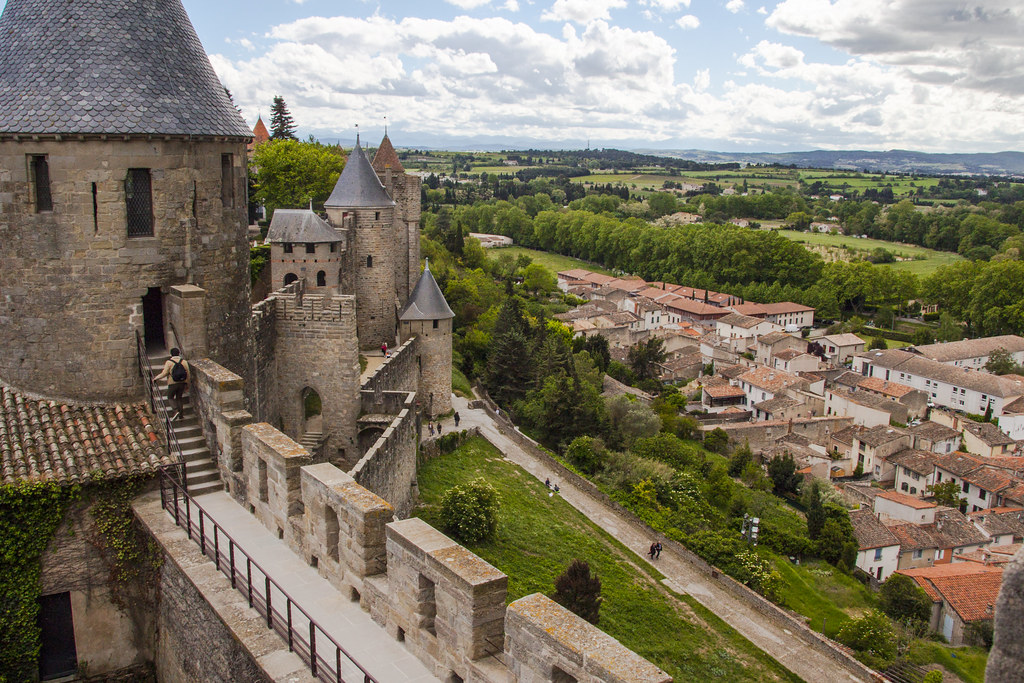
The immense project, which he supervised until his death in 1879 and was completed by Paul Boeswillwald in 1911, restored the medieval Cité to its antique splendour. Today, the Cité de Carcassonne, now a UNESCO World Heritage site since 1997, welcomes nearly 4 million visitors each year. It stands as a profound testament to medieval military architecture and the enduring legacy of 19th-century preservation, inviting visitors to admire the panorama from its patrol path and step directly into a living history book.