Eltz Castle: Germany's Unconquered Medieval Masterpiece
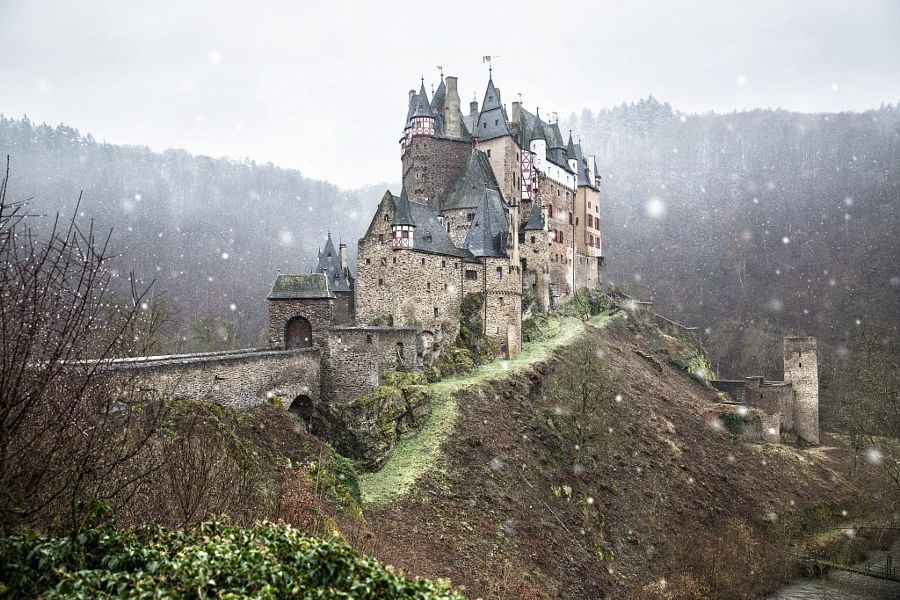
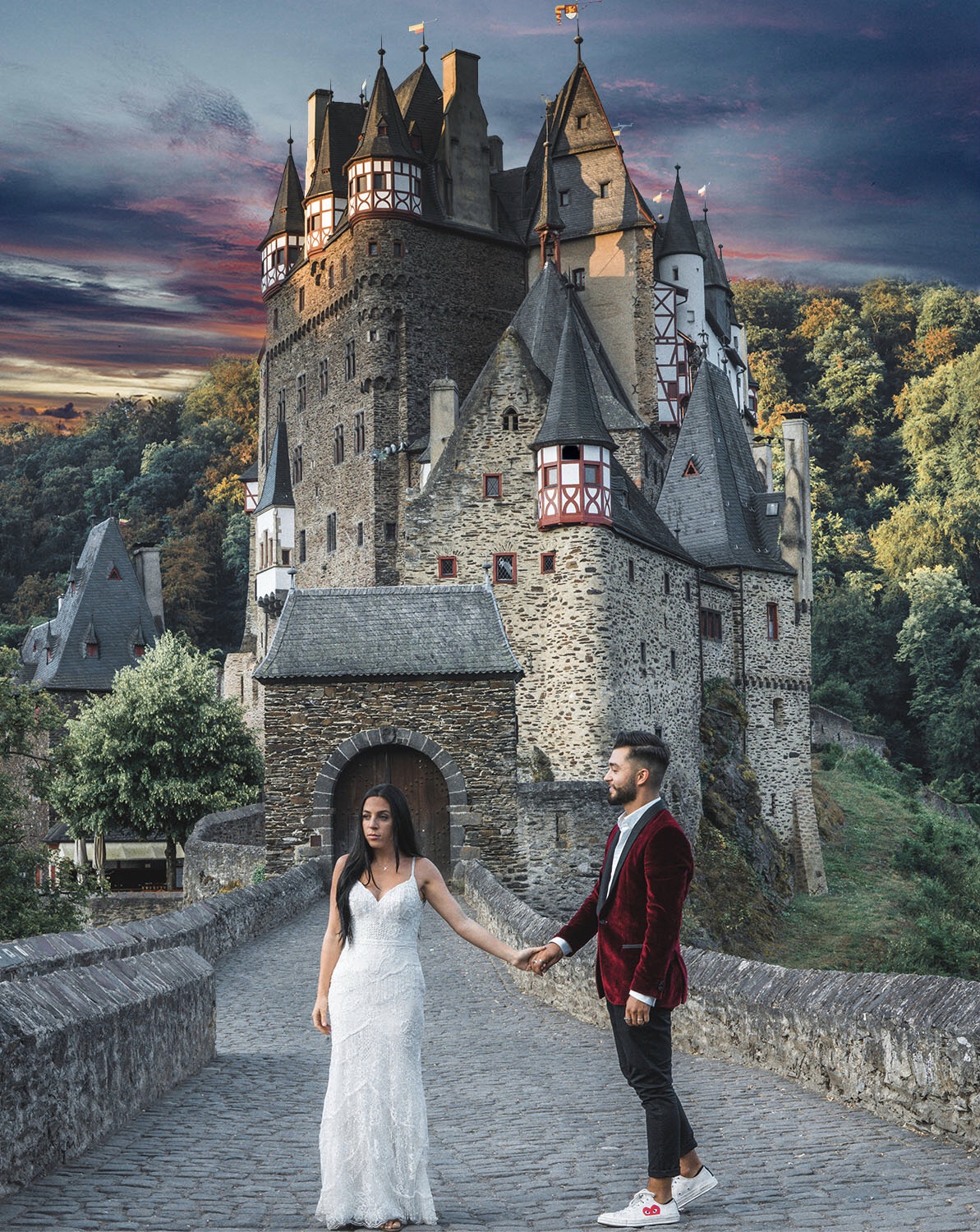
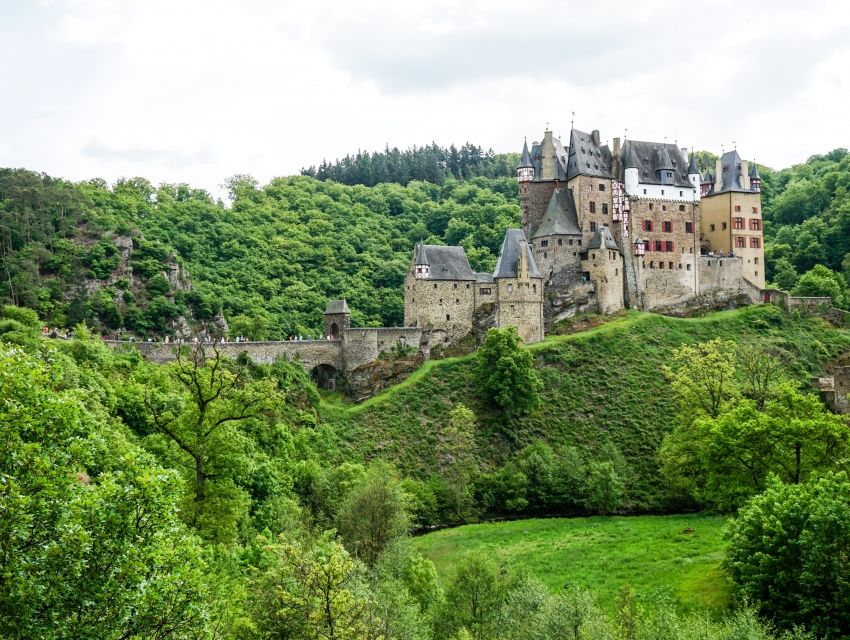
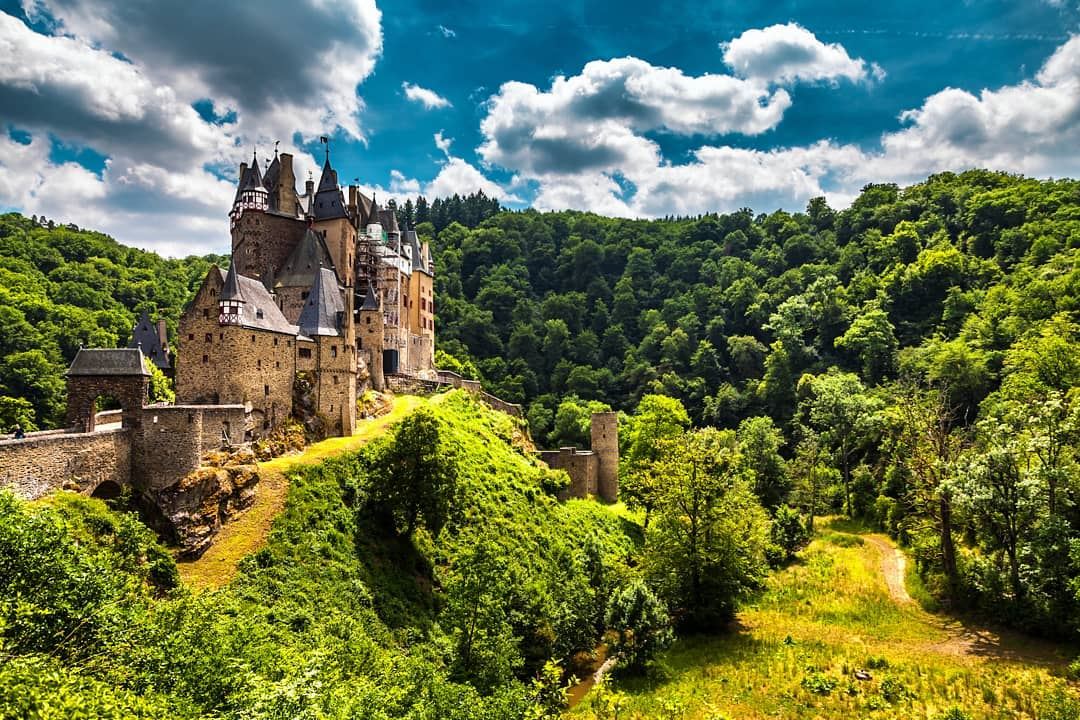
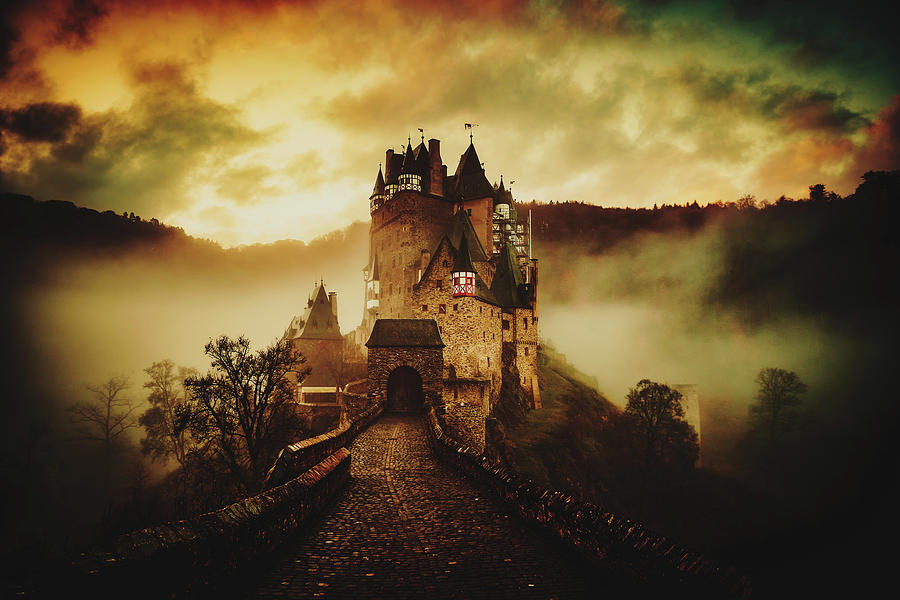
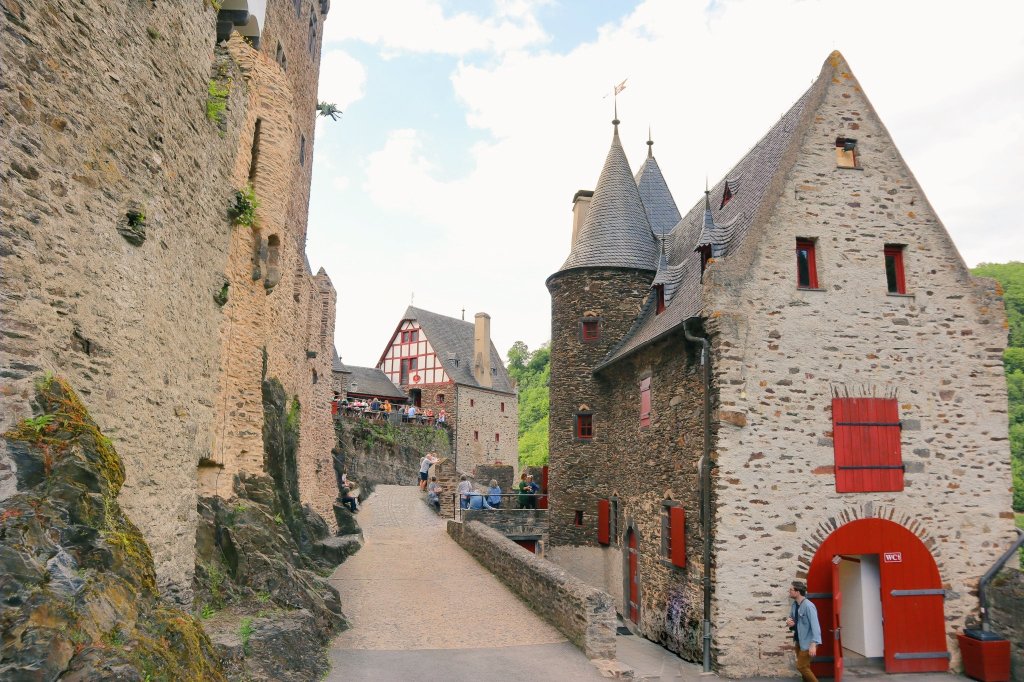
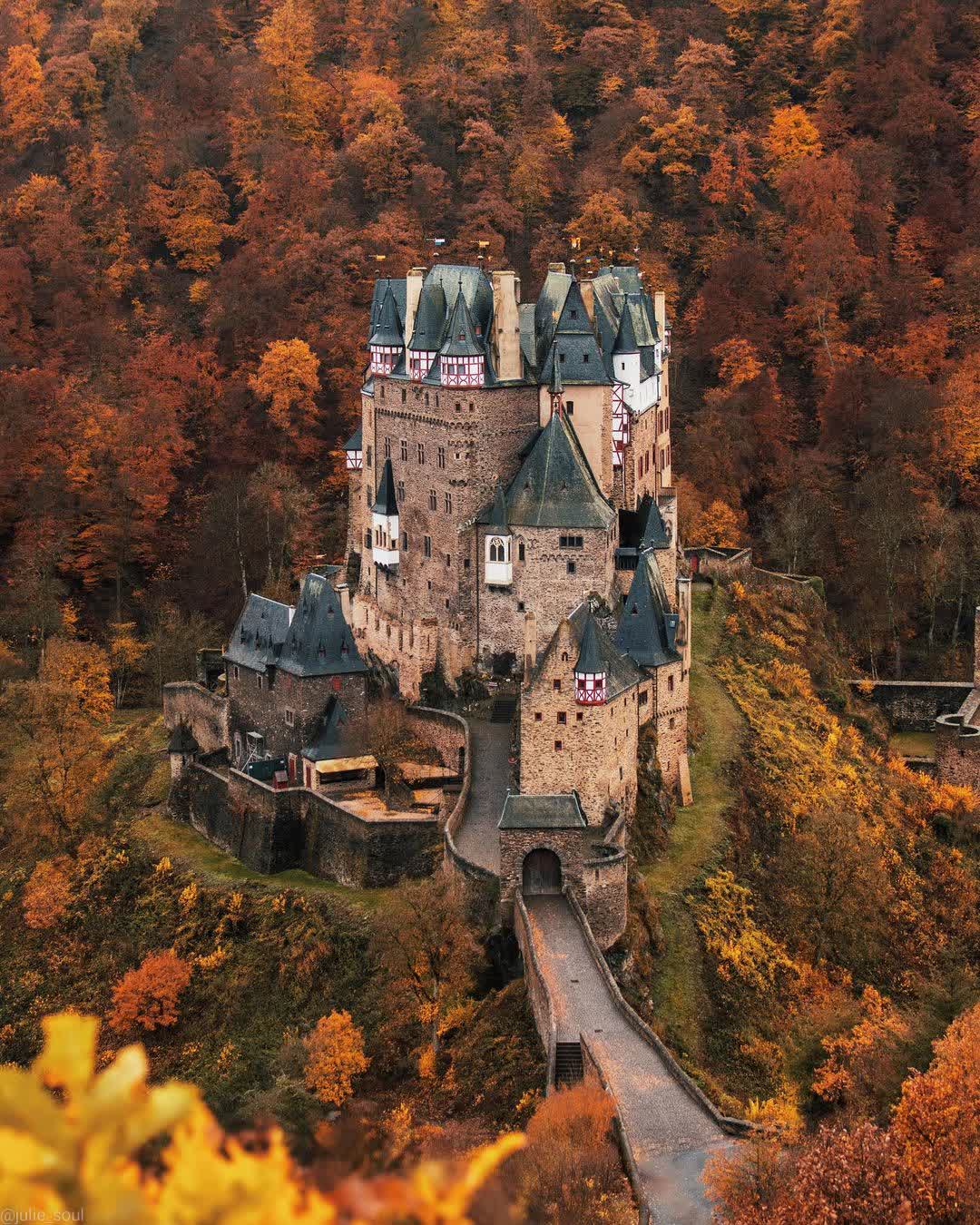
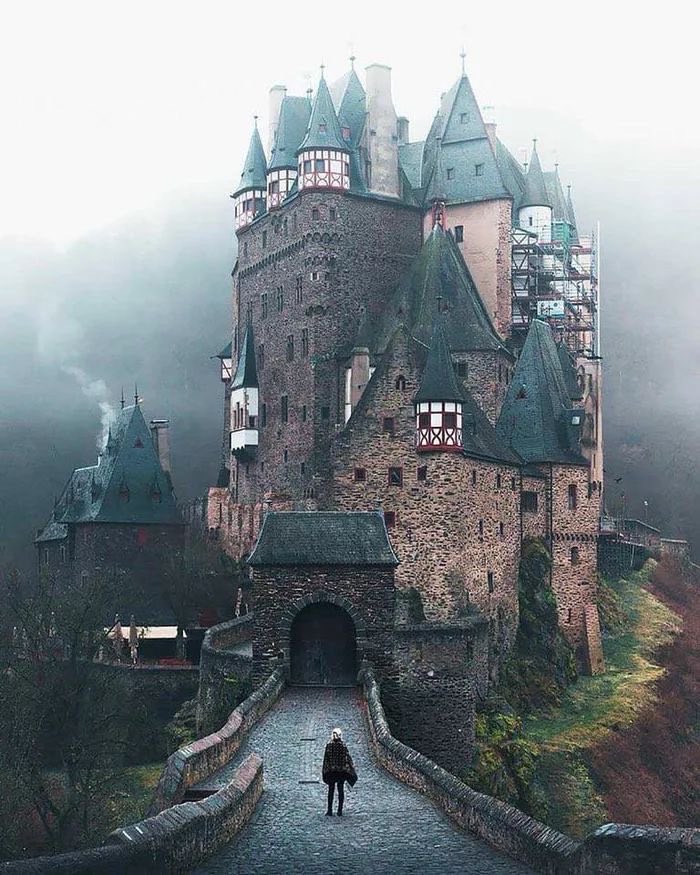
Deep in the heart of Germany’s Rhineland-Palatinate, nestled in a secluded valley and surrounded by the lush Eltz Forest, stands a monument to medieval ingenuity and resilience: Eltz Castle. Unlike many of its counterparts along the Rhine, this magnificent "Ganerbenburg" (a castle shared by several branches of a family) remains almost entirely preserved, having survived centuries of conflict, most notably the destructive Palatine War of Succession. The castle, mentioned first in a deed by Emperor Friedrich Barbarossa in 1157, is a towering fantasy of eight towers, timber frames, oriels, and turrets—the quintessential image of a medieval fortress.
Its survival is largely attributed to its unique location and structure. Perched on an elliptical, up to 60-meter-high rock spur, the Elzbach river encircles it on three sides, providing natural, formidable defense. The castle’s builders skillfully adapted the structure to the shape of the rock, resulting in the sometimes-unusual floor plans of its individual rooms.
A Testament to Unique Architecture and Strategic Importance
The architecture of Eltz Castle is its principal draw. Its towers soar up to 35 meters, creating a dramatic, vertical profile. But what truly sets it apart is its nature as a Ganerbenburg, which houses separate residential towers or groups of towers for each of the three main family branches that cohabited the site:
- Eltz-Kempenich: ("Eltz of the Golden Lion")
- Eltz-Rübenach: ("Eltz of the Silver Lion")
- Eltz-Rodendorf: ("Eltz of the Buffalo Horns")
These families shared the Knights’ Hall and the Chapel. This communal living arrangement, codified in a peace agreement (Burgfriedensbrief) in 1323, meant that at times over 100 people, including servants, lived within its walls.
The castle’s situation was not accidental; it was built to secure the trade routes running through the Elzbach Valley, connecting the Mosel near Moselkern with the fertile Maifeld and Eifel regions. Archaeological remnants of Celtic and Roman fortifications nearby confirm the long-standing strategic value of this spot.
The Eltz Feud: The Only Siege
Despite its strategic importance, the castle remained unconquered for centuries. Its sole period of severe military conflict occurred during the Eltz Feud between 1331 and 1336. The Lords of Eltz, along with other free imperial knights, resisted the territorial policies of Archbishop and Elector Balduin of Trier.
To besiege and possibly capture the castle, Elector Balduin ordered the construction of the siege castle Trutzeltz on a rocky outcrop above Eltz, equipped with long-range catapults (trebuchets*).
* The besieged defenders held out for two years but were eventually forced to surrender.
* The free imperial knights had to renounce their imperial freedom, and while Balduin reappointed one of the Lords as Burgrave, it was as his subject, not as a free knight.
Following this, the castle was spared from destruction, even during the devastating Palatine War of Succession (1688–1689), largely because Hans Anton zu Eltz-Üttingen was a high-ranking officer in the French army, who ensured its protection.
A Journey Through Nine Centuries: The Guided Tour
The guided tour offers an exciting journey through 900 years of German architecture and culture, showcasing interiors that have survived remarkably unchanged. The tour highlights include:
# The Rübenach House (From 1311)
* The Armoury at the entrance, converted during the Romantic period. It houses the world’s oldest surviving cannon bolts, as well as swords, halberds, shields, and muskets from the 14th to 17th century.
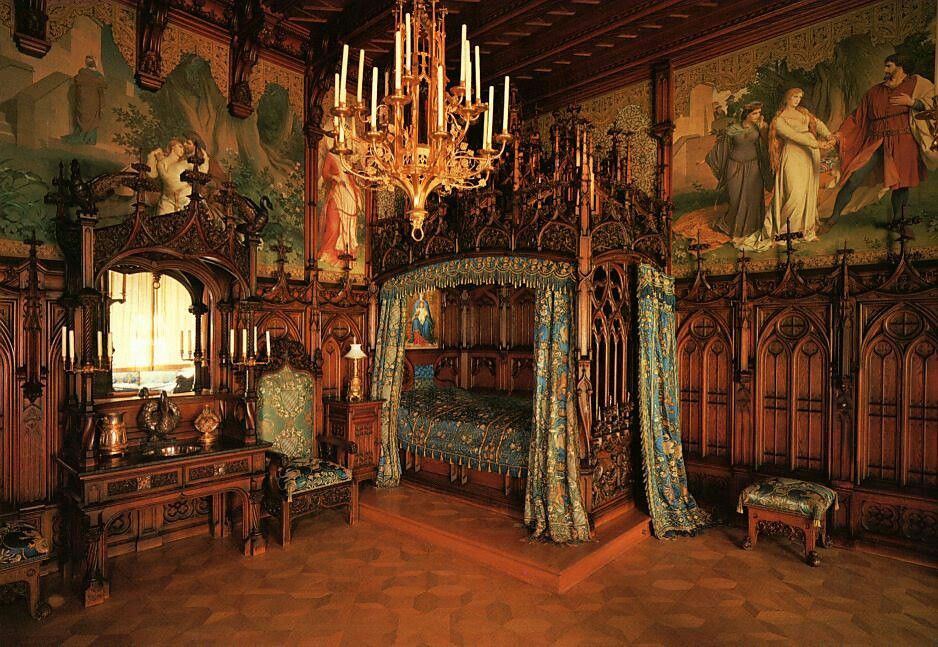
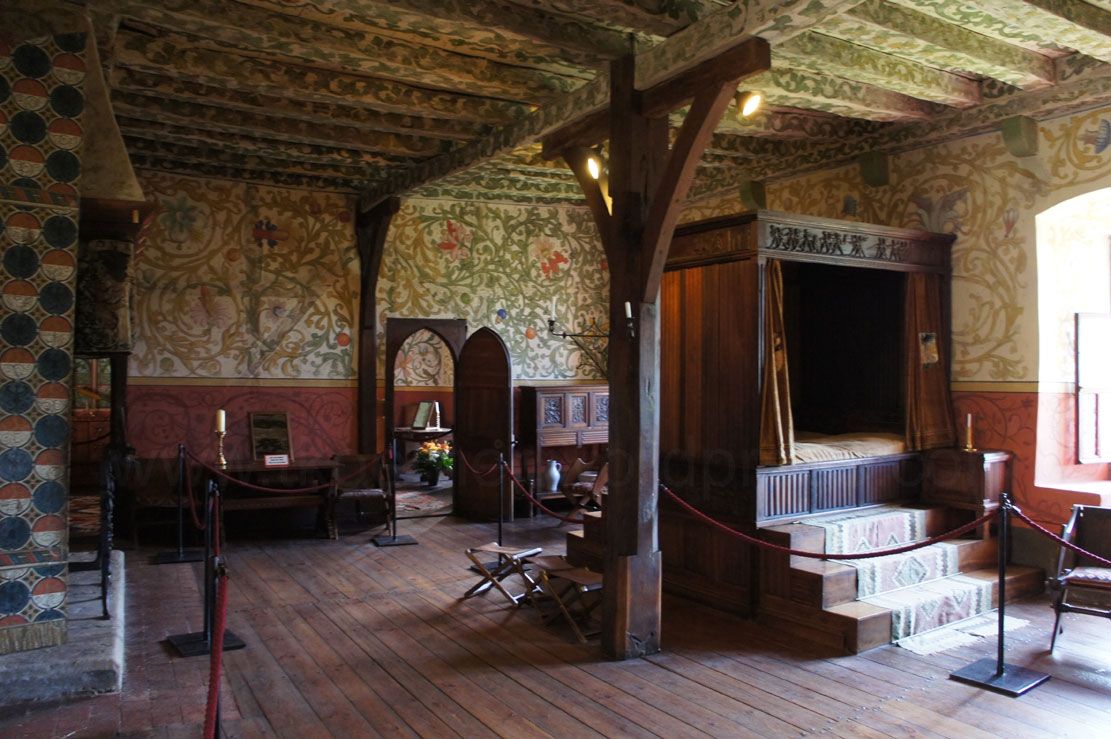
* A Salon and a Bedchamber featuring a chapel bay window from 1531 and a stunning canopy bed from 1520.
# The Rodendorf Houses (Built 1490–1540)
* These houses, which incorporated the prevailing style of the early 14th century, are marked by a vaulted portico resting on three pillars.
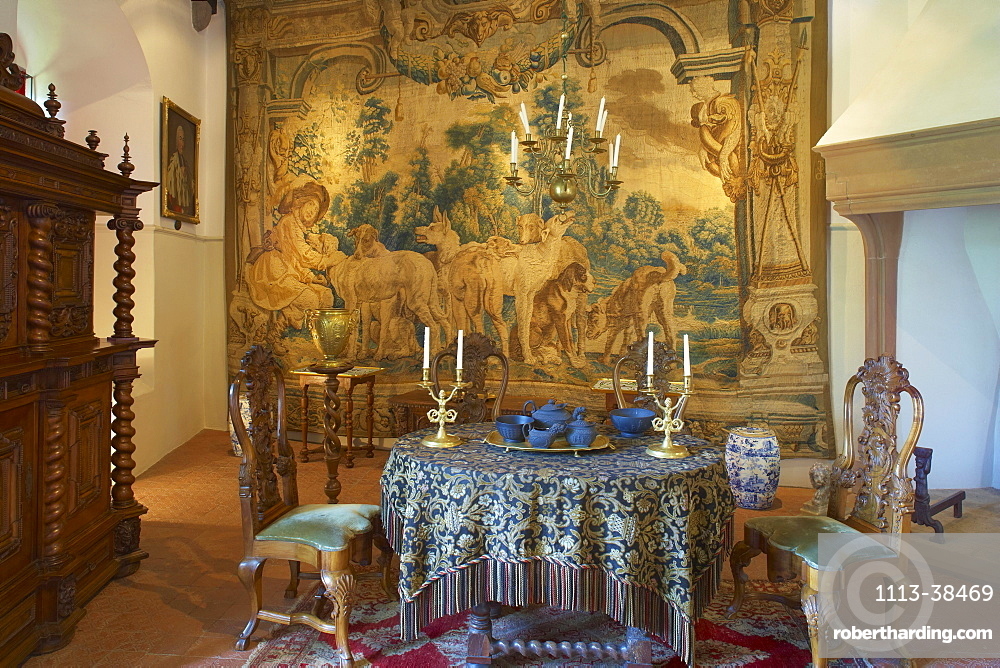
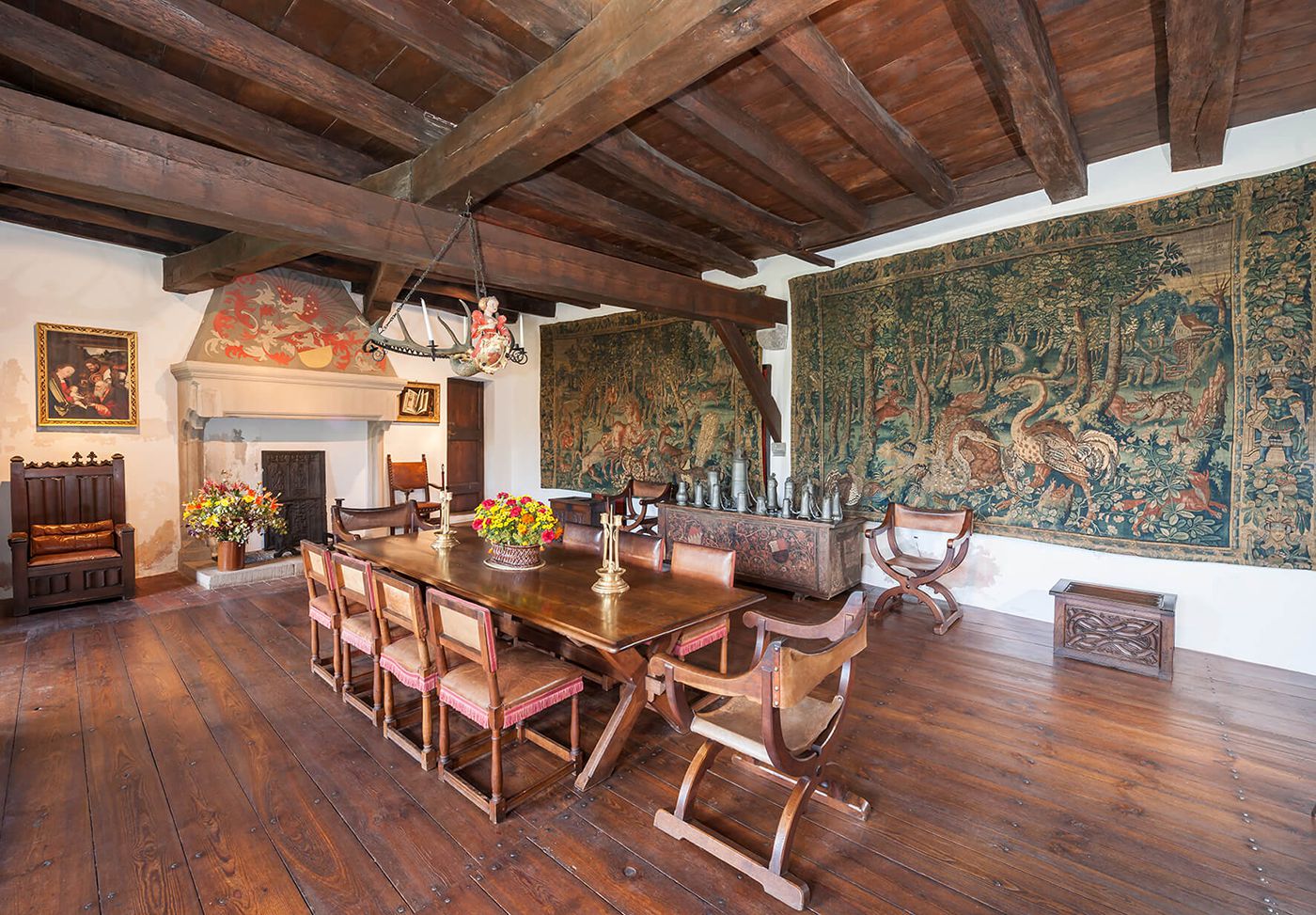
* The tour passes through a Fireplace Room furnished with Baroque and Rococo pieces.
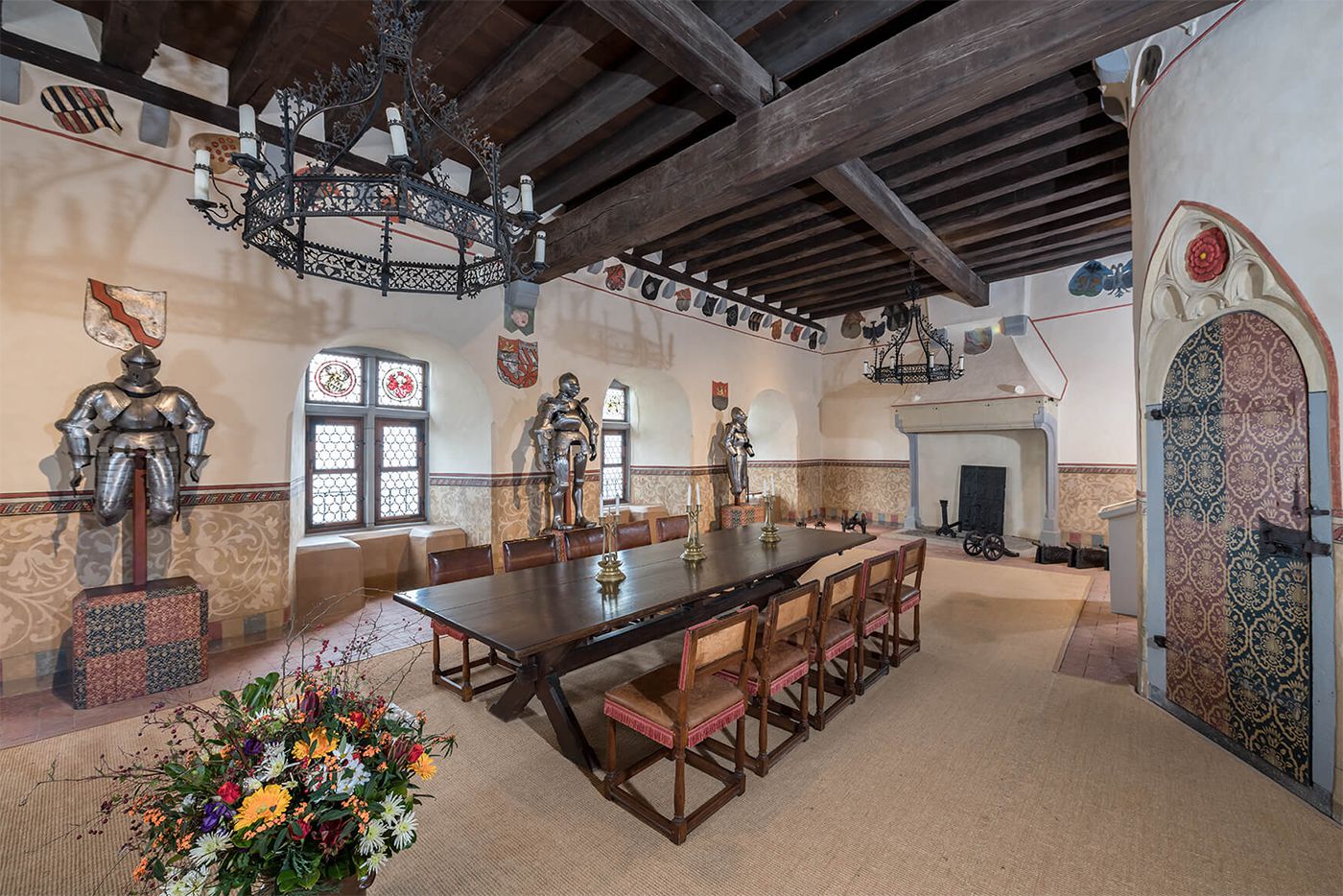
* The Knights’ Hall, which originally served as a negotiation and feast hall for all three family branches.
# The Kempenich Houses (Built 1604–1661)
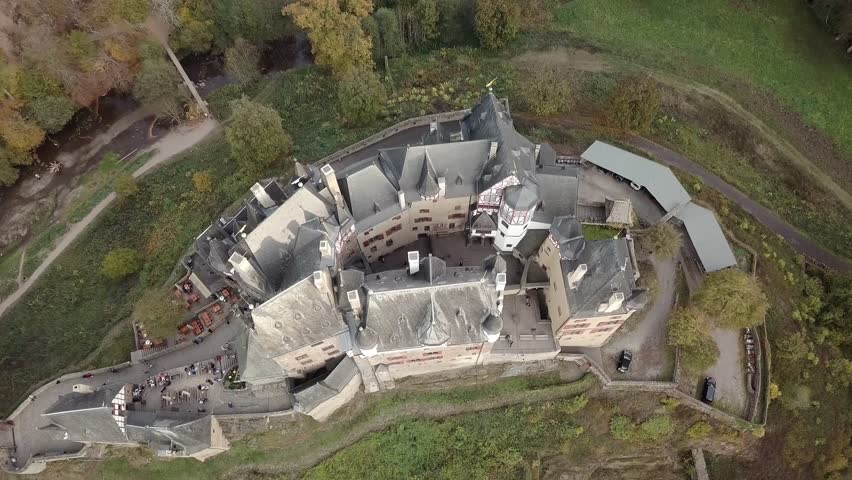
* These houses, known for their architectural composition and half-timbered structure, complete the inner courtyard.
* Beneath the massive staircase tower, a well was constructed, which served the entire castle’s water supply.
The Eltz Castle Treasury: Priceless Collections
Housed in the cellar vaults of the Rübenach House, the Treasury holds one of the most significant private collections in Germany, comprising more than 500 exhibits from nine centuries. The collection focuses on masterpieces of European art and craftsmanship, particularly German gold and silver smithing from Augsburg and Nuremberg.
Highlights of the Treasury Collection Include:
- Artworks: Exquisite glass, porcelain (such as Viennese porcelain "castle cups" from the Romantic period), and extravagant jewelry.
- Silverware: Works by German goldsmiths, including the grotesque drinking vessel, "Gluttony being Conveyed by Drunkenness" (Nuremberg, 1557), and a large silver statue of St. John of Nepomuk (Augsburg, 1752).
- Weaponry: Ceremonial and real weapons, such as the efficient Pistol Axe (circa 1600), a combination weapon blending a flintlock pistol with a battle axe.
- Curiosities: A detailed Travelling Cutlery Set of Philipp Karl Eltz (Elector of Mainz), demonstrating the gradual introduction of the fork in the 17th century.
The Romantic Revival and Restoration
By the late Middle Ages, aristocratic families often preferred residing in palaces in towns, leading to a decline in artistic depictions of castles like Eltz. This changed dramatically with the Romantic period after 1800. Eltz Castle became a symbol of untouched medieval history, attracting visitors like the British painter William Turner and the French author Victor Hugo.
* From 1820 onward, graphic art and travel journals featuring Eltz Castle were widely published, serving as an early form of a tourism boom.
* In the 19th century, Count Karl zu Eltz (1823–1900) embarked on an extensive restoration project from 1845 to 1888, investing a sum equivalent to roughly 15 million euros today, meticulously respecting the existing architecture.
* Following a devastating fire in 1920, which destroyed parts of the Kempenich and Rodendorf Houses, reconstruction was completed by 1930.
Today, the castle stands as a testament to the dedication of the Eltz family, who have owned and managed the property for over 850 years. Count Karl, the present owner, continues this tradition.
Eltz Forest: A Natural Paradise
The castle’s setting is as important as the structure itself. Surrounded by the dense Eltz Forest, far from modern roads, the site epitomizes the fantasy of an untouched medieval past.
* Over 300 hectares of the Eltz Forest have been designated a nature reserve under the Flora-Fauna-Habitat and Natura 2000 programs.
* The reserve includes the Elzbach Valley flood meadows and the forests on the steep slopes that once supplied fuel to the castle.
* The forest has been declared an "Arboretum," home to a particularly rich variety of rare indigenous and foreign tree species, and numerous rare animal and plant species.
The visitable part of the castle opens seasonally, offering daily guided tours between April 1st and November 1st. Visitors are encouraged to explore not only the historic halls and treasures but also the surrounding natural beauty of the Eltz Valley, a perfect complement to the fairytale architecture.