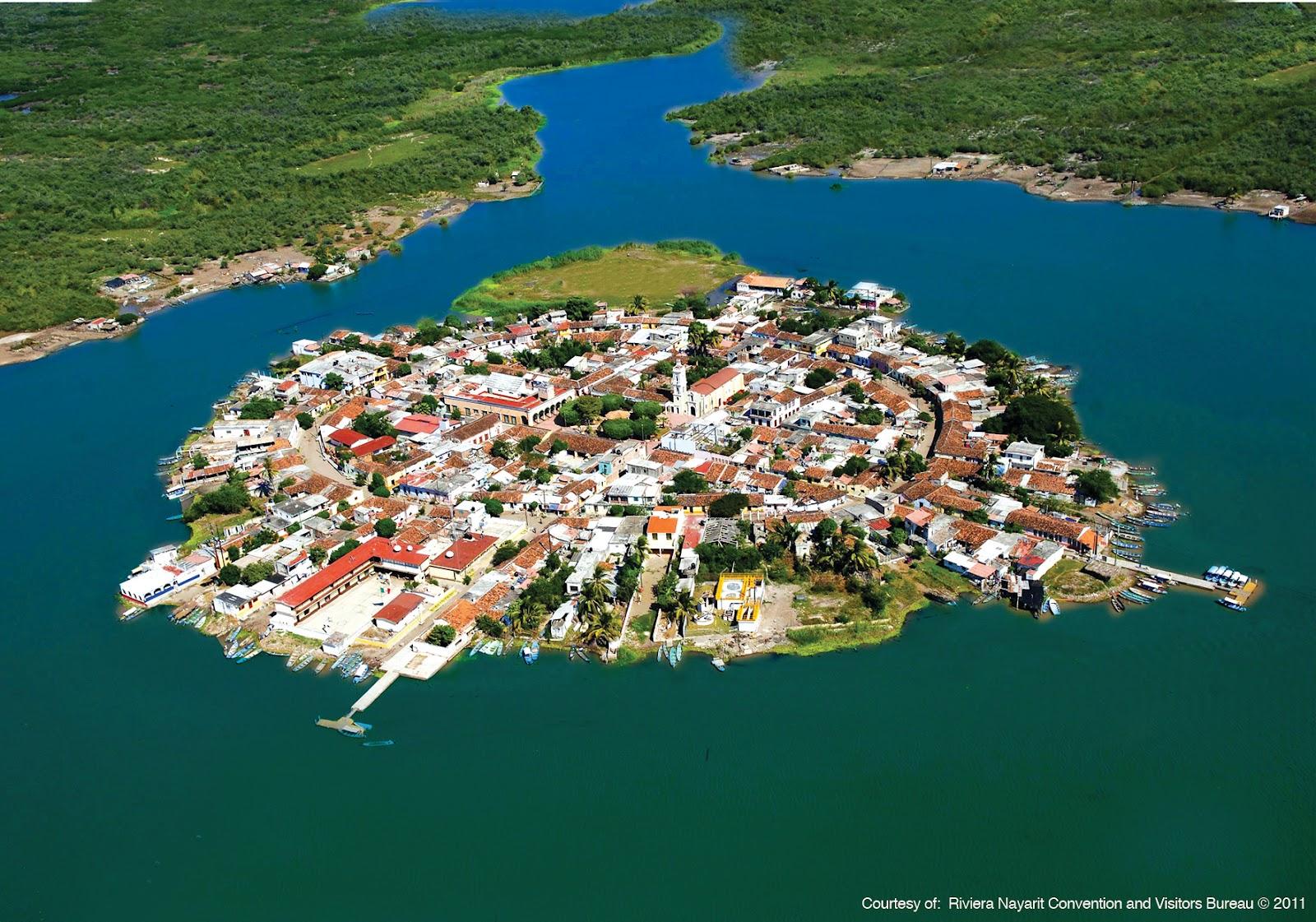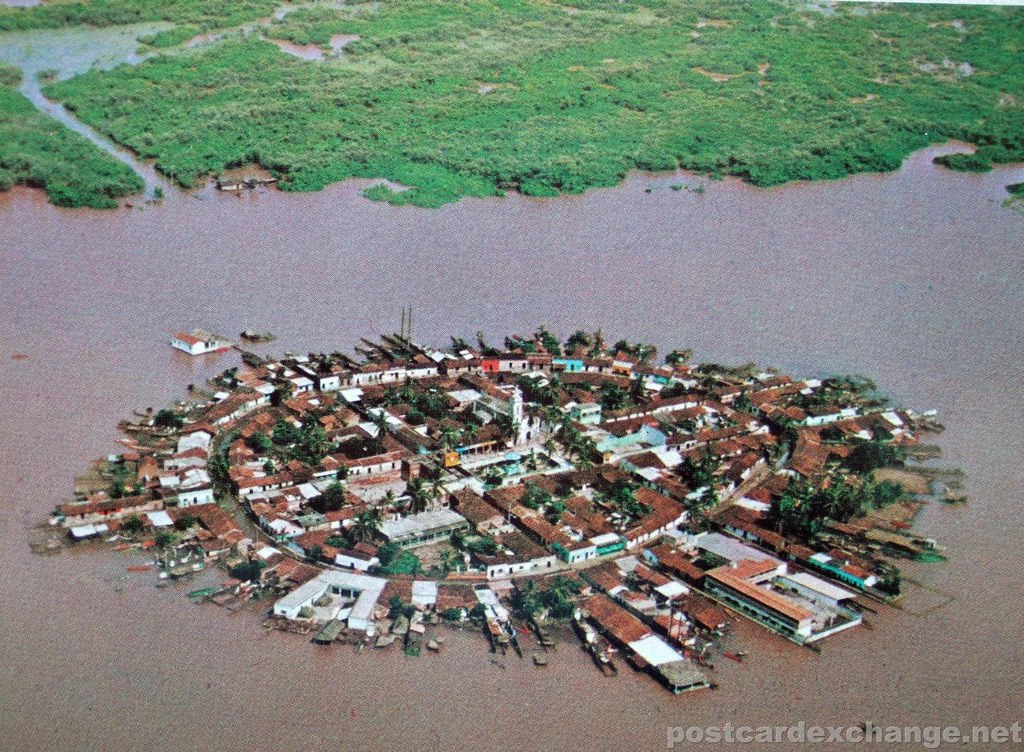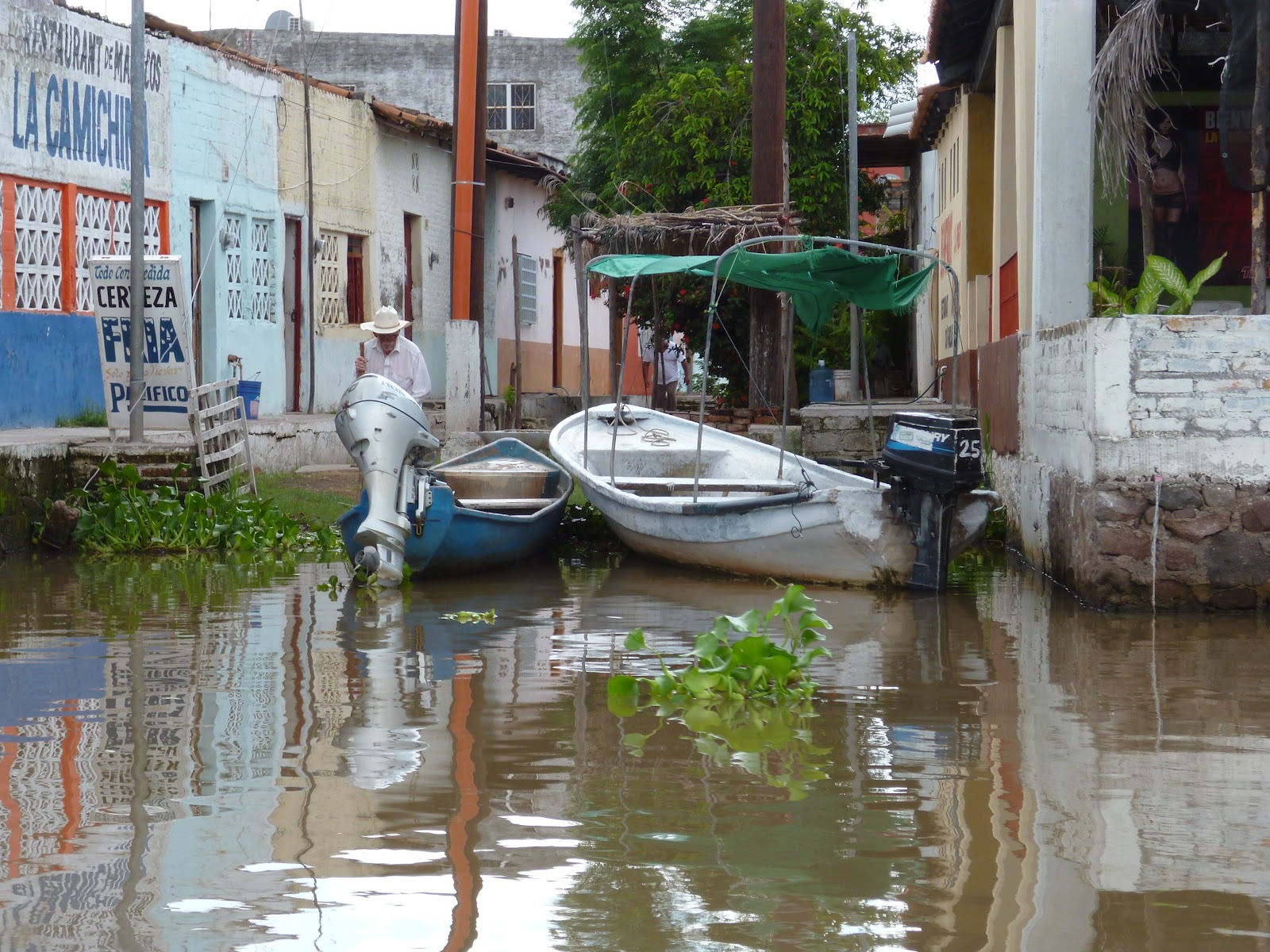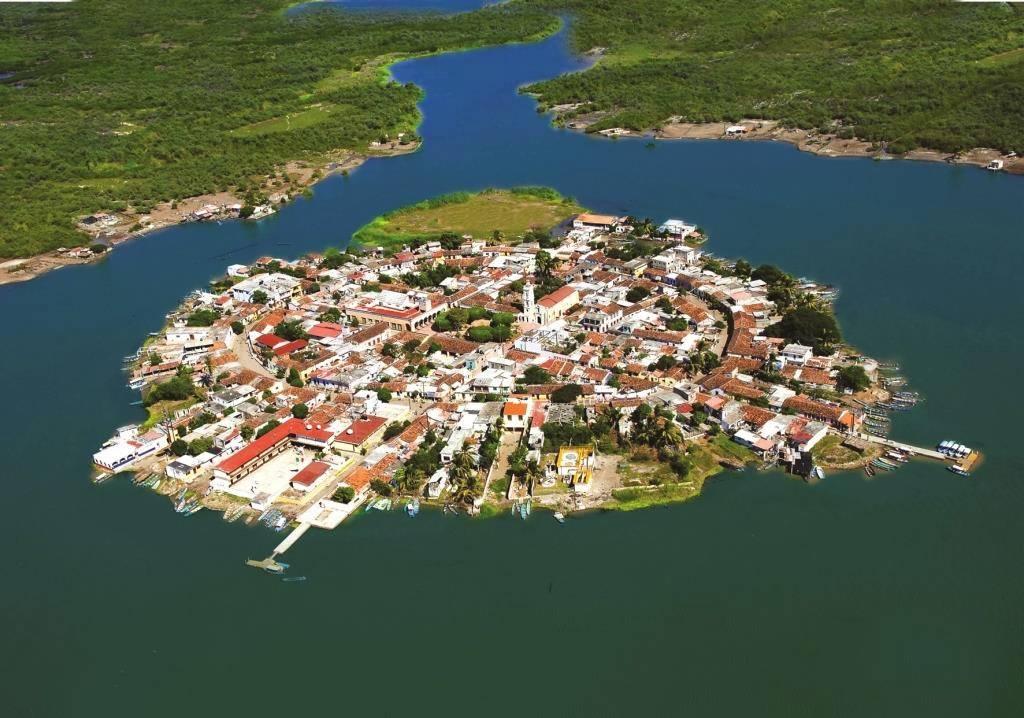
Located off the northwest coast of the state of Nayarit, Mexcaltitán de Uribe is a small, storied island long linked to the legend of Aztlán. During the rainy season,
its streets flood and become navigable by small boats—one reason locals call it Mexico’s Venice.
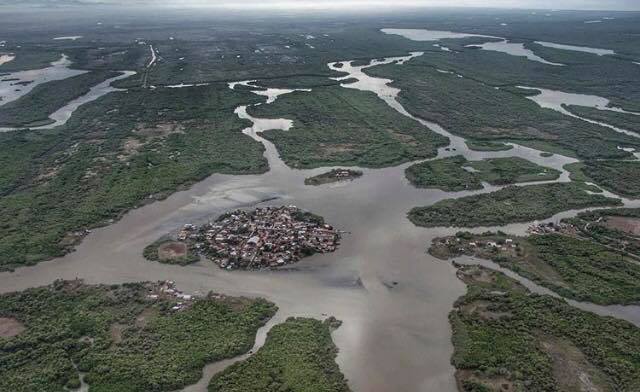
The name comes from Nahuatl: “mexcalli” (mezcal) and “titlán” (abundance, wealth). Administratively, the island belongs to the municipality of Santiago Ixcuintla and sits within the brackish lagoon of the same name, a place you can explore by boat while spotting herons, pelicans, and mangroves along the way.
In the 1960s, some researchers proposed that this could be the mythical Aztlán—the homeland from which the Mexica set out before founding Tenochtitlan. The theory was eventually set aside, but the legend still lingers in the collective imagination.
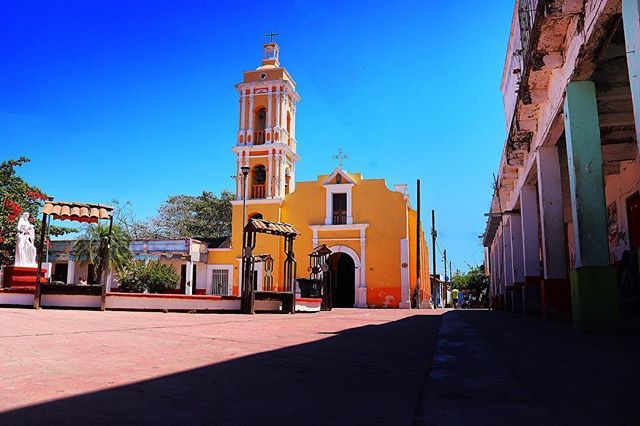
Faith flows through the channels of everyday life. The island’s patrons are Saints Peter and Paul. At the end of June the community celebrates them with music, dance, food, and a water blessing.
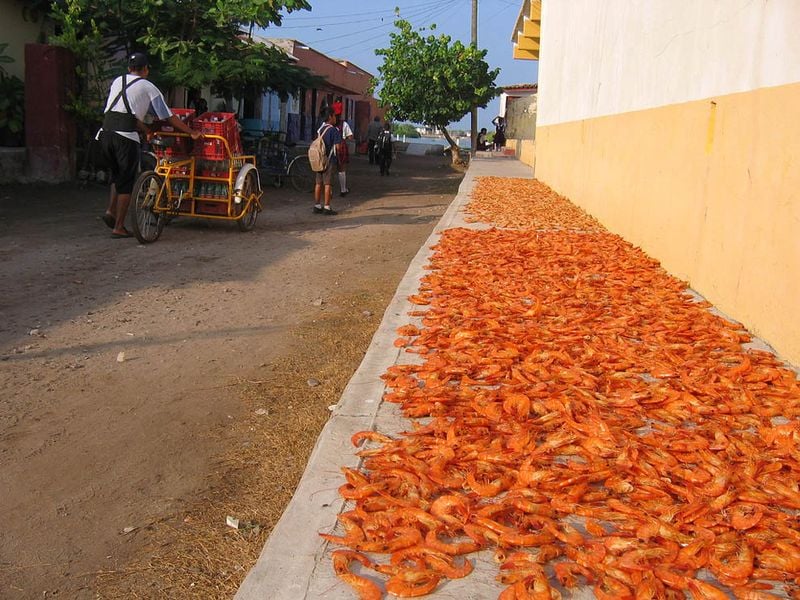
The festivities culminate in a friendly regatta: the town splits into two teams (one for each saint) and chooses navigators to race around the island in decorated boats bearing the saints’ images. Locals believe the rite helps secure a bountiful season ahead—especially for shrimp, the backbone of the local economy.
The cuisine is proudly maritime: bearded-shrimp meatballs, shrimp-filled tamales, tlaxtihuili (also spelled tixtihuil, a thick shrimp soup), classic “pescado zarandeado,” and briny oysters served on the half shell.
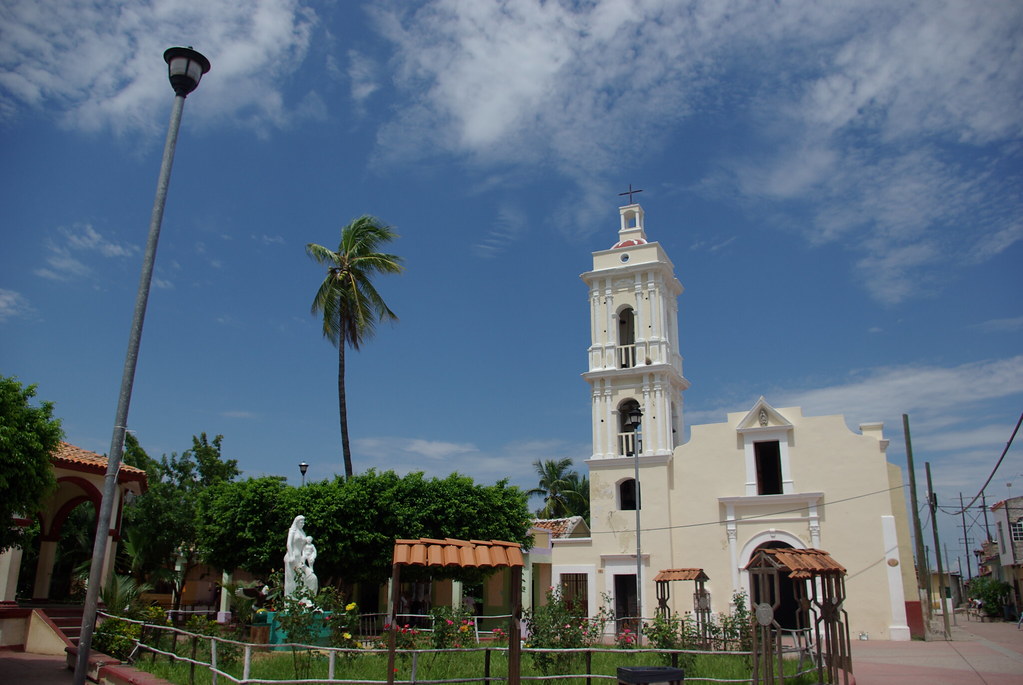
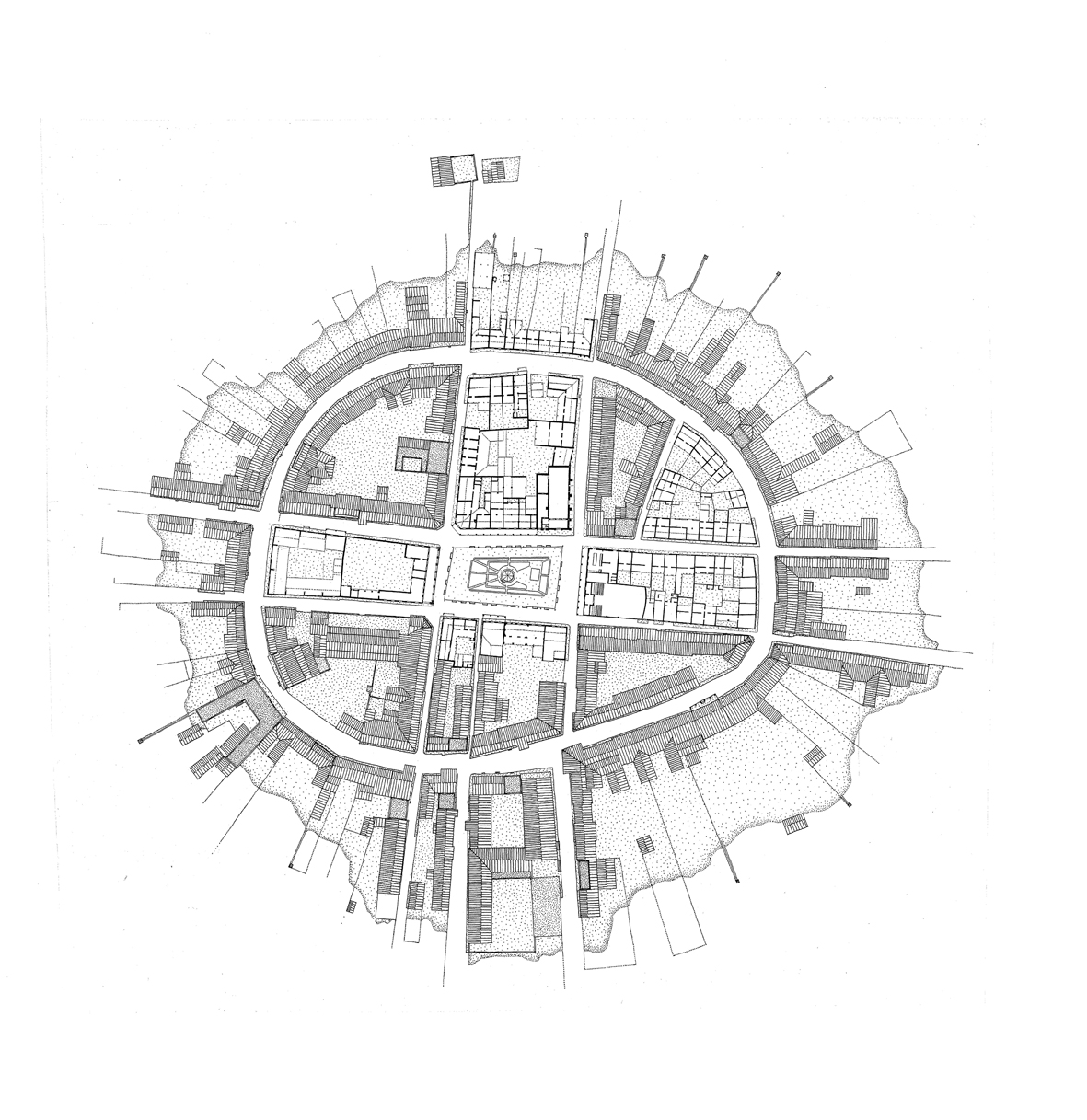
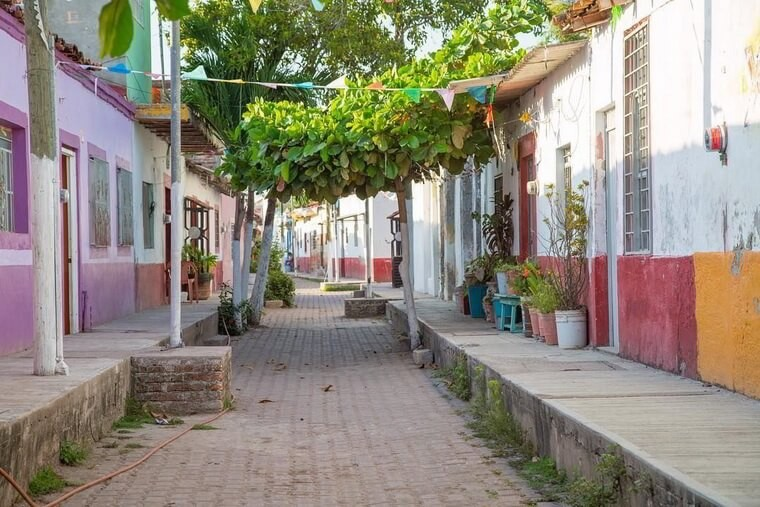
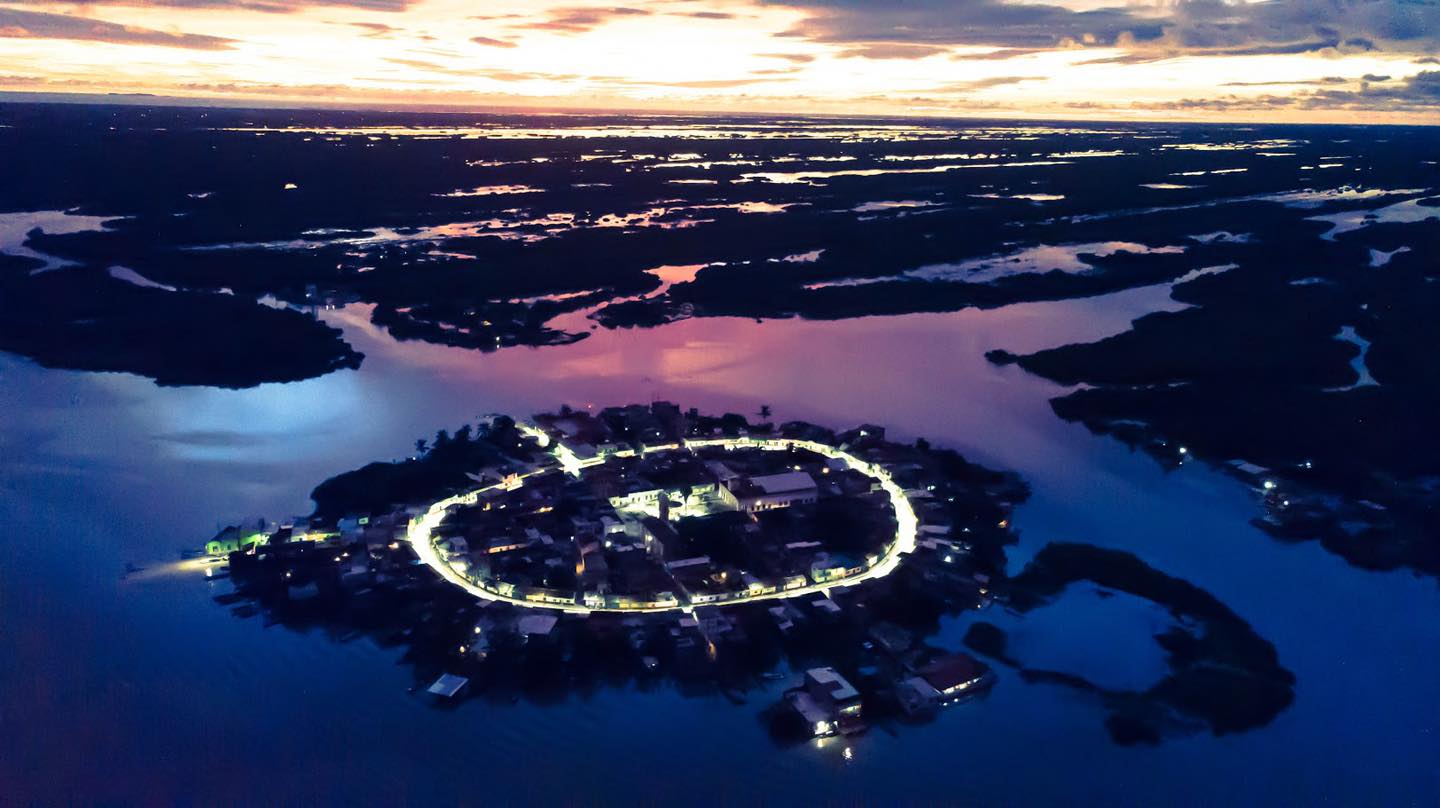
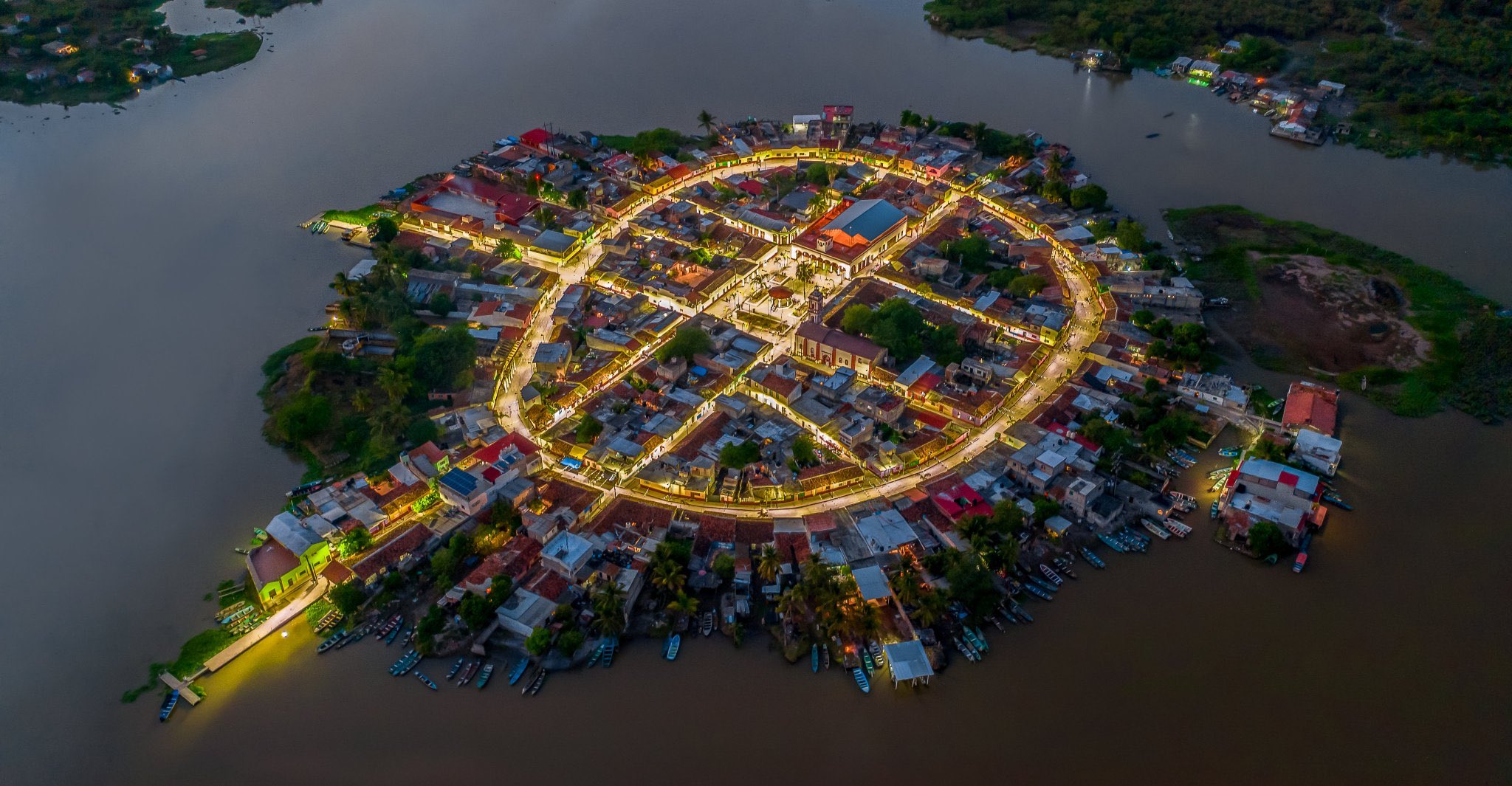
Mexcaltitán is a community of farmers and fishers that has acted as a regional head town and trading hub since the 17th century. Its vernacular architecture stands out: two-pitched clay-tile roofs and a compact, circular layout. The island’s perimeter is roughly 1 km and its diameter about 400 m. In just twenty city blocks you’ll find 19th- and 20th-century buildings arranged around the main square—most notably the Temple of Saint Peter, the east and west arcades, and the Government Palace. Other historic buildings serve educational, social services, and civic or military uses.
Conservation and heritage status underscore the island’s value. Mexcaltitán has belonged to the Marismas Nacionales de Nayarit Biosphere Reserve since May 12, 2010; it was declared a Zone of Historical Monuments in 1986; and in 2020 it was named a Pueblo Mágico.
When to go: the dry season (roughly November through May) offers easier walking; the wet months bring the singular experience of boating down the streets. Whichever season you choose, tread lightly—respect the mangroves and birdlife that make this little circle of land so extraordinary.