A Romanesque stronghold at the edge of empires
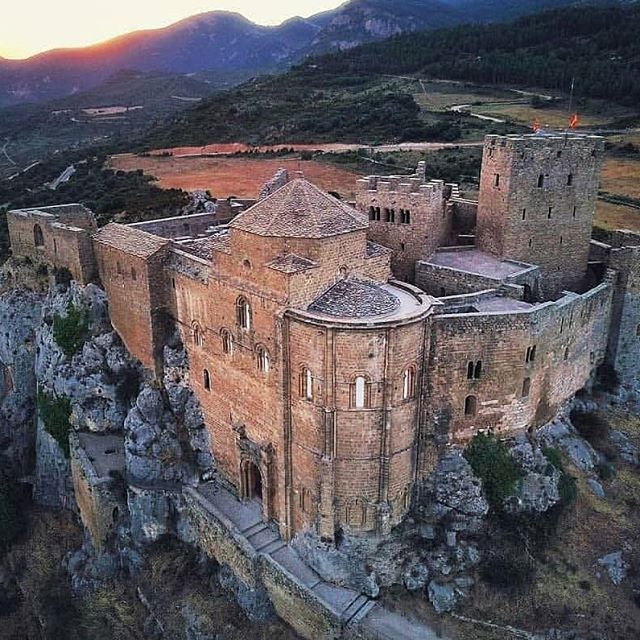
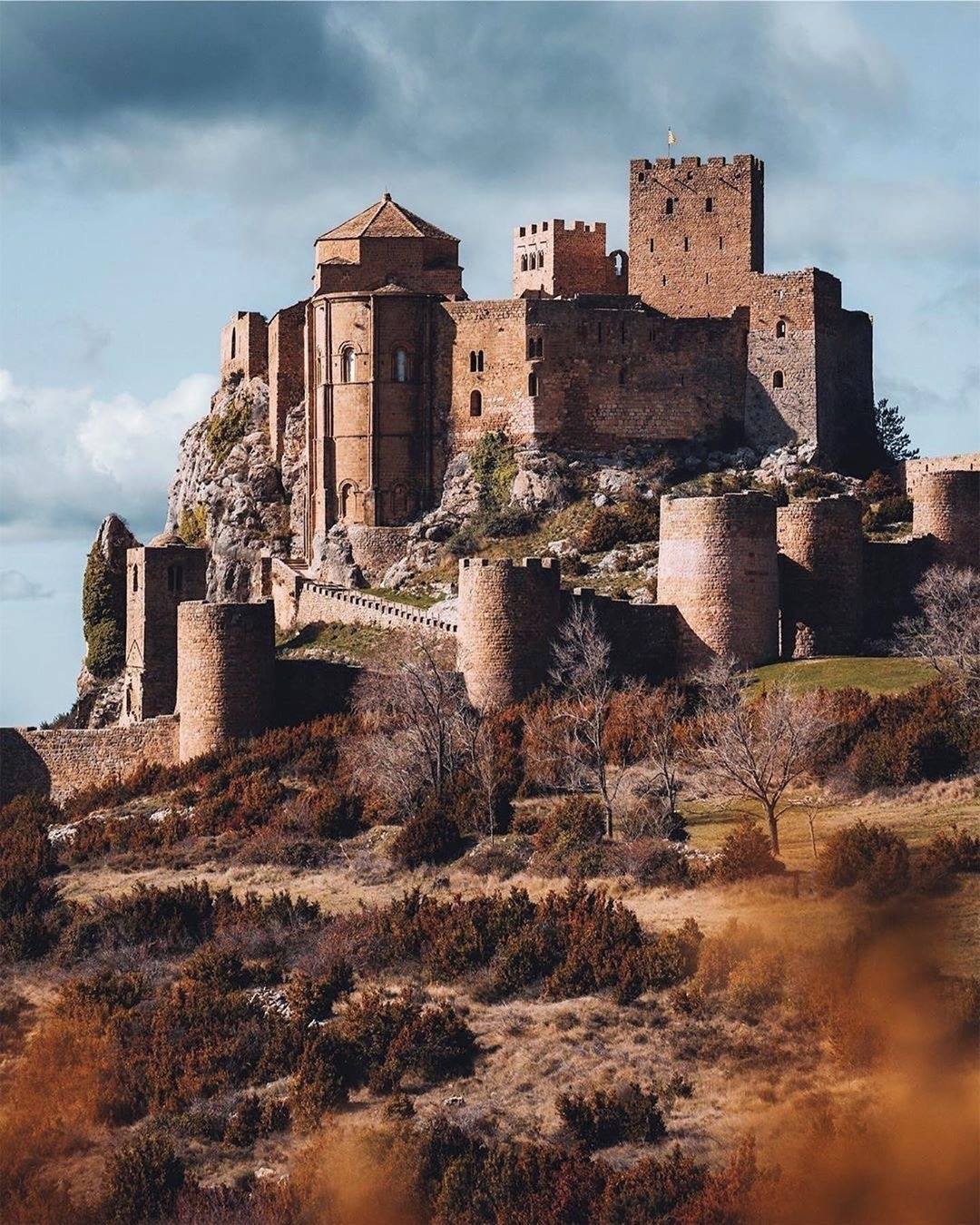
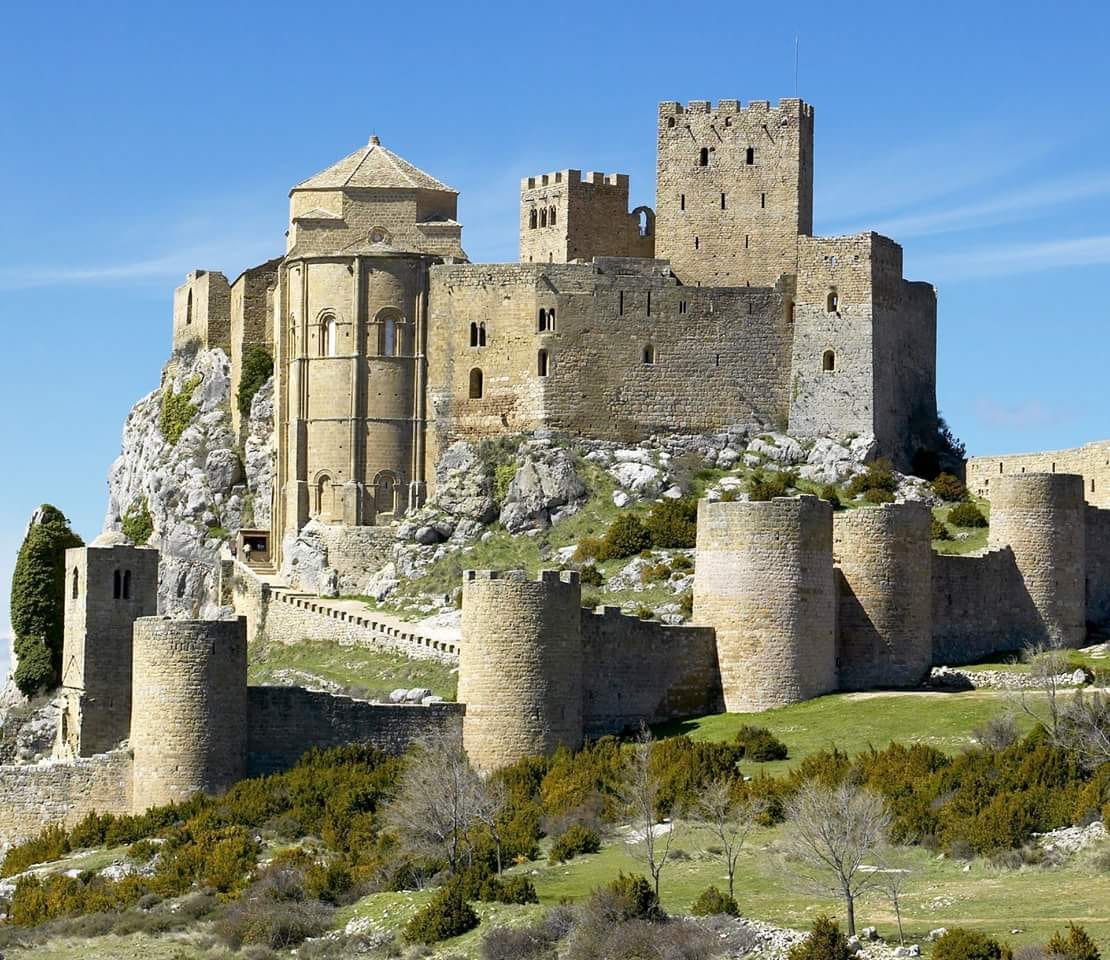
Loarre Castle rises from a rocky outcrop in Aragón like a ship of stone, its irregular plan and double curtain walls molded to the terrain. Begun in the early 11th century by Sancho III of Navarre — “el Mayor” — and enlarged later that century by his grandson, Sancho Ramírez, King of Aragón, the fortress commanded a frontier where Christian and Muslim lands pressed against each other. The result is Spain’s most celebrated Romanesque castle: a complex of towers, chapels and walls that reads like a timeline carved into limestone.
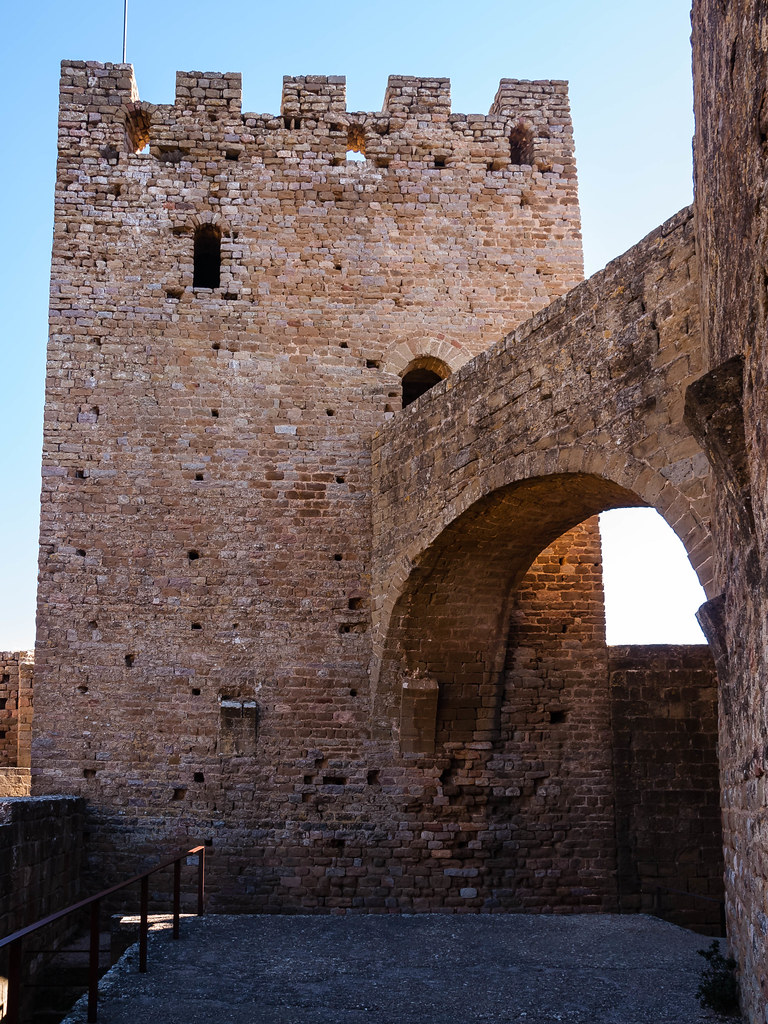
The rocky knoll dictated the layout. Instead of a single unified mass, Loarre became a collection of buildings wrapped by curtains, each campaign solving problems of defense, residence and worship. At least three towers belong to the first major building phase (c. 1020 onward), among them the isolated keep (Torre del Homenaje) and the Tower of the Queen (Torre de la Reina). The keep originally stood ahead of the main fortifications, linked by a wooden bridge — an assertive outpost that allowed defenders to contest any approach before foes reached the inner ward.
From royal bastion to Augustinian convent
- Frontier strategy.: After 1070 the castle’s importance rose sharply. In 1073, Sancho Ramírez installed a community of Augustinian canons at Loarre, turning the fortress into both spearhead and sanctuary. From here he prepared the conquest of Huesca in 1094, consolidating Aragón’s reach across the Ebro gateways.
- Monastic turn.: In 1097, Peter I — Sancho’s successor — transferred Loarre’s goods to the new royal monastery at Montearagón. Even so, building at Loarre continued into the 12th century, and its religious life remained interwoven with its military purpose. This dual identity — bastion and cloister — explains why the complex preserves some of the most refined Romanesque architecture in Iberia alongside bluntly functional military work.
At the heart of the enclosure stands the Church of San Pedro, a jewel of 11th-century Romanesque design. Its single-cell nave and eastern apse speak a clear, harmonious language: semicircular vaulting, measured proportions and capitals carved with iconography that channeled the theology of the age for a lay and clerical audience. The nave’s original timber roof was later replaced by a vault near the end of the 11th century, tightening the interior’s acoustics and fire resistance while visually lifting the space. Above, an imposing dome asserts both engineering confidence and symbolic authority — a crown within a crown.
Reading the architecture in the round
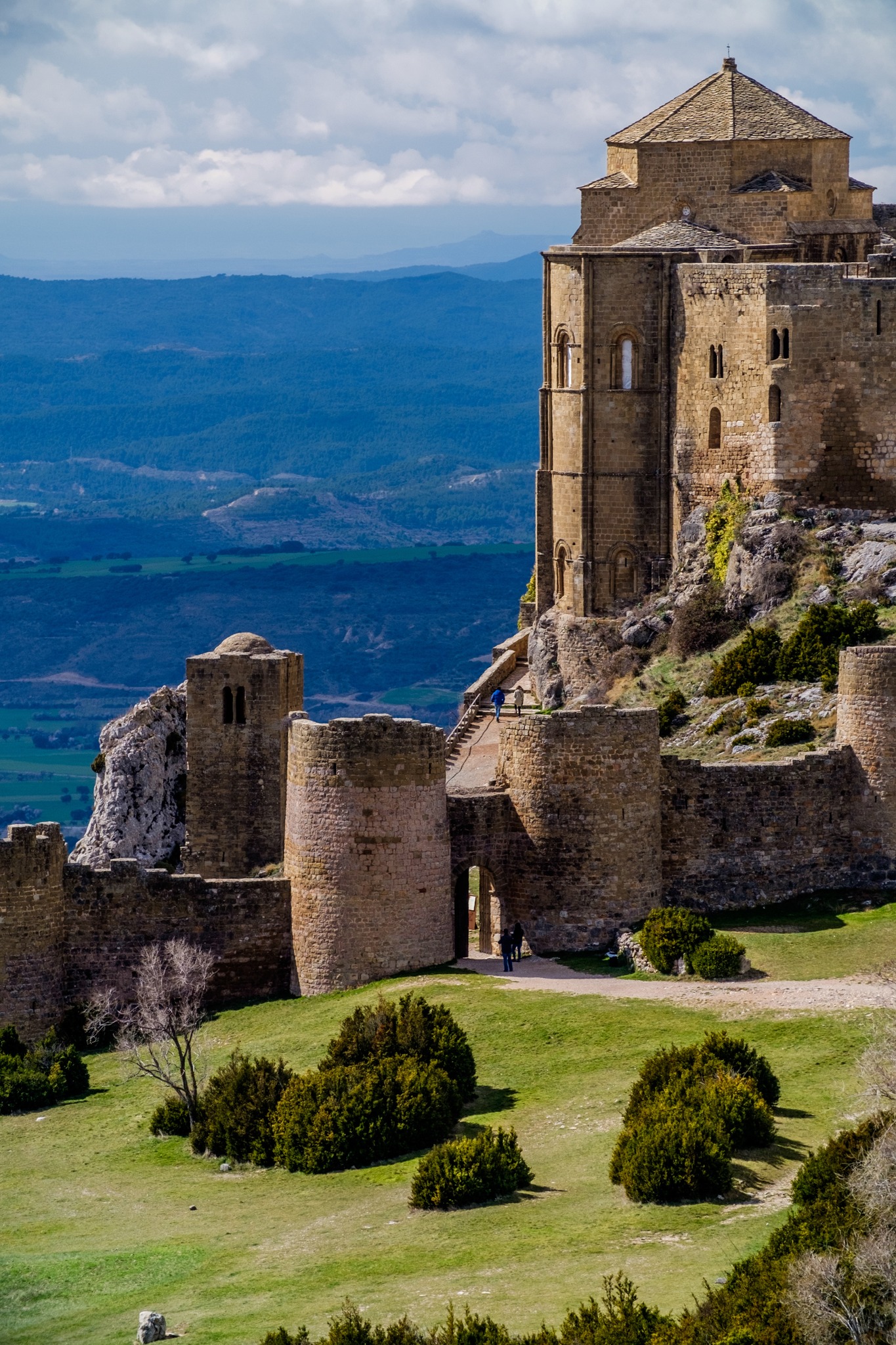
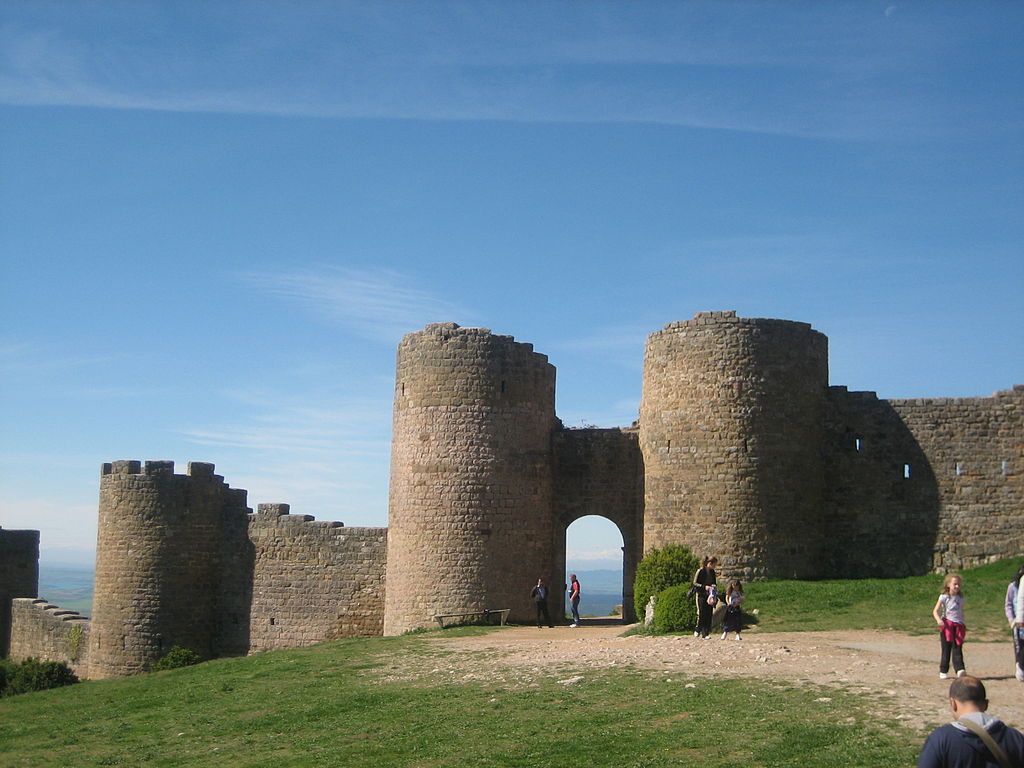
- Curtain walls and outer line.: The outermost walls with eight towers date to the 13th–14th centuries, a period when artillery and siegecraft demanded broader envelopes and fresh angles of fire. These later defenses, together with the earlier inner lines, give Loarre its layered, honeycomb plan: concentric shells that slow and expose attackers.
- The Tower of the Queen.: Noted for its sets of twin-arched windows, the Torre de la Reina blends Lombard and Mozarabic sensitivities: columns with exaggerated entasis, trapezoidal capitals and openings that filter light like a stone lattice. Below, basements store the memory of siege and scarcity; above, residential floors suggest the comforts nobles expected from a royal residence.
- The keep.: With a basement and five floors, the keep acted as last refuge and lookout. Its original wooden bridge — now gone — would have been retractable or sacrificial, an elegant way to buy time if the outer lines fell.
- Valverde chapel.: A dedicated chapel to Santa María de Valverde sits within the complex, its apse and vaulted volumes stitching devotion into the day-to-day life of garrison and canons alike. A second chapel, Romanesque and outside the walls toward the end of the 11th century, reveals how the site spilled beyond purely military needs as pilgrims and travelers threaded the frontier.
Centuries of adaptation, from sieges to cinema
Loarre’s story is one of constant recalibration. As the balance of power shifted, so did architecture. The 13th–14th-century expansion of the outer defenses reflects a world of more disciplined armies and tougher sieges. Later, periods of neglect left breaches and collapses; a major restoration in 1913 and further campaigns in the 1970s rebuilt many fallen stretches, consolidating towers and curtains to the crisp profiles we admire today. The castle’s cinematic silhouette found a global audience with a starring location role in Ridley Scott’s 2005 epic Kingdom of Heaven, where its austere lines and windswept perch stood in effortlessly for the medieval Mediterranean.
Visiting Loarre today: what to look for
- Approach & vistas.: From a distance, the complex resolves as terraces of stone stepping up the knoll. As you near the gate, note how the double walls create killing zones and bend lines of sight. Walk the perimeter to read the eight outer towers in sequence — each a small essay in volume, proportion and purpose.
- San Pedro church.: Inside, linger beneath the dome; its geometry pulls the eye upward while the capitals’ Romanesque carvings draw you back to the human scale. Look for vegetal motifs and narrative figures that would have served as teaching tools a millennium ago.
- Towers & windows.: Seek out the Torre de la Reina’s twin-arched windows; their sculpted profiles soften the fortress mood and hint at courtly life within. From the keep, imagine the wooden bridge angling back to the main line — a detail that captures how medieval engineers balanced risk and resilience.
- Stone as scripture.: Loarre’s masonry alternates between precisely cut ashlar and sturdier rubble core, an economical blend that hints at the different crews and calendars behind each phase. On ledges and corners, weathered tool marks remain legible, like signatures left by vanished hands.
Why this castle matters now
- Architectural purity.: Loarre is a textbook of Spanish Romanesque in three dimensions — not just a church, but an entire fortified ecosystem where sacred space, domestic quarters and war craft coexist.
- Historical clarity.: Its phases align neatly with documentary history: the c. 1020 royal reconquest drive under Sancho el Mayor; the 1073 monastic installation under Sancho Ramírez; the 1094 Huesca campaign; the 1097 transfer to Montearagón; and steady 12th-century refinements. Later outer walls (13th–14th c.) make the timeline visible in stone.
- Cultural reach.: From local pilgrim routes to modern filmmaking, Loarre has projected Aragón’s landscape and memory outward. It stands not as a fossil but as a living lesson in how places change use without losing soul.
Practical pointers for a low-impact visit
- Best season.: Spring and autumn bring sharp light and clear views across the Huesca plains toward the Pyrenees. Summer heat is intense; start early.
- On-site etiquette.: Respect signed paths; the outcrop’s soils are thin and erode easily. Drones are typically restricted. Interiors and chapels may have photography rules — follow staff guidance.
- Make it a day.: Pair Loarre with nearby Romanesque sites or Hoya de Huesca viewpoints; the castle rewards both wide panoramas and close study of capitals, vaults and arrow slits.
Loarre Castle is, finally, a paradox made stone: a war machine that houses prayer; a royal residence that became a convent; a frontier work that helped redraw the frontier. Walk its walls and you feel both the severity of purpose and the serenity of design — a medieval treasure in Aragón that still commands the horizon.