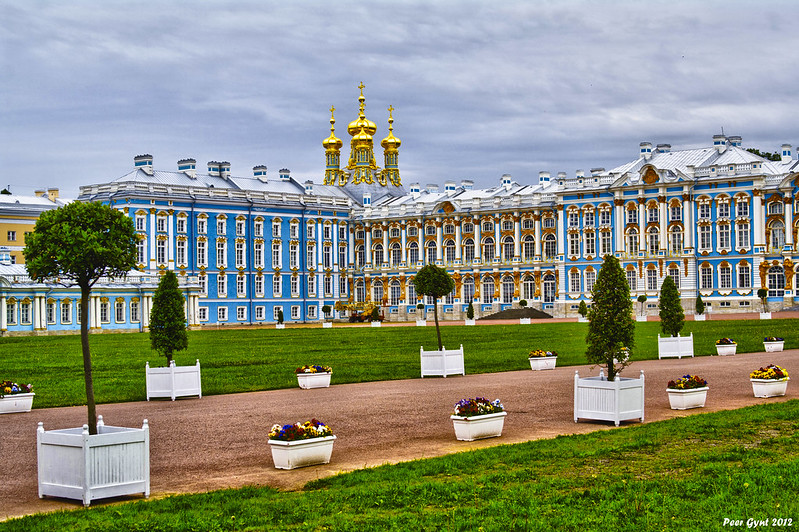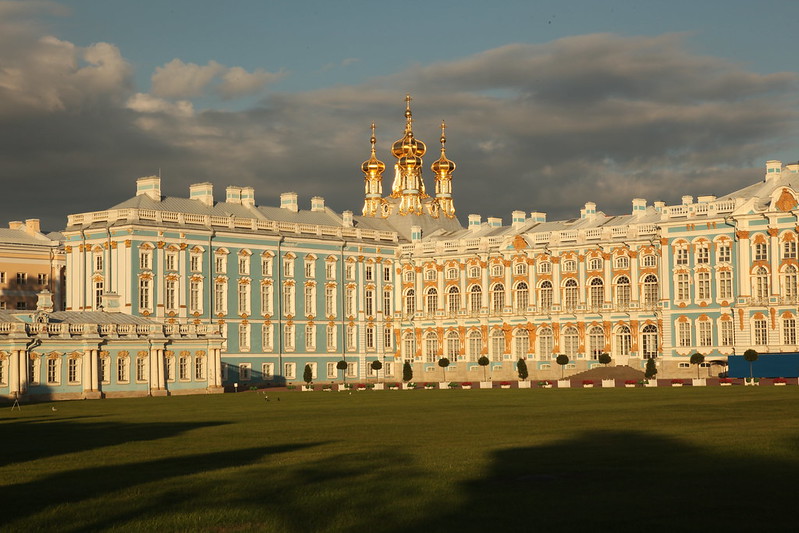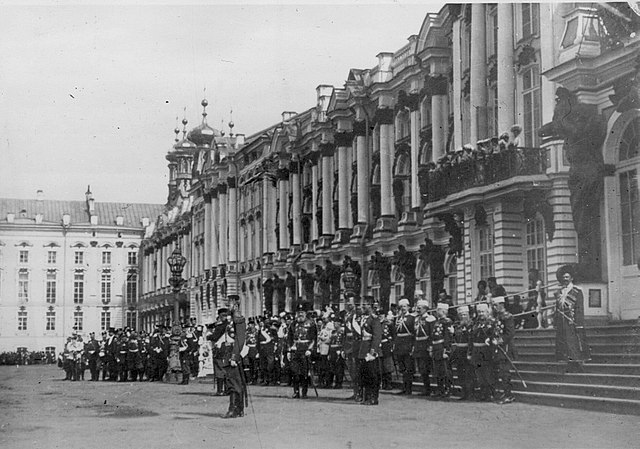
The Catherine Palace, once known as the Great Palace of Tsarskoe Selo until 1910, stands as a colossal monument to imperial Russian history and architectural artistry. Located in the former imperial residence of Tsarskoe Selo, now within the town of Pushkin, Saint Petersburg, this edifice is recognized as an object of Russian cultural heritage and is part of a UNESCO World Heritage site. The palace's three-century history reflects the architectural currents and personal tastes of its crowned mistresses, notably Empresses Catherine I, Elizabeth Petrovna, and Catherine II.
From Stone Chambers to Rococó Showcase
The palace’s story begins modestly in 1717 when architect Johann Friedrich Braunstein oversaw the construction of the first masonry royal residence for Empress Catherine I. This initial structure was a small, two-story building in the Dutch style.
The transformation into the flamboyant masterpiece seen today began with Empress Elizabeth (daughter of Peter the Great and Catherine I). Deciding to enlarge the building in late 1742 or early 1743, she later entrusted the complete reconstruction to the Chief Architect of the Imperial Court, Bartolomeo Francesco Rastrelli (1700–1771). Between 1748 and 1756, Rastrelli directed the construction, culminating in the unveiling of his magnificent creation on July 30, 1756.
The resultant structure is a prime example of late Rococó or Russian Baroque style, measuring nearly 1 km in circumference. Rastrelli’s design emphasizes dramatic scale and elaborate decoration. The blue-and-white facades are lavishly embellished with gilded atlantes, caryatids, and pilasters designed by the German sculptor Johann Franz Dunker. This sheer opulence came at a literal golden cost: over 100 kg of gold was used to decorate the palace exteriors during Elizabeth's reign. This excess was later famously deplored by Catherine the Great when she realized the vast state and private funds poured into the building.
The Grandeur of the Rastrelli Interiors
No less spectacular than the exterior are the interiors, which form the focus of the palace tour. The most renowned of these is the so-called Golden Enfilade of state rooms, designed by Rastrelli himself.
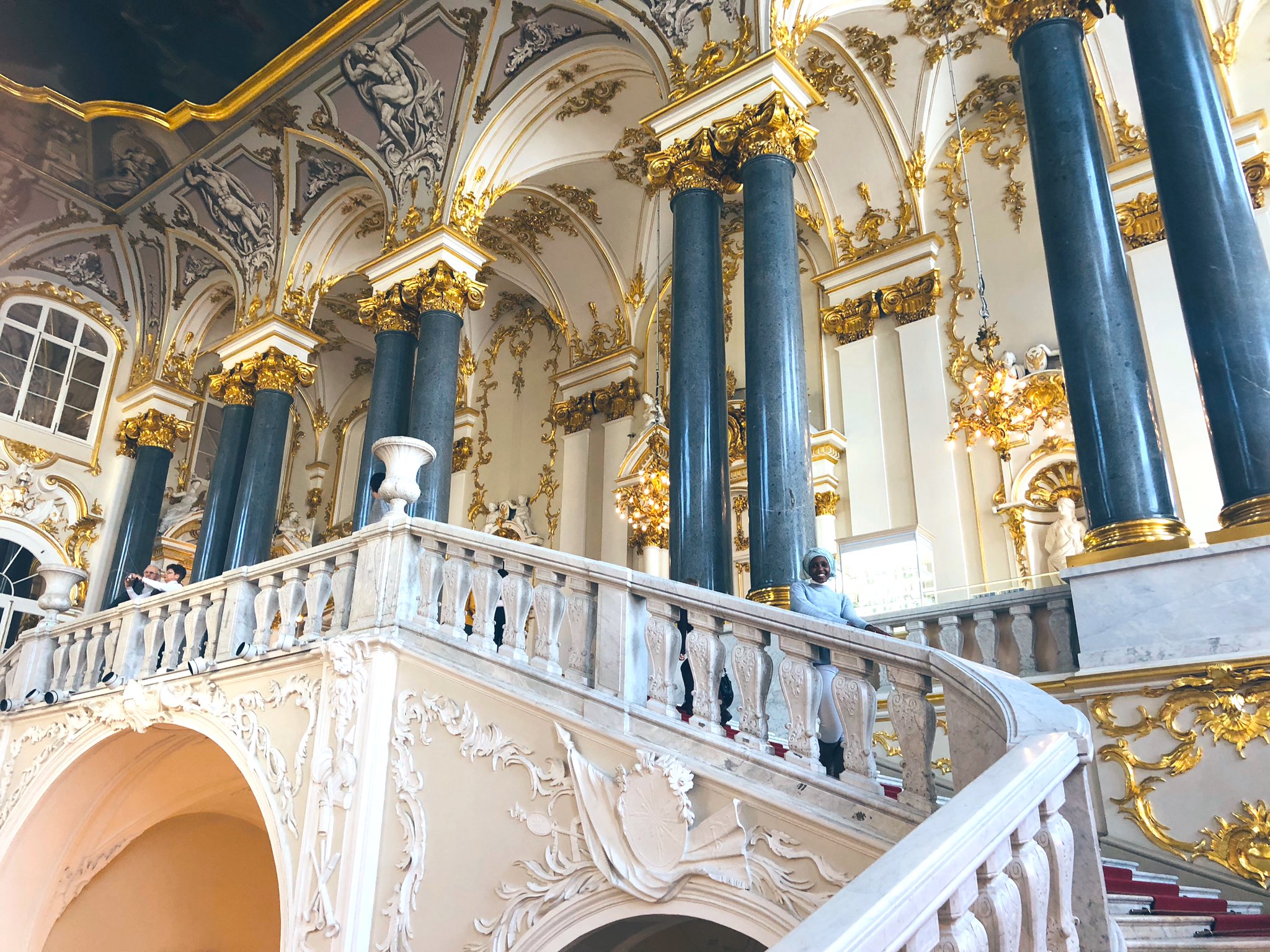
- The State Staircase: Although it blends seamlessly with the Rococó splendour of Rastrelli’s vision, the current State Staircase actually dates from the 1860s, created by Ippolito Monighetti in the “Second Rococó” style. Its ornate banisters and reclining marble cupids set the stage for the opulence within.
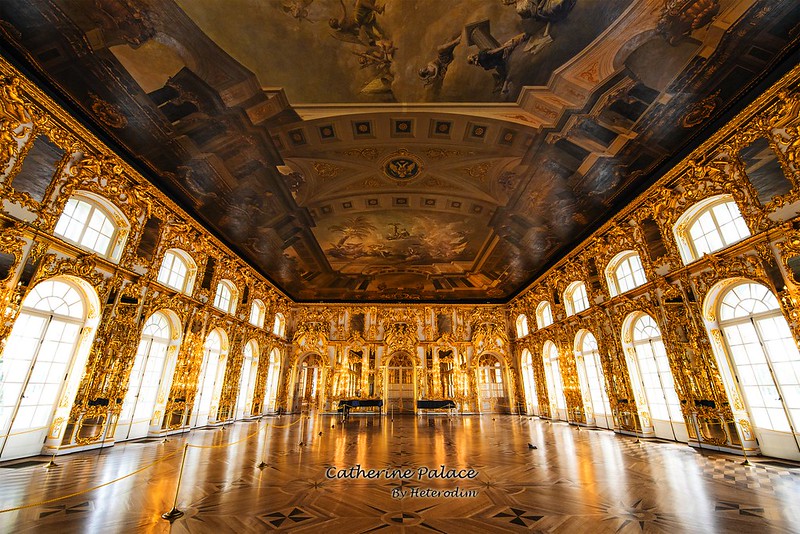
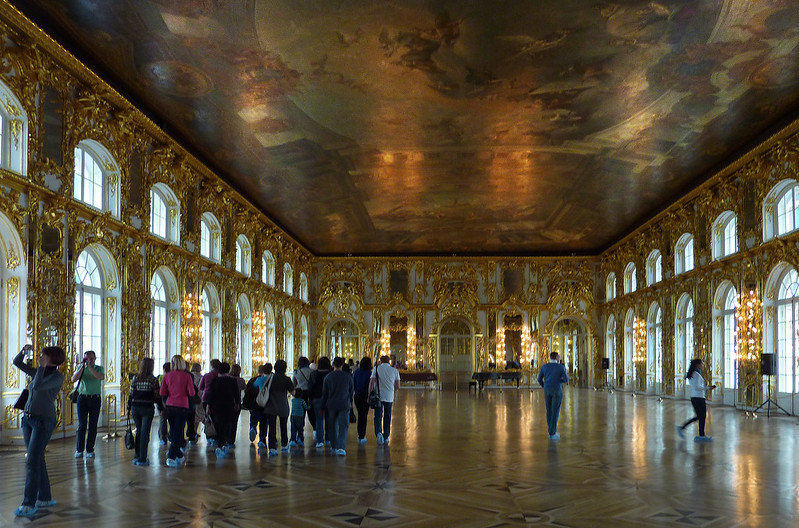
- The Great Hall (Hall of Light): The sheer scale is breathtaking; the room spans the entire width of the palace, covering nearly 1,000 square meters. Large arched windows flood the space with light, mitigating the vast quantity of gilded stucco decorating the walls. The ceiling is covered by a monumental fresco titled The Triumph of Russia.
- The White Dining Room: Employing similar techniques to the Great Hall but on a smaller scale, the White Dining Room displays equal luxury. Its grandeur is notably softened by the presence of a beautiful traditional blue-and-white tiled stove in the corner.
- The Amber Room: Among the most celebrated of the state rooms, the Amber Room's original paneling, a gift from Frederick William I of Prussia to Peter I, was tragically removed by German forces during the Second World War. Following decades of painstaking work by Russian restorers, and with funding from German firms, the room was recreated in full by 2003 for the 300th anniversary of St. Petersburg.
The Refined Elegance of the Cameron Rooms
A shift in taste occurred in the 1770s under Empress Catherine II. Fascinated by the art of the Ancient World, Catherine sought to update her apartments in line with the new Neoclassical fashion.
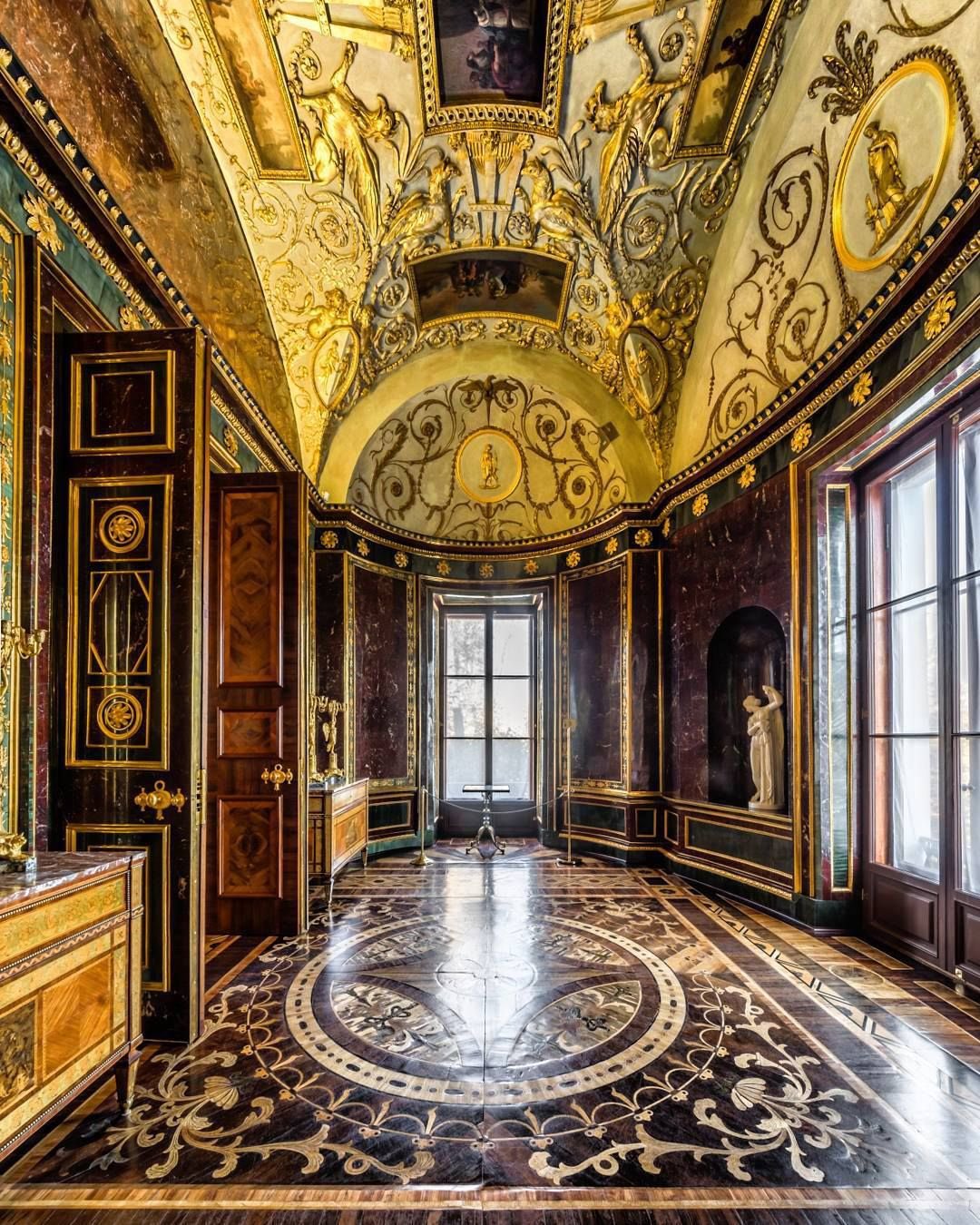
She appointed the Scottish architect Charles Cameron (1743–1812), an expert on ancient architecture, to the task. Cameron’s interiors, located in the Zubov Wing and the North Part of the Palace, are celebrated for their refined beauty and austere decoration. His signature is marked by a penchant for classical symmetry and a superb taste for colour.
The most noteworthy Cameron rooms include:
- The Green Dining Room: Originally fitted for Catherine’s son, Paul, this room showcases Cameron’s characteristic charm.
- The Blue Drawing Room: A delightful space featuring exquisite blue-and-white painted-silk wallpaper and a superb painted ceiling.
- The Chinese Blue Drawing Room: A slightly more flamboyant room that also boasts intricate painted-silk wallpaper detailing Chinese landscapes.
- The Lyons Hall: Created by Cameron between 1781 and 1783, this hall takes its name from the magnificent silk covering its walls, which was made in Lyon, France. Despite being destroyed during WWII, the exquisite inlaid parquet floor was thankfully recovered from Germany in 1947. The silk fabric for the current recreation was faithfully reproduced by the original Lyonnaise manufacturer, and the hall was reopened in 2019.
The Achievements of Restoration
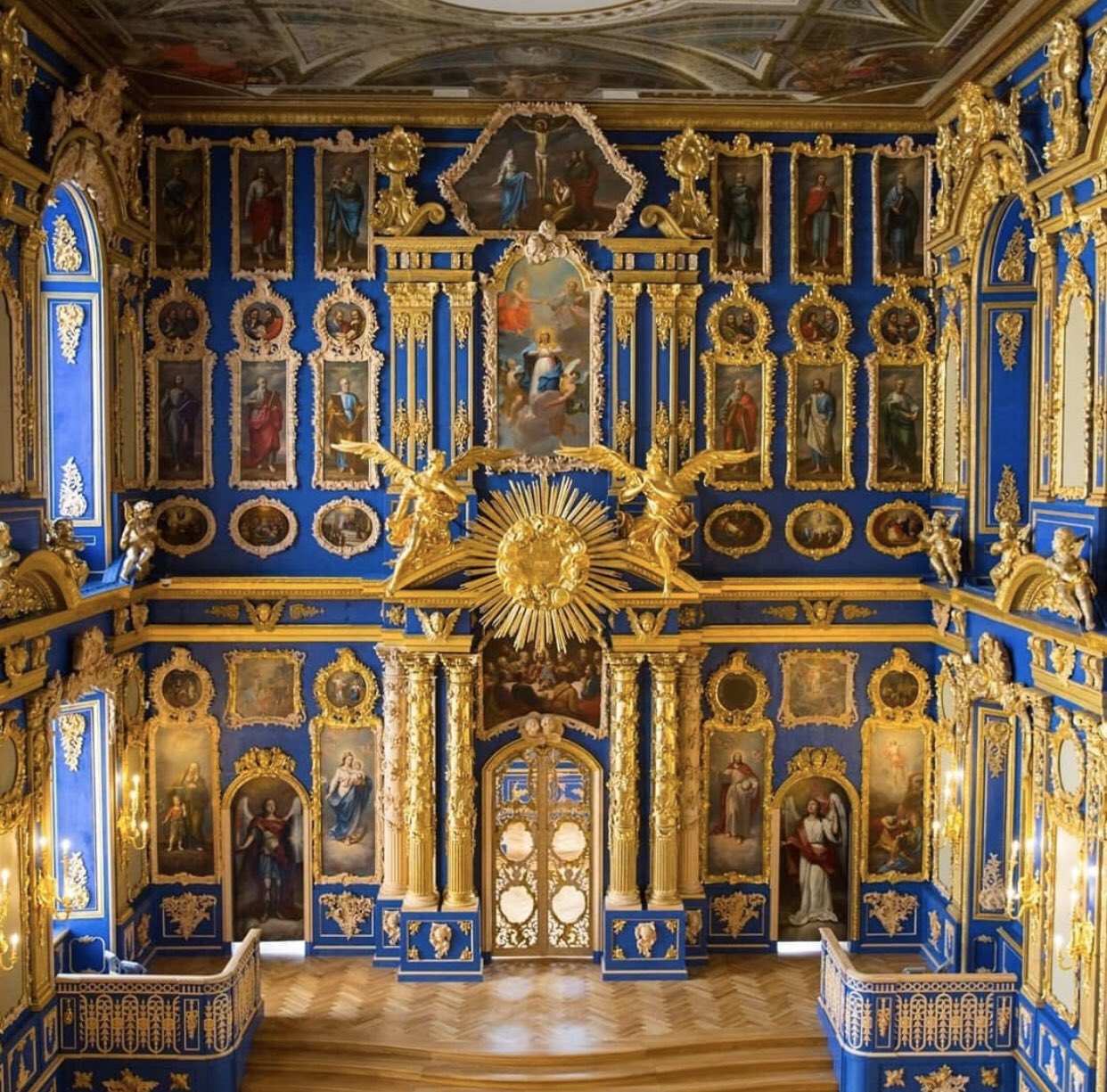
The palace suffered immense damage during the German occupation in the Second World War, with the interior of the Palace Church being virtually destroyed. Of the 58 halls destroyed during the war years, 32 have been successfully recreated by the Leningrad School of Restorers on a strictly scientific basis, and more are currently awaiting their revival. The restoration efforts not only rebuilt destroyed spaces but painstakingly recovered fragments and whole pieces, such as the unique marquetry from the Lyons Hall, which was found under a pile of grain in a Berlin elevator. The ongoing restoration is a testament to the dedication to returning the palace to its former glory.
The Legacy of Victory
Finally, the palace contains sections devoted to commemorating Russian military success. In 1817, at the command of Emperor Alexander I, the architect Vasily Stasov created the State Study and adjoining rooms in a common style devoted to extolling the brilliant victories won by the Russian army against Napoleon in 1812 and thereafter.
The Catherine Palace is thus a deeply layered monument: a testament to the dazzling opulence of Rococó, the refined taste of Neoclassicism, and the enduring resilience of cultural heritage against the ravages of war.