The Heart of "Half the World"
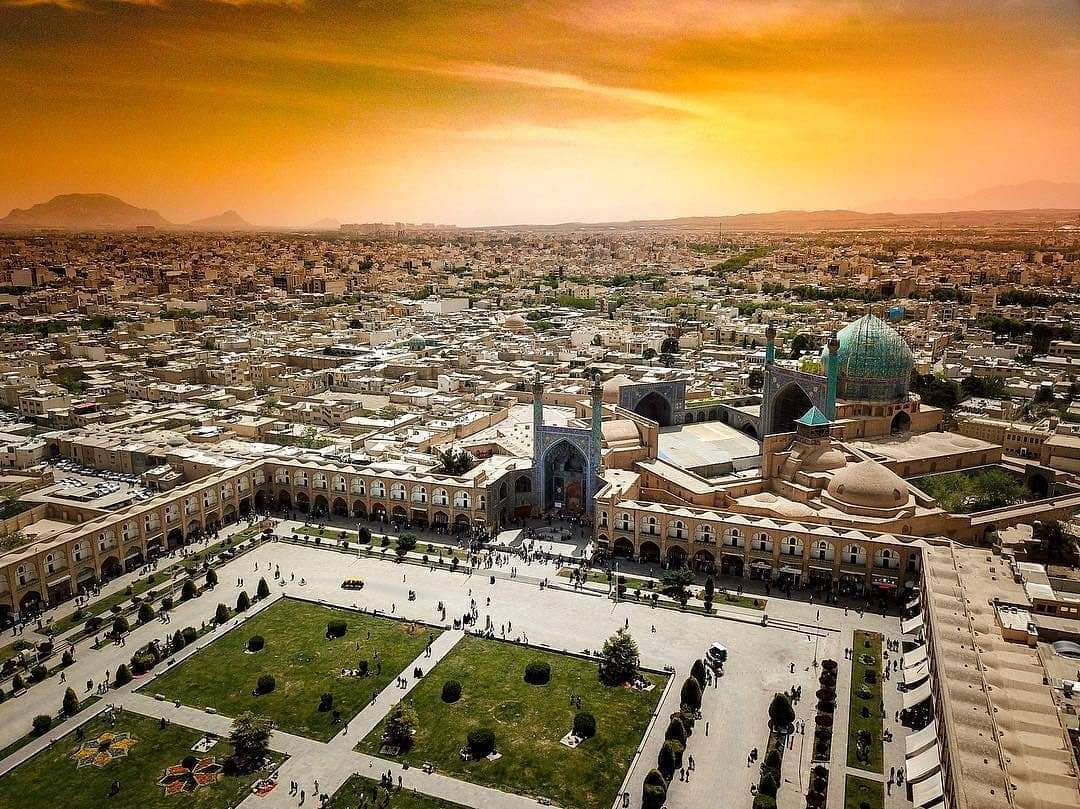
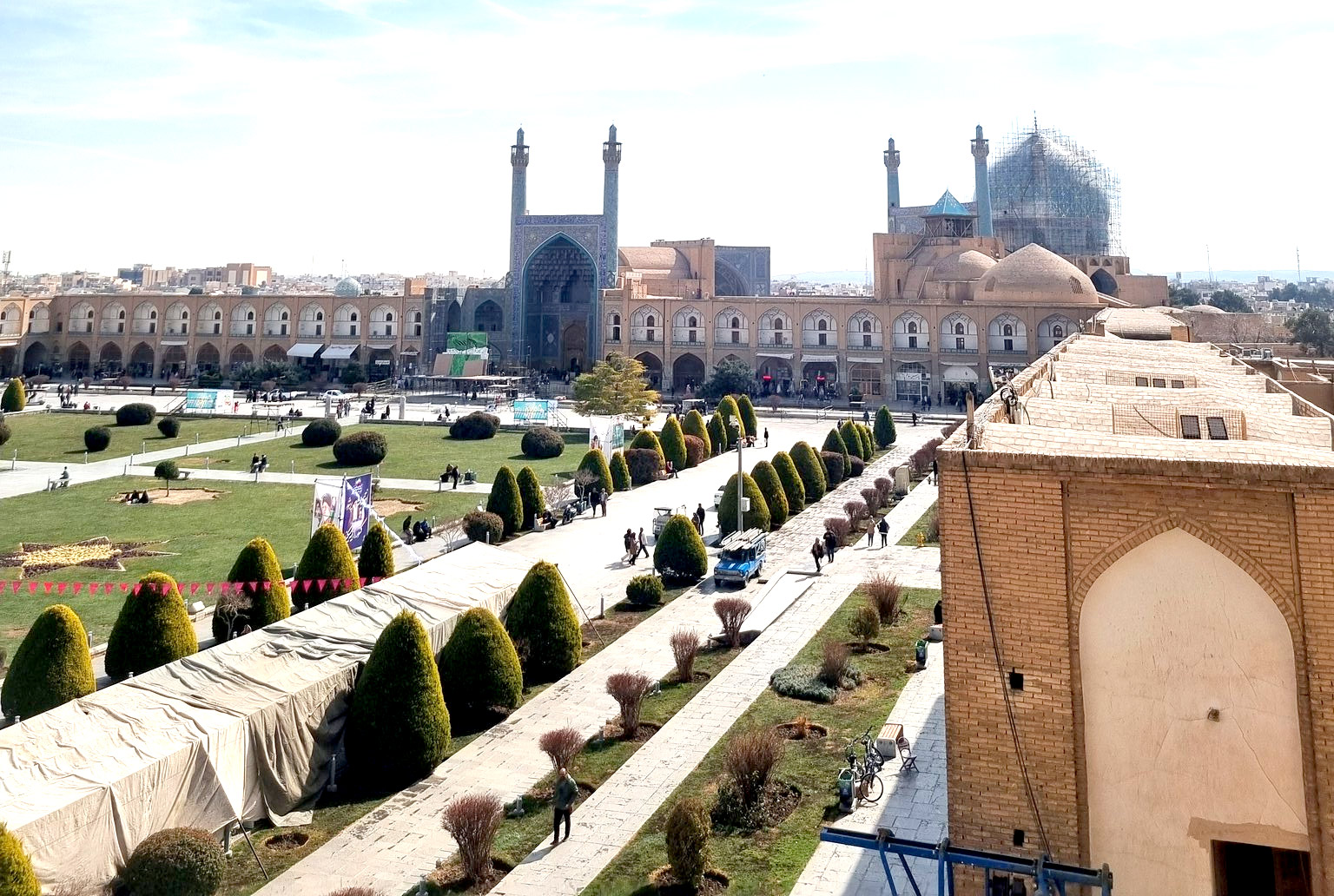
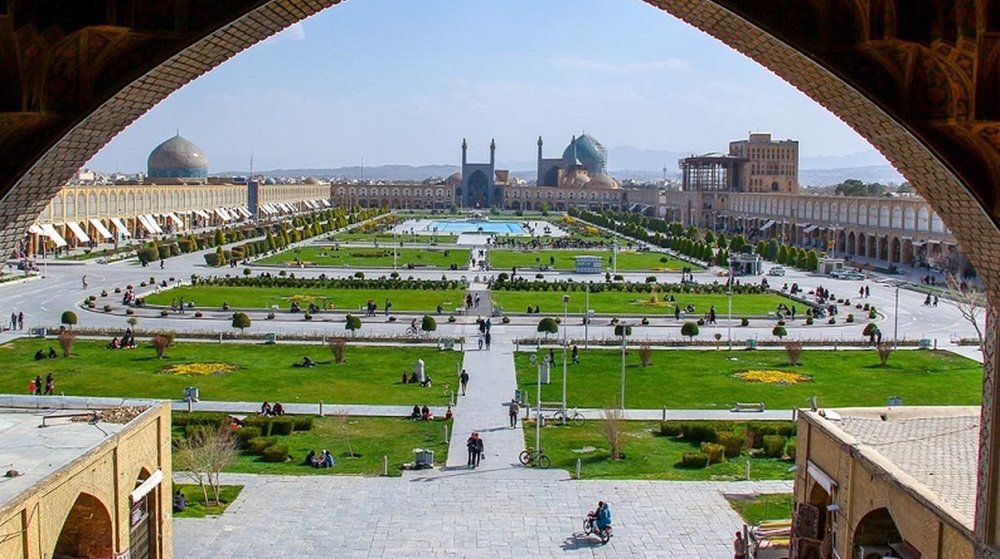
In the center of Isfahan, a city so culturally rich it is traditionally called "Nesf-e Jahan" (Half the World), lies a vast rectangular expanse that captures the very essence of Persian architectural genius. Naqsh-e Jahan Square, officially known as Meidan Emam, is not merely a public space; it is a profound statement of power, spirituality, and commerce woven into a single urban tapestry. Stretching 560 meters in length and 160 meters in width, this UNESCO World Heritage site is one of the largest public squares in the world, eclipsed in fame only by its sheer historical weight.
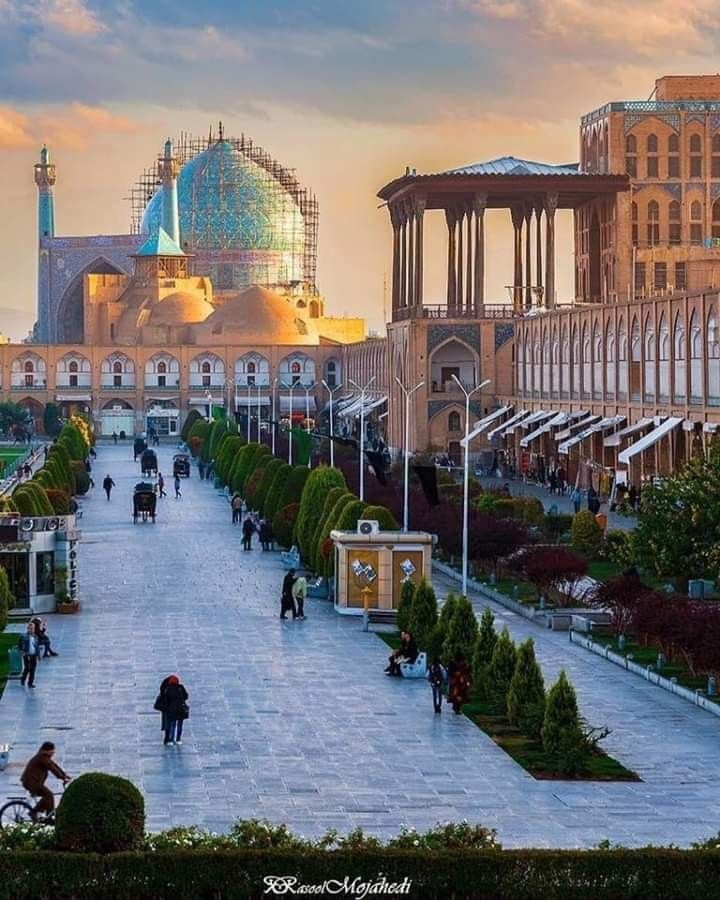
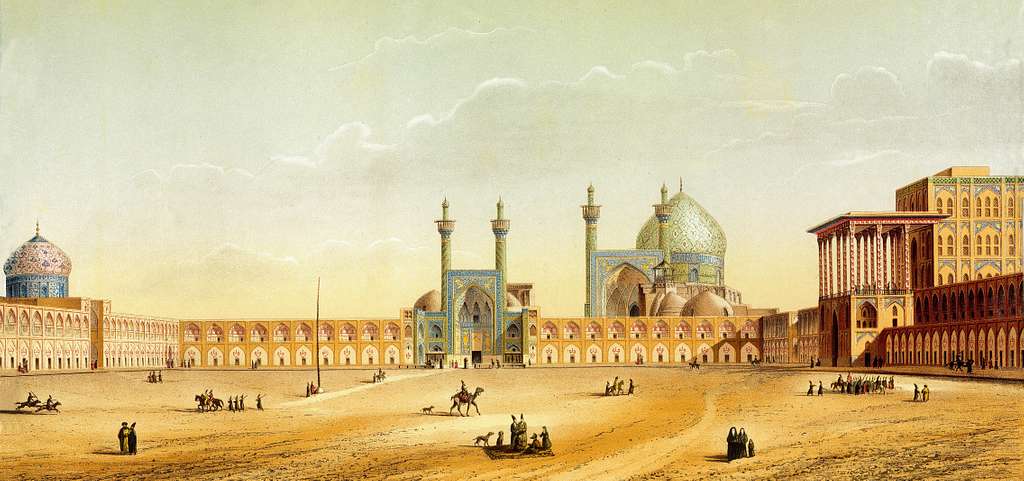
Built in the early 17th century under the visionary leadership of Shah Abbas I, the square represents the zenith of the Safavid Empire’s artistic achievement. It was here that the Shah decided to move his capital, transforming a former garden area—also named Naqsh-e Jahan (Image of the World)—into the beating heart of a new political and religious metropolis. The square was designed to unite the three main components of power in Persia: the power of the clergy, represented by the Masjed-e Shah; the power of the merchants, housed in the Imperial Bazaar; and the power of the Shah himself, residing in the Ali Qapu Palace.
A Masterpiece of Urban Design
Prior to the Safavid era, this area was a spacious garden housing government buildings and palaces of Timurid rulers. However, Shah Abbas I sought something grander. Around 1602 AD (1011 AH), the construction of the square began in earnest. The project was helmed by master architects of the time, including Ostad Mohammad Reza and Ostad Ali Akbar Isfahani, whose names are still immortalized on the inscriptions of the surrounding monuments.
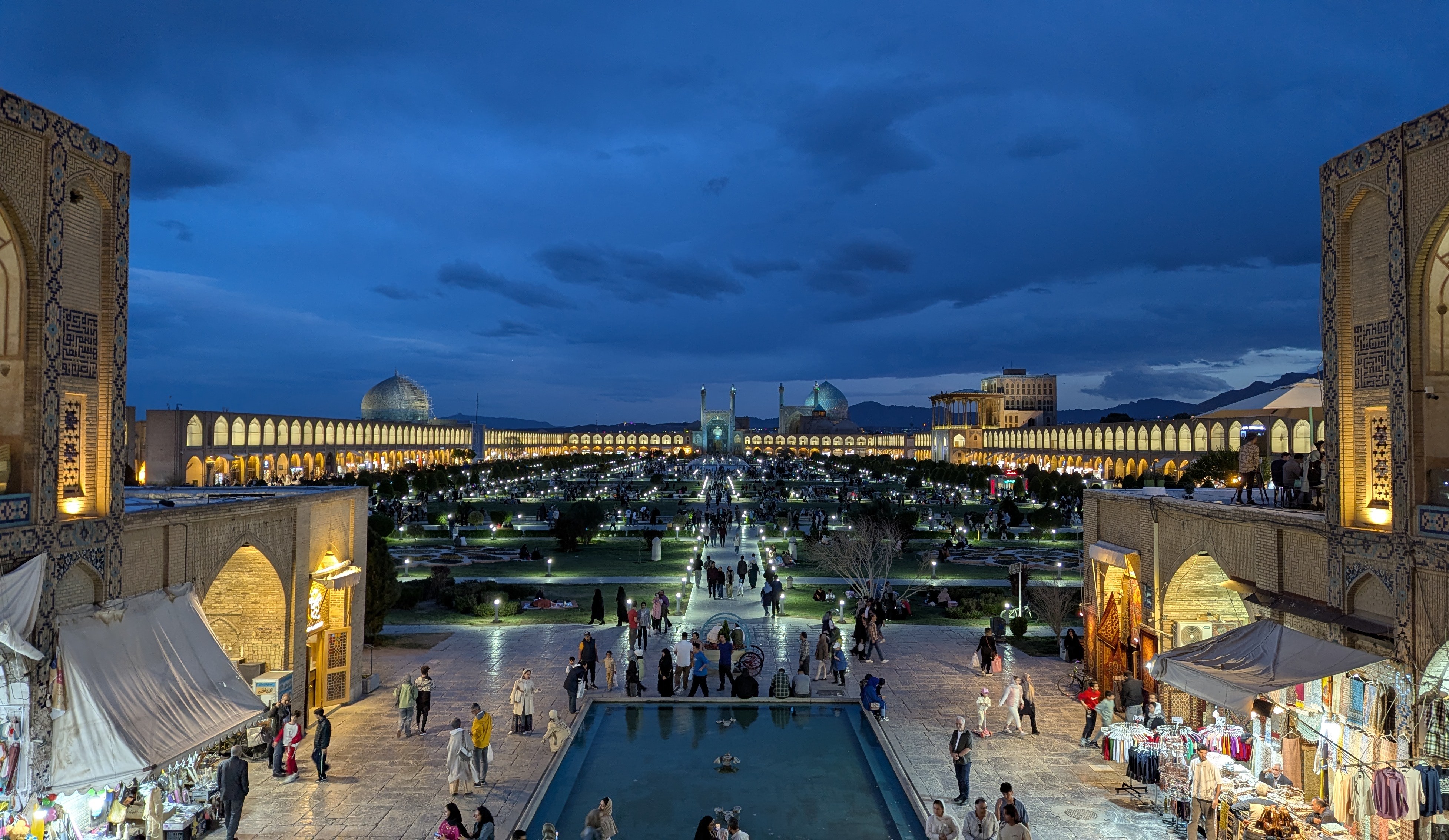
The layout is strictly directional, yet harmoniously integrated. The square is surrounded by two-story arcades containing two hundred chambers, which have historically served as the workshops and storefronts for Isfahan’s renowned artisans. These arches connect four monumental structures placed at the center of each side of the rectangle, creating a stunning skyline that has mesmerized travelers for centuries.
The Four Pillars of the Square
The Shah Mosque (Masjed-e Shah)
Domineering the southern side of the square is the Shah Mosque (now Imam Mosque), the most significant religious building remaining from the Safavid era. Its construction began in 1611 and took nearly two decades to complete. The mosque is famous for its magnificent seven-color mosaic tiles and calligraphic inscriptions. A unique architectural feat is the orientation of the mosque; while the square faces north-south, the mosque is angled towards Mecca (Qibla). The architect, Ostad Ali Akbar Isfahani, solved this by creating a twisting entrance corridor that subtly realigns the visitor without disrupting the external visual symmetry of the square. The massive double-shell dome, standing 52 meters high, is an acoustic marvel where a sound created in the center echoes repeatedly.
The Sheikh Lotfollah Mosque
On the eastern side sits the Sheikh Lotfollah Mosque. Unlike the Shah Mosque, this structure has no minarets and no courtyard, marking it as a private sanctuary for the royal court and the Shah’s harem rather than a public place of worship. Its cream-colored dome changes color throughout the day, shifting from pink to gold depending on the sunlight. It is often cited by art historians as one of the most perfectly balanced religious structures in the world due to its intricate tile work and intimate scale.
The Ali Qapu Palace
Facing the Sheikh Lotfollah Mosque on the western side is the Ali Qapu Palace. Rising 48 meters high with six floors, this was the residential palace of the Shah and the gateway to the royal gardens beyond. Its most famous feature is the elevated veranda supported by wooden columns, from which the Safavid monarchs would watch polo matches and military parades in the square below. The sixth floor contains the Music Room, featuring hollow cut-outs in the walls in the shapes of vases and vessels, designed to enhance the acoustics for royal musical performances.
The Qeysarieh Gate
To the north opens the Qeysarieh Gate, the grand entrance to the Imperial Bazaar. This structure symbolizes the economic power of the Safavids. Historically, it housed the Naqqareh Khaneh (Drum House) on its upper floors, where music was played to announce sunrise and sunset. The gate connects the square to the bustling labyrinth of the bazaar, where spices, carpets, and handicrafts have been traded for four hundred years.
A Stage for History and Culture
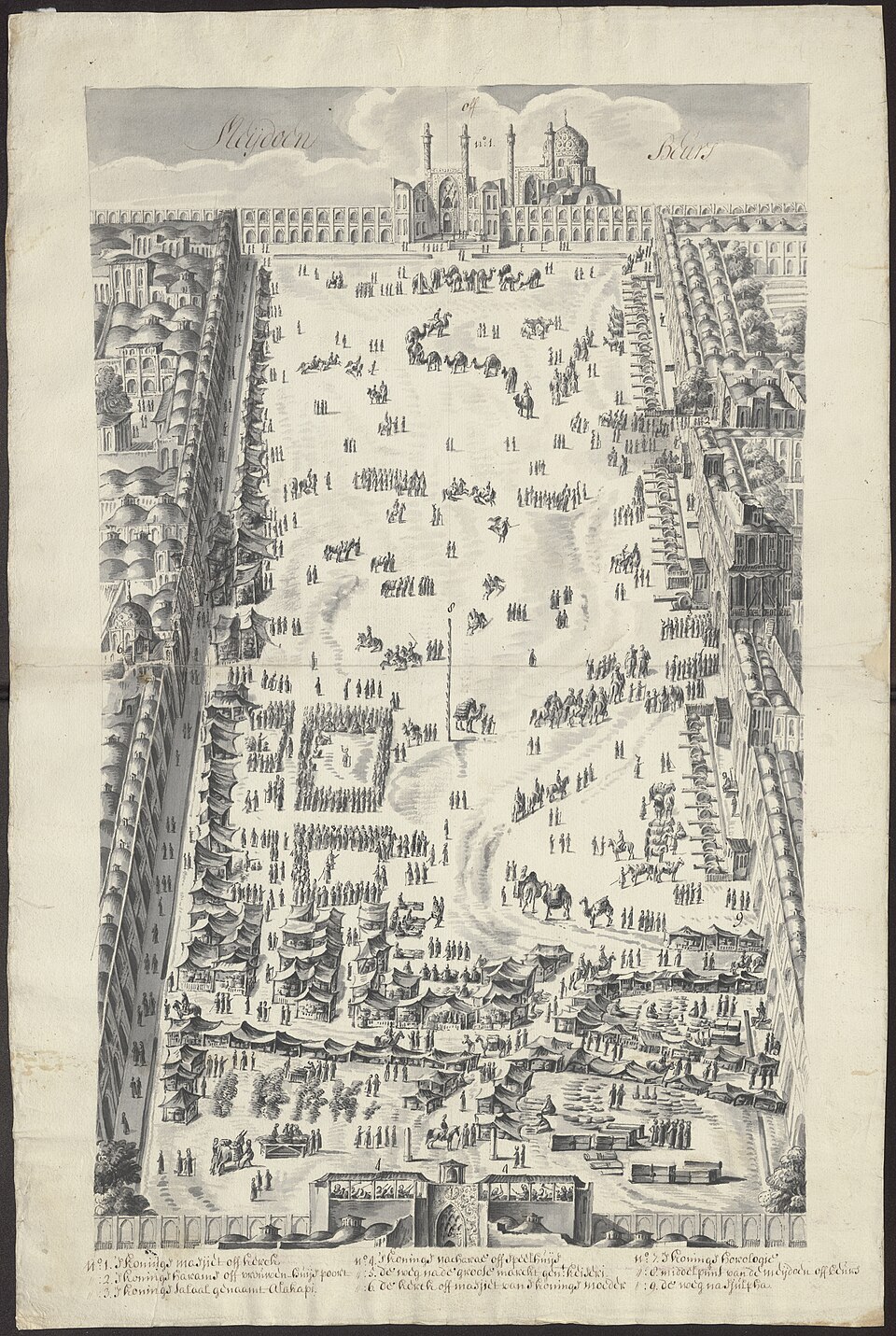
For centuries, Naqsh-e Jahan was more than a static monument; it was a dynamic stage for public life. French travelers like Jean Chardin and Jean-Baptiste Tavernier, who visited Isfahan in the 17th century, described the square as the most beautiful in the world. It was the venue for royal festivities, polo matches, and grand illuminations where up to 50,000 lamps would light up the night.
Remarkably, the original stone goalposts for polo are still standing at the north and south ends of the square, making it the oldest polo field in the world. The dimensions of this square even influenced the standard size of polo fields used globally today, such as those at Hurlingham.
Preservation and Modern Challenges
The square was officially registered as a National Monument of Iran in 1935 and became one of the first Iranian sites to be inscribed on the UNESCO World Heritage List in 1979. However, preserving such a massive complex has not been without challenges. In the early 2000s, the construction of the "Jahan Nama" tower, a modern high-rise located 700 meters from the square, threatened the visual integrity of the historic skyline. UNESCO placed the square on its "List of World Heritage in Danger," prompting a complex legal and diplomatic intervention. Eventually, the top floors of the tower were demolished to preserve the historic view, securing the square's status.
Today, Naqsh-e Jahan remains a vibrant public space. While the polo horses have been replaced by electric carts for tourists and the royal parades by families enjoying picnics on the lawns, the spirit of the place endures. The surrounding shops continue to sell Isfahan’s famous handicrafts, although there have been concerns in recent years regarding the influx of non-local goods. Nevertheless, walking through the square today, with the call to prayer echoing against the turquoise domes and the sun setting over the Ali Qapu, one can still feel the pulse of the Safavid golden age.