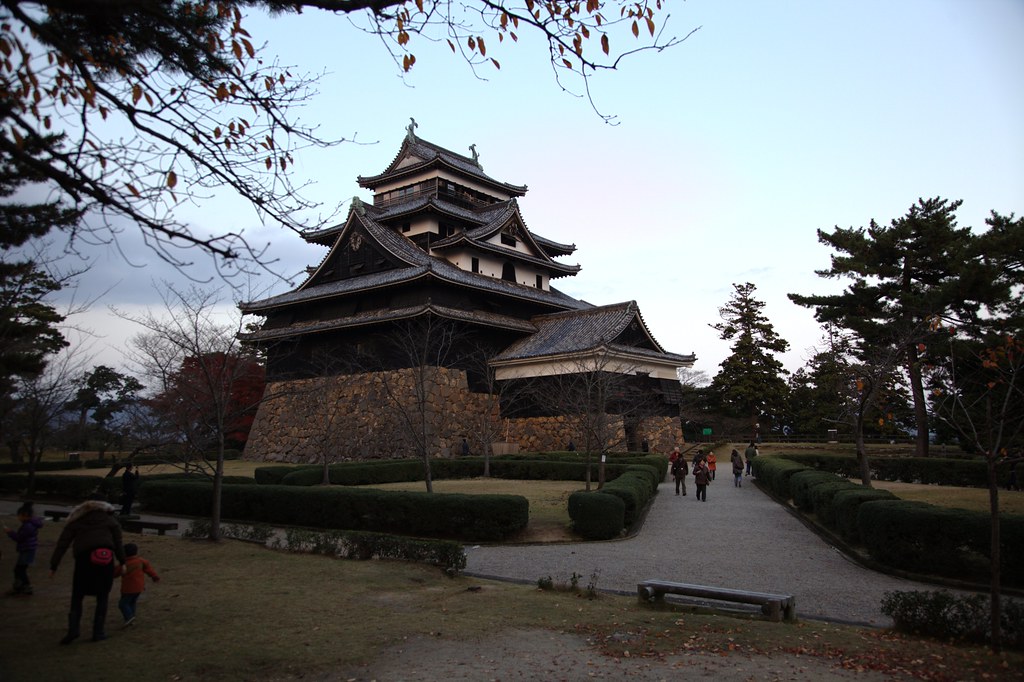
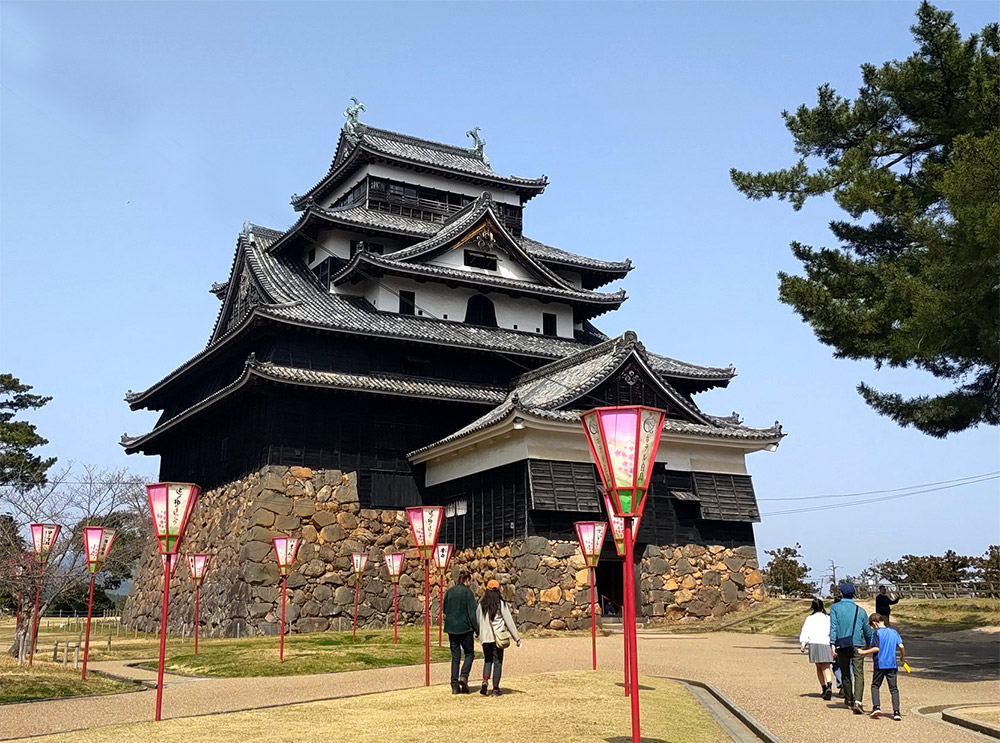
Rising above the quiet waters of Lake Shinji, Matsue Castle—often called Chidori-jō, the “Plover Castle”—stands as one of Japan’s few remaining original feudal fortresses. Built in 1611 and designated a National Treasure in 2015, its heavy black timber, sweeping hip-and-gable roofs, and commanding presence link modern visitors to four centuries of regional power, conflict, and cultural memory. Out of Japan’s hundreds of former castles, only twelve retain an original, intact keep. Matsue Castle is among them—one of just five elevated to the status of National Treasure. According to its official description, it is the only such surviving original keep in the entire San’in region of western Honshu .
Yet Matsue’s significance extends beyond its preserved silhouette. The castle’s history traces the rise and fall of powerful clans, early-modern urban planning, community action that saved it from demolition, and today, a growing debate between heritage preservation and urban development. Together these layers make Matsue Castle not just a remnant of Japan’s past, but a living symbol of how cities negotiate identity and modernity.
A Castle Built for Control—and for the Water
The origins of Matsue Castle can be traced to the aftermath of the Battle of Sekigahara in 1600. Victorious warlord Horio Tadauji, heir to the prominent Horio family, was granted 240,000 koku of land across Izumo and Oki. He moved his base from the mountainous medieval fortress of Gassan-Toda to a more strategic and commercially advantageous location near Lake Shinji and the Ohashi River, which connected the lake to nearby Nakaumi Lagoon—important waterways for transport and trade .
Construction began in 1607 atop Kameda-yama, previously the site of the smaller medieval Sunetsugu Castle. The new fortress would adopt a rinkaku rengaku hybrid layout on a hilltop: a complex pattern of baileys linked by corridors, stone walls, and moats that allowed for layered defense and controlled access. The moats themselves form part of a brackish-water ecosystem connected to Lake Shinji—an unusual environmental feature noted in historical surveys .
Horio Tadauji did not live to see its completion; Matsue Castle was finished in early 1611, only months before his death. The clan line itself would end only two decades later.
A Fortress That Outlived Its Lords
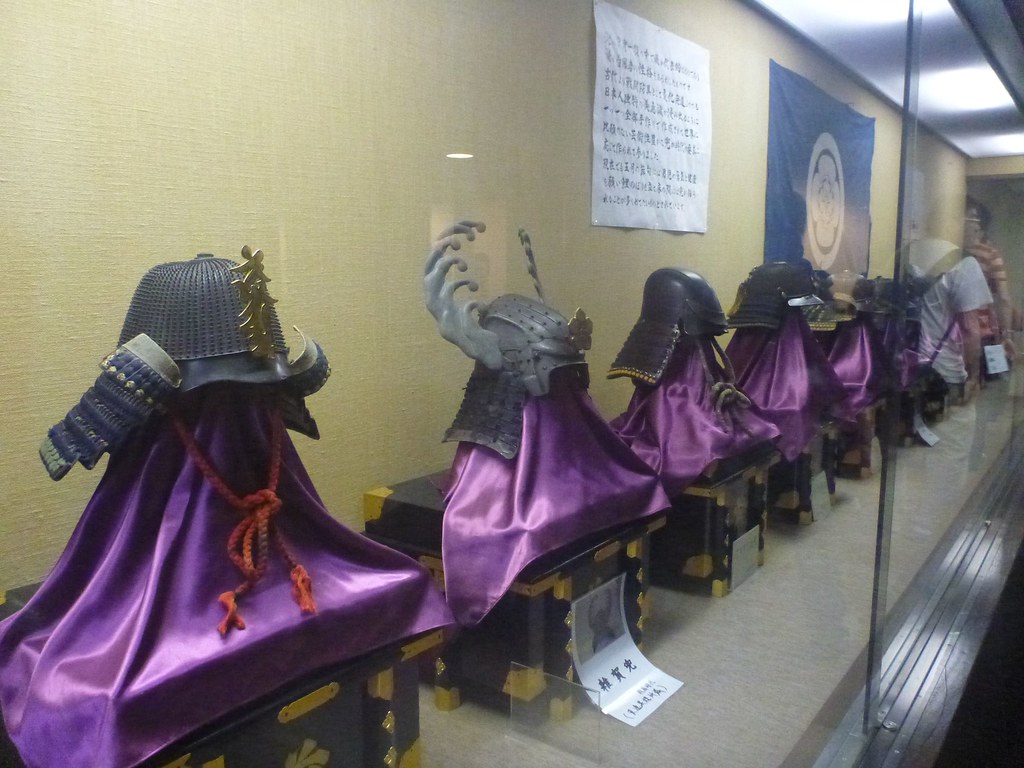
The castle passed through the hands of two major families. After the Horio clan died out, Matsue was governed by the Kyōgoku family (1634–1637), who expanded the castle’s third bailey. Their rule, too, ended without an heir. In 1638 the Matsudaira clan—relatives of the Tokugawa shogunate—took over, ruling until the Meiji Restoration in 1868 .
Under the Matsudaira, Matsue grew into a structured castle town, its neighborhoods organized by class: samurai quarters around the northern and eastern moats, merchant districts to the south, and temple areas beyond. The preserved traditional street of Shiomi Nawate still echoes this arrangement today, lined with former samurai residences and cultural institutions.
The Keep: A Rare Survivor
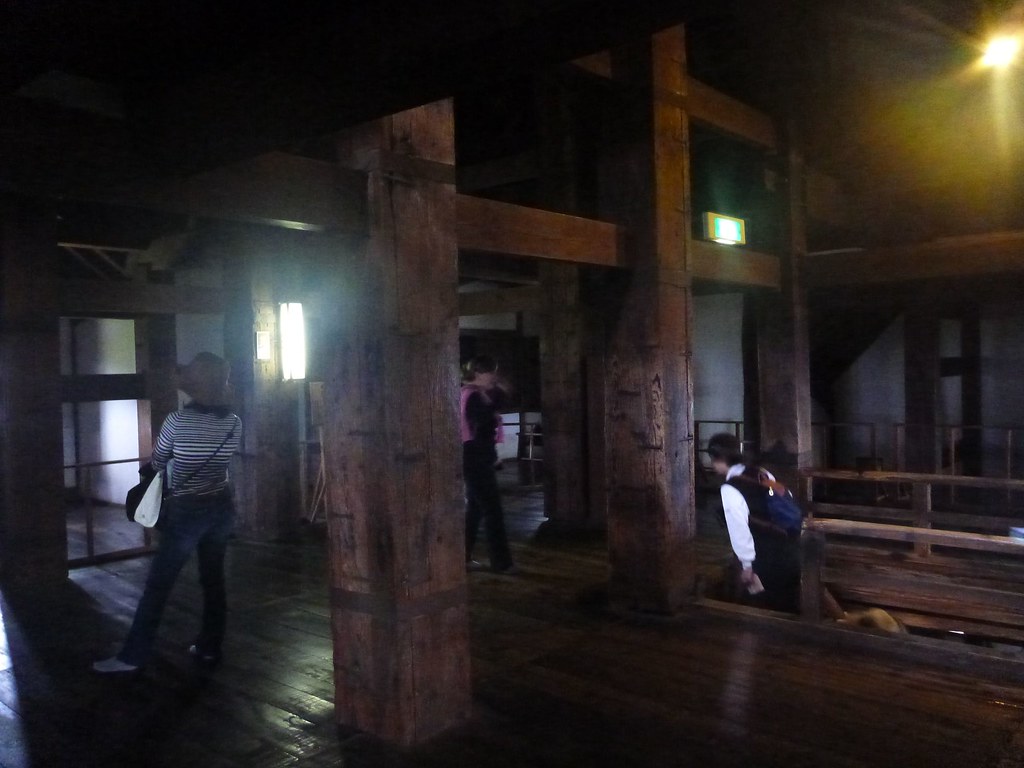
Architecturally, Matsue Castle is classified as a bōrō-gata (watchtower-style) keep: four visible tiers, five internal floors, plus a basement level. Its form highlights a layered defensive approach—thick pillars running across multiple floors, stone-drop openings for attacking invaders, and arrow windows cut into dark timber siding. Inside lies a unique feature: one of the only surviving wells located inside a Japanese castle keep, a vital lifeline in siege scenarios .
Its distinctive black façade comes from horizontal wood paneling on the lower floors, contrasted with white plaster on upper levels. Its largest rooftop ornaments—the shachihoko, mythic fish-shaped figures—are among the tallest surviving examples in Japan, reaching nearly two meters in height .
While Edo-period drawings suggested the keep once displayed more elaborate gables and decorations, restoration analysis in 2016 uncovered structural traces confirming that these features did indeed exist in the original 17th-century design . Over centuries, repairs simplified the keep’s silhouette to the form seen today.
Nearly Lost to Modernization
In the early Meiji era, Japan sought to eliminate symbols of feudal rule. A nationwide castle abolition order in 1873 mandated the sale or demolition of most castle buildings. Matsue Castle’s outbuildings were auctioned for as little as four to five yen—everything except the keep was dismantled. Even the tenshu itself was marked for sale at 180 yen, but was saved at the last moment when two local figures, Katsube Motoemon and Takagi Gonpachi, raised funds to buy it back and return it to public stewardship .
This civic intervention spared Matsue from becoming another vanished fortress—like the vast majority of its contemporaries.
By 1934, the castle became a nationally designated Historic Site; by the 1950s, it underwent major restoration. Finally in 2015, following the discovery of a key prayer plaque confirming its construction date, Matsue Castle earned a coveted position as a National Treasure—the first such elevation of a castle keep in 63 years .
A City Debates Its Skyline
Today, Matsue faces a challenge seen in many historic cities: balancing heritage with urban development. High-rise construction in neighborhoods adjacent to the castle has sparked heated debate, especially the 19-story “Matsue the Tower,” whose height rivals the castle’s iconic tenshu. Local residents, historians, and preservation groups argue that new towers intrude on the cultural landscape and threaten the city’s aspirations for UNESCO World Heritage status. Recent city council deliberations and public petitions reflect growing concern that Matsue’s historic skyline may be overshadowed—literally and symbolically—by modern concrete towers .
The controversy raises an urgent question: how can cities protect visual heritage in the face of private development? Matsue’s answer will shape not only its skyline, but its identity.
A Castle Connected to Its Community
Tourism remains central to Matsue’s relationship with the castle. Visitors can explore the keep’s steep wooden stairways, tour restored guardhouses such as the South, Middle, and Taiko Yagura—painstakingly rebuilt in 2000 and 2001 using Edo-period carpentry diagrams—and glide along the moats on low-roofed excursion boats that duck under ancient bridges .
Each September, the views from the keep stretch across Lake Shinji and the surrounding mountains, a sweeping panorama that once helped daimyo monitor their domain. Today, it offers one of the region’s most peaceful urban vistas.
The castle also remains a centerpiece of local festivals, research projects, and cultural heritage initiatives. Since 2018, the city has hosted the “National Treasure Matsue Castle Marathon,” further cementing its status as a civic symbol .
A National Treasure for the Future
Matsue Castle stands as a testament to resilience—of architecture, community, and memory. Its survival was never guaranteed: it outlasted the extinction of ruling families, escaped Meiji-era demolition, endured structural revisions, and now confronts the pressures of modern urban development.
But in its shadow, Matsue continues to define itself: a city negotiating between preservation and growth, between its feudal past and its uncertain future. The black fortress on Kameda-yama remains a reminder that heritage is not just inherited—it is actively protected.