

Hagley Park, the largest urban open space in Christchurch, New Zealand, stands as a historic and geographical cornerstone of the city. Established by the Provincial Government in 1855, the park's dedication was enshrined in a decree stating it is "reserved forever as a public park, and shall be open for the recreation and enjoyment of the public." This commitment has ensured that Hagley Park—named after the country estate of Lord Lyttelton, a key figure in the Canterbury Association—remains a cherished 164.637-hectare green lung for the "Garden City."
The park's character is defined by its broad open spaces and mature woodlands. Early Canterbury settlers, who initially found the scrubby grassland and shingle "unprepossessing," soon began extensive clearing and planting, leading to the more than 3000 trees that now grace the park, transforming it into the vibrant green heart of Christchurch. The first formally recorded planting was an avenue of Oriental plane trees in North Hagley in 1870.
The Geographic and Structural Layout
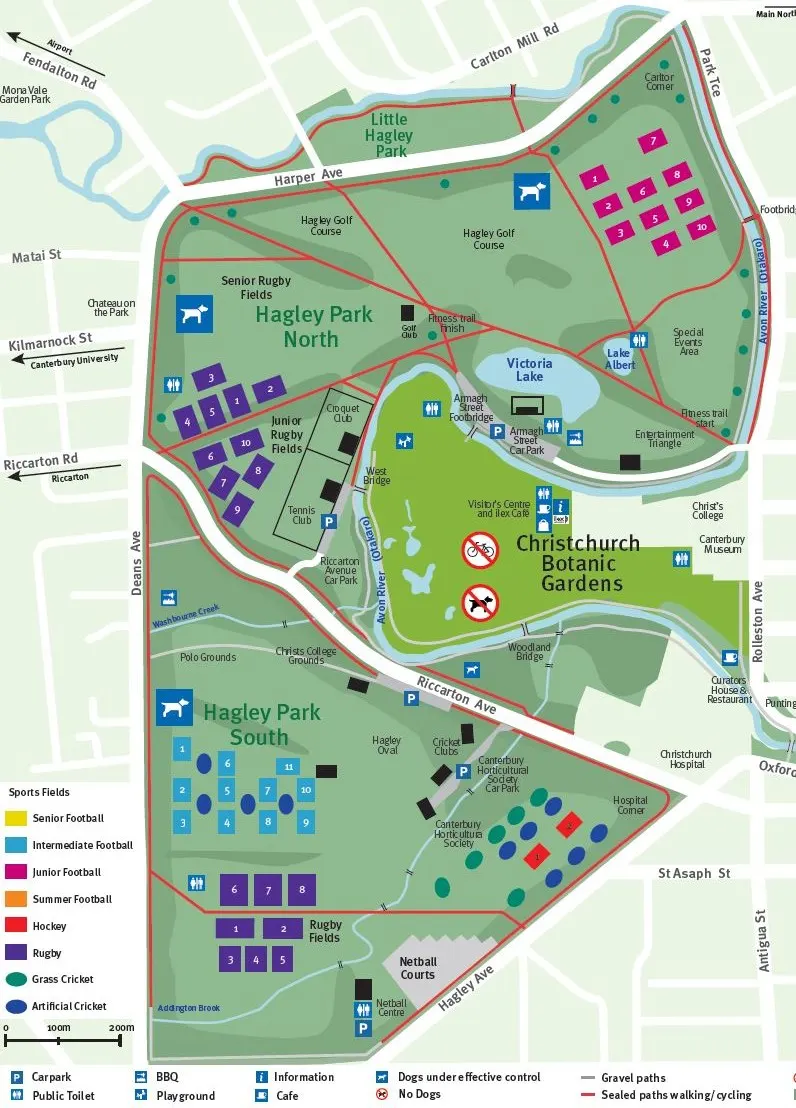
Hagley Park is strategically located to the east of central Christchurch. Its boundaries are naturally defined by the Avon River / Ōtākaro and surrounding roadways. The park's perimeter includes:
- West: Deans Avenue (often considered one of The Four Avenues delimiting central Christchurch) and the suburb of Riccarton.
- North/Northeast: The natural path of the Avon River.
- South/Southeast: Moorhouse Avenue and Hagley Avenue.
- East: The two-kilometre loop of the Avon River, which extends into the park.
Two major avenues, Harper Avenue and Riccarton Avenue, subdivide the park into three distinct units:
- Little Hagley Park: 6.96 hectares, located to the north of Harper Avenue.
- North Hagley Park: 87.17 hectares, situated between Harper Avenue and Riccarton Avenue.
- South Hagley Park: 70.507 hectares, lying to the south of Riccarton Avenue.
Historically, proposals to build additional roads, such as connecting Armagh Street with Riccarton Road in the 1860s, were considered but ultimately set aside, preserving the park's expansive nature.
The Christchurch Botanic Gardens
Nestled within the Avon River loop on the eastern boundary of Hagley Park, the Christchurch Botanic Gardens (21.14 hectares) form a spectacular component of the park system. Frequent bridges connect the gardens to the main park areas.
The Gardens were formally founded in 1863 when an English oak was planted to commemorate the marriage of Prince Albert and Princess Alexandra of Denmark. They showcase a diverse array of exotic and local New Zealand plants, several conservatories, a nursery, and a Climatological Station.
The mission of the Botanic Gardens is focused on:
* Leading in horticulture, display, interpretation, education, and research.
* Emphasizing New Zealand indigenous (native) plant diversity and global plant diversity.
* Protecting heritage and cultural values.
Key features and collections within the Gardens include:
- The New Zealand Garden: Established between 1910 and 1927, offering a rich collection of native species, including mature kahikatea and beech trees.
- New Zealand Icon Garden: A short trail featuring iconic native plants like the legendary silver fern, harakeke, rimu, and kōtukutuku.
- The Armstrong Lawn: Commemorating early curator John Armstrong, featuring formal bedding displays that cycle through the seasons (tulips and poppies in post-winter, petunia, begonia, and salvia in spring/summer).
- The Curator's House (built 1920): Now used for fine dining and education, surrounded by gardens featuring nasturtiums, herbs, and heirloom vegetables.
- The Peacock Fountain: An imported feature first installed in the garden.
- Botanic Gardens Visitor Centre (opened 2014): Includes a café, gift shop, and an interactive exhibition on the history of plants in Canterbury. The attached Ilex nursery propagates 10,000 plant species for display and preservation.
Historical Significance and Public Events
Hagley Park has long been the primary site for large public gatherings and historical events in Christchurch:
- Early Settlement: Following the arrival of the first British settlers in December 1850, many built huts along the Avon River in what is now North Hagley Park, an area known as Settlers Corner. They utilized a natural spring, now memorialized as Pilgrim's Well (commemorating the 80th anniversary of the first ships).
- Major Exhibitions: The park hosted the Great Industrial Exposition of 1882 and the massive New Zealand International Exhibition in 1906–1907. The latter covered over a quarter of the park and attracted more than one million visitors to view industrial wares and recreational attractions like an overhead gondola and a giant boat ramp.
- Lakes Victoria and Albert: Lake Victoria was excavated in 1897 from a naturally occurring swamp to mark Queen Victoria's 60th anniversary. It was a centerpiece of the 1906-07 Exhibition and became a popular spot for model yachts. Albert Lake was excavated in 1916 for soil and named in memory of Victoria's husband.
- Sporting History: The park was used for horse races in its early days. Hagley Park also hosted the Australasian tennis championships (now the Australian Open) in 1906, with Tony Wilding winning the singles event.
- National Memorial: In recent years, Hagley Park was the site of a national memorial service attended by 20,000 people to commemorate the 51 victims of the Christchurch mosque shootings (Al Noor Mosque and Linwood Islamic Centre). Dignitaries included Prime Minister Jacinda Ardern and singer Yusuf Islam (Cat Stevens).
- Modern Events: The park frequently hosts circuses, open-air concerts, the Ellerslie Flower Show (since 2008), and the Electric Avenue Music Festival.
Sports and Recreation Facilities
Hagley Park offers extensive facilities catering to both casual enjoyment and organized competition.
North Hagley Park contains:
* The Hagley Golf Club golf course.
* A fitness circuit bordering the perimeter pathway with 17 exercise stations.
South Hagley Park contains:
* The Hagley Oval cricket ground.
* Several netball courts.
* A heliport for Christchurch Hospital (though relocation to the hospital roof is currently under consideration).
Facilities available across the park include areas for:
* Golf
* Netball
* Pétanque
* Croquet
* Model yachts
* Tennis
The park also features metered, monitored paid car parks in North and South Hagley Park, allowing parking for up to 180 minutes.
Hagley Park and the adjacent Botanic Gardens truly embody the commitment made by the Provincial Government over 160 years ago, serving as a dynamic and enduring space for the recreation, culture, and enjoyment of the public.