A filling station near Luther, Oklahoma, tells a different story from the familiar postcard of Route 66. The Threatt family’s business supplied fuel, but it also offered refuge to Black motorists who could not count on being welcomed elsewhere. Remembering that role changes what it means to celebrate the road’s hundredth year in 2026.
The anniversary invites a journey through businesses and communities as much as scenery. Route 66 connected livelihoods, migration and leisure, while exposing unequal access to the freedom its image promised. Its survival now depends on people maintaining places that a faster transport system once left behind.
A road assembled, then made famous
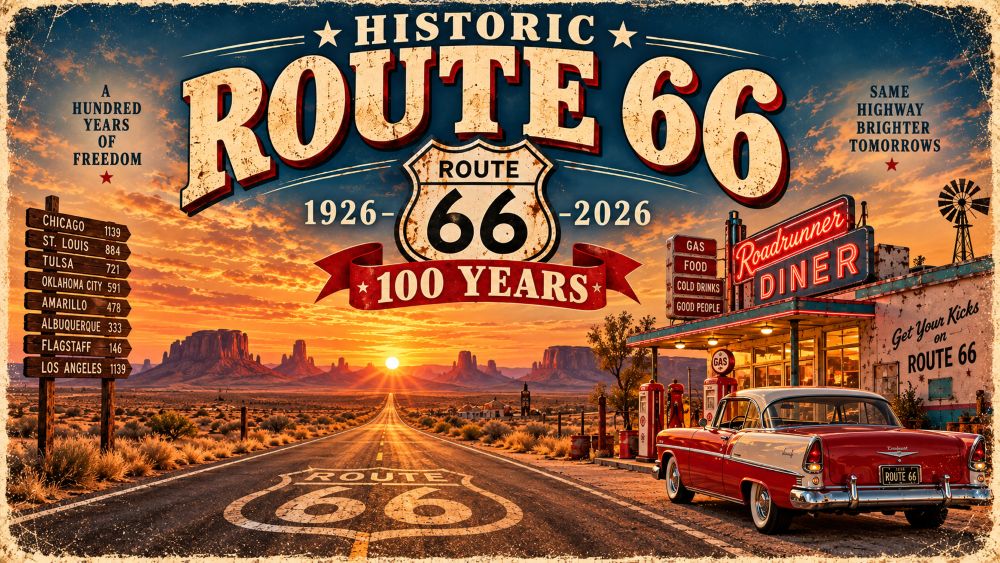
Route 66 entered the numbered federal highway system in 1926. The National Park Service explains that it joined existing roads rather than emerging as an entirely new strip of pavement. Routes and alignments changed over time. Treating it as one perfectly continuous, unchanging road misses the history of how a transport corridor was built and used.
Its connection between Chicago and the Los Angeles area made passing traffic an economic opportunity. Fuel, repairs, beds and meals were things a driver needed repeatedly. For towns along the corridor, motorists represented customers who might otherwise never have stopped. The road’s history can therefore be read through the businesses that grew beside it.
Small enterprises were part of that economy. A family could operate a service station, restaurant or motor court without owning a national network. The journey created demand at many separate points, spreading opportunities along the route. A roadside building was both a place of work and a small claim on the traffic flowing through town.
Migration before the holiday postcard
During the Depression, people moving west in search of work added to that traffic. The National Park Service describes how migration increased opportunities for businesses even amid national hardship. That is a complicated relationship: commercial activity could grow around journeys made because families had few good choices, rather than because they wanted an adventure.
The Second World War changed the route’s uses again. It carried military personnel and supplies, while workers travelled west towards defence industries. Tourist travel declined under wartime restrictions, but other movements sustained demand for accommodation and services. There was never just one kind of Route 66 traveller or one reason to take the road.
After the war, greater car ownership and renewed leisure travel helped establish its holiday image. Families headed towards western attractions and the Pacific coast. Songs and television helped turn a transport route into a cultural symbol. The romance was powerful, but it was only one layer over an older history of work, displacement and necessity.
Who could stop safely?
The promise of mobility was unequal. Segregation meant Black motorists could not assume that an available room, restaurant table or fuel pump would be available to them. Driving a private car did not remove that uncertainty. Planning a journey involved knowing where services could be found without humiliation, rejection or danger.
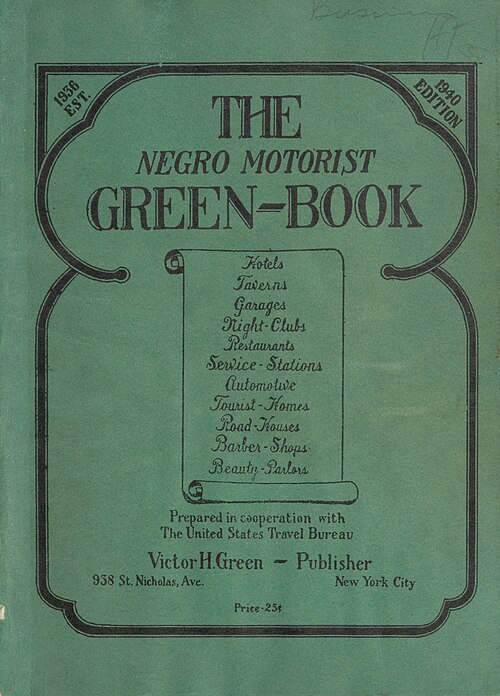
Victor Hugo Green began publishing the Green Book in 1936. Its directories identified businesses that welcomed Black travellers. The New York Public Library preserves editions that make those journeys visible through addresses and practical information. They also preserve a business history: hospitality and safety depended on proprietors whose work deserves a place in the road’s memory.
The Threatt Filling Station illustrates why that history cannot be reduced to a list in a guidebook. According to the National Trust for Historic Preservation, the station was not listed in the Green Book, yet served as a refuge. A documented absence from the directory does not mean the business had no role in Black travel.
In the Trust’s published account, descendant David Threatt recalled how motorists could rest behind the station and continue their journeys after using its services. That is a family testimony reported by the preservation organisation, rather than a new interview for this article. It gives a concrete meaning to hospitality: sometimes the essential service was a safe place to stop.
When the traffic passed elsewhere
The interstate network gradually replaced Route 66’s transport function. The final bypass came in 1984, followed by its removal from the federal highway system in 1985. Those administrative changes mattered locally because a faster journey could also be a journey that no longer passed a town’s businesses.
The National Park Service places that transition alongside the growth of fuel, motel and restaurant chains. Small operators faced changes in both the route customers used and the commercial system serving them. An abandoned sign can look picturesque today, but it also marks a place where an income or a community service may have disappeared.
Preservation campaigns followed. Historic designations, associations and renewed interest in travelling the old alignments gave some places another purpose. That recovery does not make every surviving building a museum, nor does it mean every business survived. It demonstrates that a road’s significance can outlast its original role in the highway network.
What the centenary can protect
In its current Route 66 programme, the National Trust describes grants, work on a database of legacy businesses and mapping projects that draw attention to overlooked places. The organisation also advocates federal recognition as a National Historic Trail. Advocacy is a proposal for protection; it should not be confused with a designation already granted.
Albuquerque offers another way to connect the anniversary with working businesses. Its tourism organisation has created a 2026 directory covering establishments along Central Avenue and nearby, including Fourth Street’s older alignment. The directory presents places to eat, stay, shop and learn, bringing contemporary commerce into the centennial story.
Preservation can also revise what was believed about a place. During restoration work at the Threatt station in 2023, the team found a cornerstone dated March 22, 1933. According to the National Trust, conversations with the family confirmed that this building had replaced an earlier station destroyed by fire. The business was older than the structure that survived.
Such details matter when a road becomes a heritage destination. A preserved building, an address in a Green Book and a family recollection offer different kinds of evidence. Together they can recover a history that a roadside sign alone cannot tell. The centenary projects give that work a practical setting, linking the conservation of places with the businesses and communities around them.
At Luther, that history places a limit on the familiar image of the open road. A car could carry a Black family across states without securing a hotel room for the night. The Threatts supplied something the highway itself could not guarantee: a safe place to stop. A century after Route 66 received its number, that distinction remains part of the road worth preserving.
Sources: National Park Service: Route 66 history, New York Public Library: the Green Book, National Trust: Threatt Filling Station, National Trust: Preserve Route 66, Visit Albuquerque: centennial business directory.
Books and resources
- Explore the history of Route 66 — National Park Service
An English-language institutional account of the road, its businesses and its preservation.
Free resource