
Nahanni National Park Reserve of Canada is one of the most remote and storied protected areas in North America. Tucked into the Mackenzie Mountains of the Northwest Territories and centred on the South Nahanni River, it protects a world of towering canyons, thundering waterfalls and northern forests where human footprints are light and the seasons still set the rhythm of life. Since it became one of the first UNESCO World Heritage Sites in 1978, the park has stood as a symbol of Canada's commitment to large, intact wilderness landscapes.
A UNESCO sanctuary on the South Nahanni River
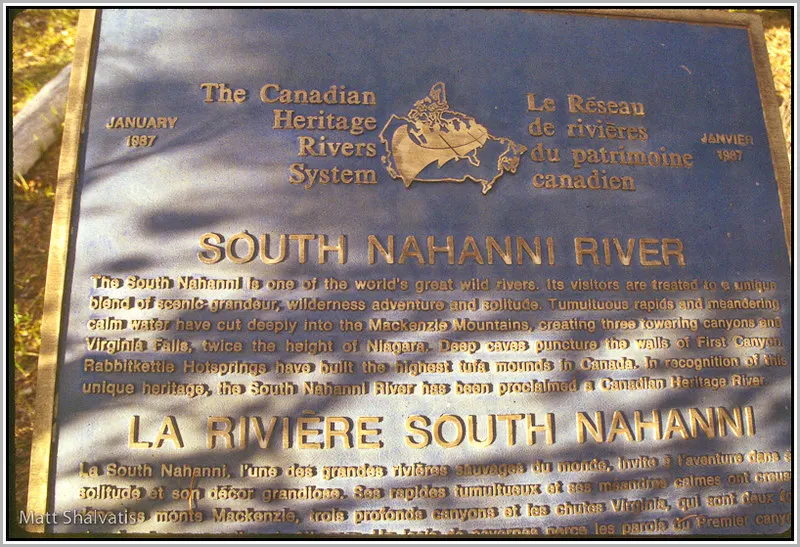
Nahanni National Park Reserve covers roughly thirty thousand square kilometres, an area larger than some small countries. It stretches across rugged ranges and deep valleys along the South Nahanni River, known in the Dene language as Nahą Dehe. Flowing for hundreds of kilometres from its mountain headwaters to its confluence with the Liard River, the Nahanni has carved four great canyons and nourished wetlands, hot springs and forests along the way.
The park's world heritage status recognizes this rare combination of deep river canyons, huge waterfalls, karst formations and alpine tundra that remain largely untouched by roads, mines or dams. At the same time, Nahanni is not an empty space on the map. Archaeological sites and oral histories show that Indigenous peoples have travelled, hunted and fished here for thousands of years. Today the valley remains part of the traditional homeland of the Dehcho First Nations, who co-manage the park with Parks Canada and continue to use the area for cultural and subsistence activities.
Virginia Falls, canyons and hot springs
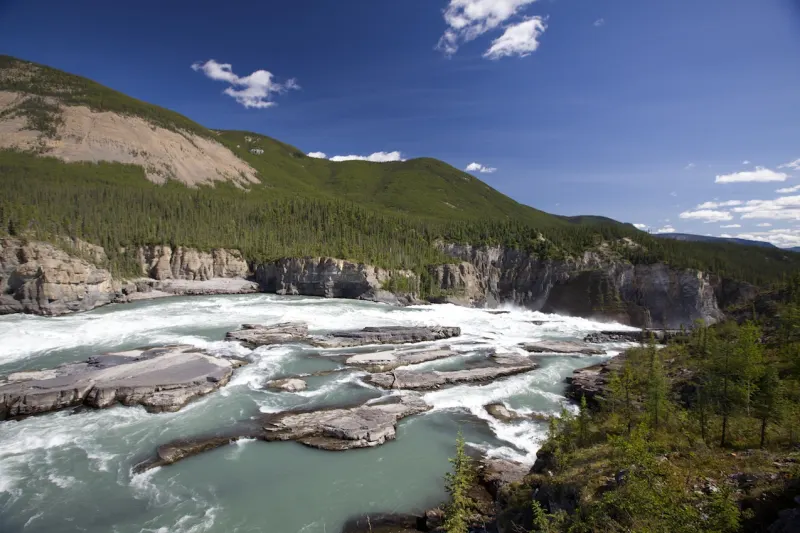
For many visitors the emotional heart of the park is Náįlįcho, better known in English as Virginia Falls. Here the South Nahanni River suddenly plunges almost ninety metres in a roaring, churning curtain of water that is nearly twice as high as Niagara. In the middle of the cataract stands Mason's Rock, a resistant limestone pillar that splits the flow in two and sends spray drifting high above the gorge on sunny days.
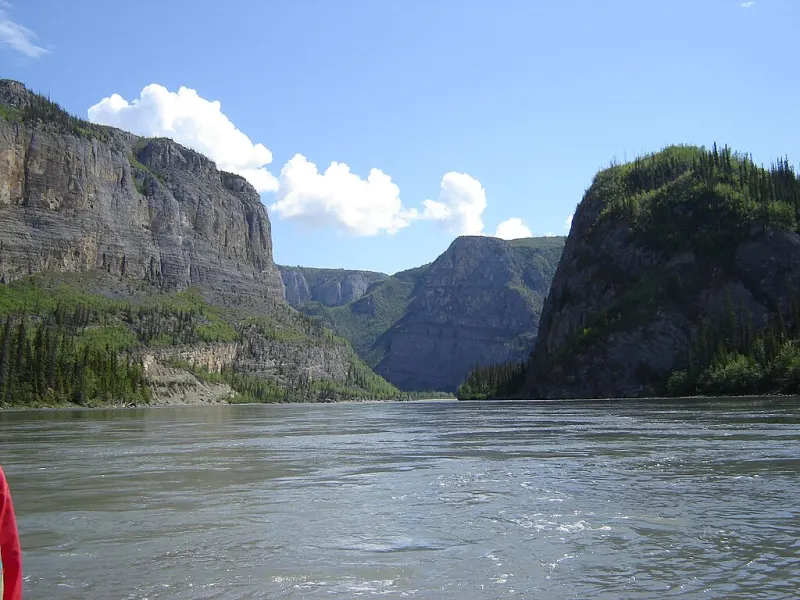
Downstream from Virginia Falls the river enters its legendary canyons, simply called First, Second, Third and Fourth Canyon. In places, their walls rise close to a thousand metres above the river, creating some of the deepest river canyons in the country. Each canyon has its own personality, shaped by bands of limestone, sandstone and shale that the river has cut through over millennia. Tight bends such as the Big Bend show how the river has entrenched itself in the rock while preserving the curves it carved long ago in softer sediments.
Nahanni is also famous for its hot springs and unusual karst landscape. Warm mineral waters seep from slopes along the river, creating small oases of lush vegetation in the middle of the cooler boreal forest. In other areas, sinkholes, caves and disappearing streams reveal how water has dissolved the underlying limestone, leaving behind a maze of hollows and ridges that scientists describe as unique in the subarctic.
Wildlife in a northern wilderness
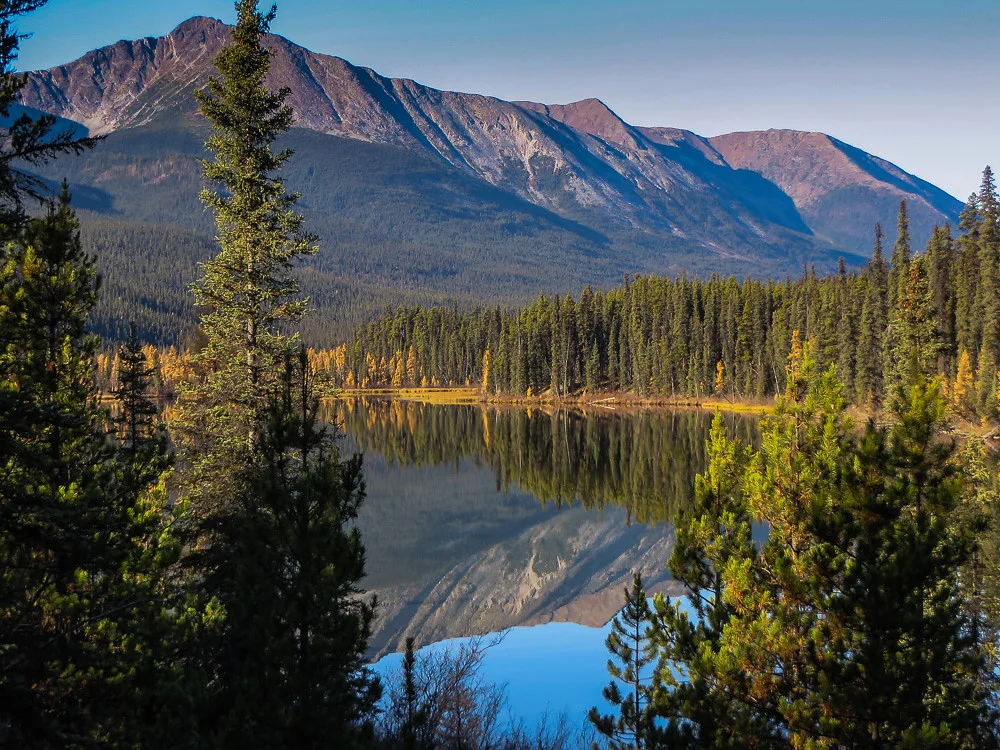
Because the park spans several natural regions, from taiga plains to high, treeless summits, it supports an impressive variety of wildlife. Boreal forests of spruce and aspen give way to shrub-covered slopes, alpine meadows and wetlands that are alive with insects and birds in summer. Black bears and grizzly bears roam throughout the region, while woodland caribou, moose, mountain goats and Dall sheep move between seasonal feeding areas. Wolves travel huge home ranges and are sometimes seen trotting along gravel bars or silhouetted on distant ridges.
The South Nahanni River and its tributaries hold Arctic grayling, northern pike and other fish species that feed people and wildlife alike. Beaver dams shape ponds and backwaters, creating habitat for waterfowl and amphibians. During the brief northern summer, migratory songbirds and raptors arrive from as far away as South America to nest in the park's forests, cliffs and wetlands before returning south with the autumn winds.
Living culture and northern stories
Nahanni is also a cultural landscape rich in stories. For the Dehcho First Nations, the river and mountains are tied to place names, legends and traditional travel routes that explain how features came to be and where to find caribou, fish and safe campsites. Community guardians and guides share this knowledge with visitors, reminding them that this is not untouched land but a homeland that continues to sustain people.
In the early twentieth century, tales from prospectors and travellers turned Nahanni into a place of mystery for people in the south, with rumours of lost gold and unexplained deaths. Those sensational stories still find their way into travel writing, but today the emphasis is shifting toward the real drama of conservation battles, Indigenous leadership and cooperative management that kept dams and industrial projects out of the valley.
How to visit Nahanni National Park Reserve
Nahanni's remoteness is part of its attraction. There are no public roads into the core of the park, so most journeys begin with a small aircraft or floatplane from communities such as Fort Simpson in the Northwest Territories. Scenic flights offer sweeping views of Virginia Falls, the canyons and distant peaks before landing on a high mountain lake or a calm reach of the South Nahanni River.
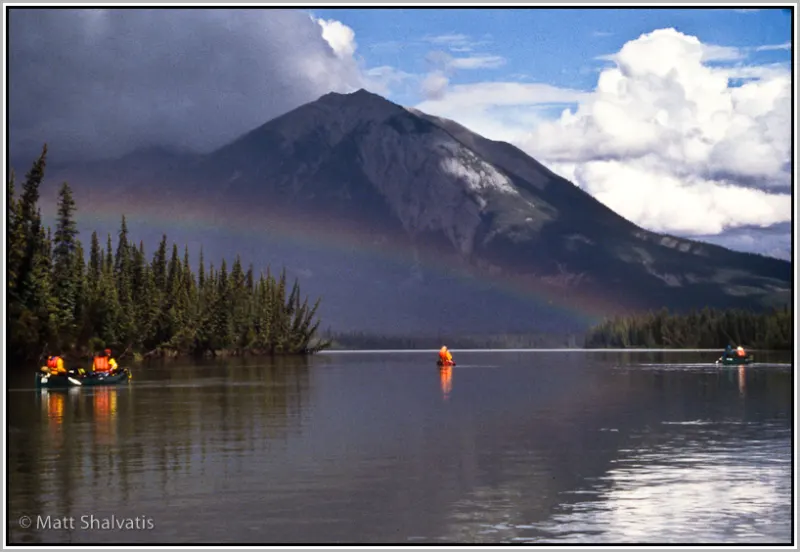
The classic way to experience the park is by multi-day river trip. Commercial outfitters run guided canoe and raft expeditions that can last from a week to more than two weeks, depending on the route and water levels. These trips mix lively whitewater with quieter stretches, side hikes to viewpoints, soaks in hot springs and evenings around campfires under long northern twilight. Experienced paddlers also organize their own journeys, but they are expected to be fully self-reliant in navigation, safety and wilderness camping.
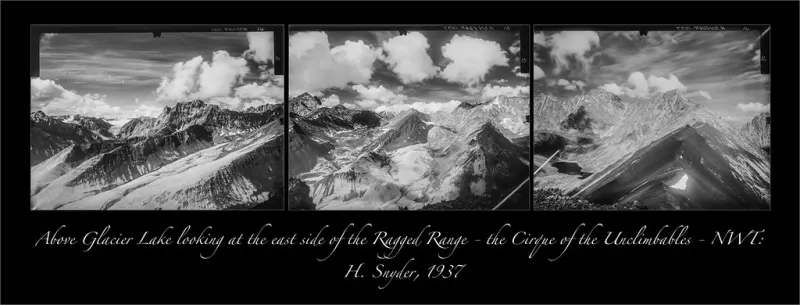
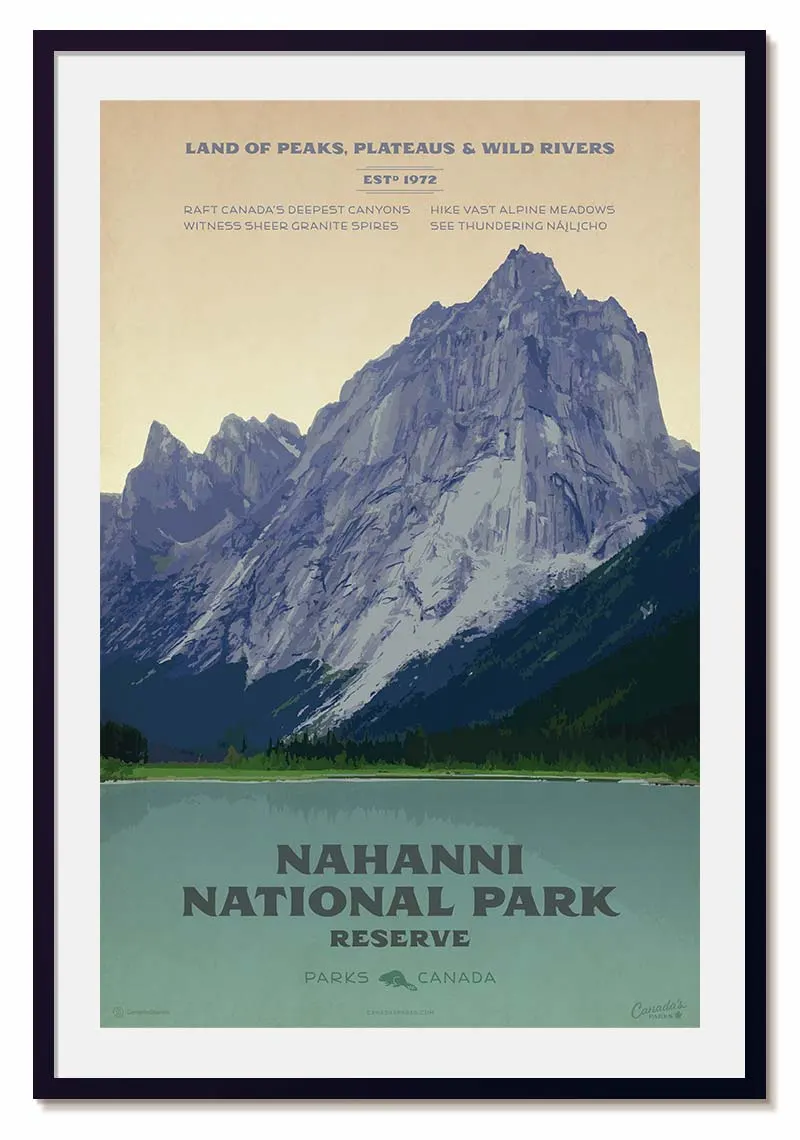
Day hikes near Virginia Falls lead to dramatic lookouts such as the top of Sunblood Mountain, where the river can be seen looping far below through the valley. In other parts of the park, strong, well-prepared climbers are drawn to the sheer granite walls of the Cirque of the Unclimbables, one of the world's classic big-wall climbing areas.
Practical tips for responsible travel
Because conditions in Nahanni can change quickly, advance planning is essential. Overnight trips usually require registration with Parks Canada, and some areas may have quotas or seasonal restrictions to protect wildlife and sensitive vegetation. Visitors are asked to follow strict leave-no-trace principles: pack out all garbage, camp on durable ground, keep a safe distance from animals and avoid loud disturbances.
Those without strong whitewater or backcountry experience are encouraged to join a guided expedition, where trained guides handle safety decisions and share insights into geology, wildlife and Indigenous culture. Respecting local protocols, including any guidance about sacred places or traditional activities, is another key part of travelling responsibly in the Dehcho homeland.
For travellers who are willing to trade highways for rivers and hotels for tents, Nahanni National Park Reserve offers something rare: the chance to feel, just for a while, what a truly wild northern river valley is like when it is allowed to follow its own course.