
Unconquerable Fortress: The Enduring Legacy of San Felipe de Barajas Castle
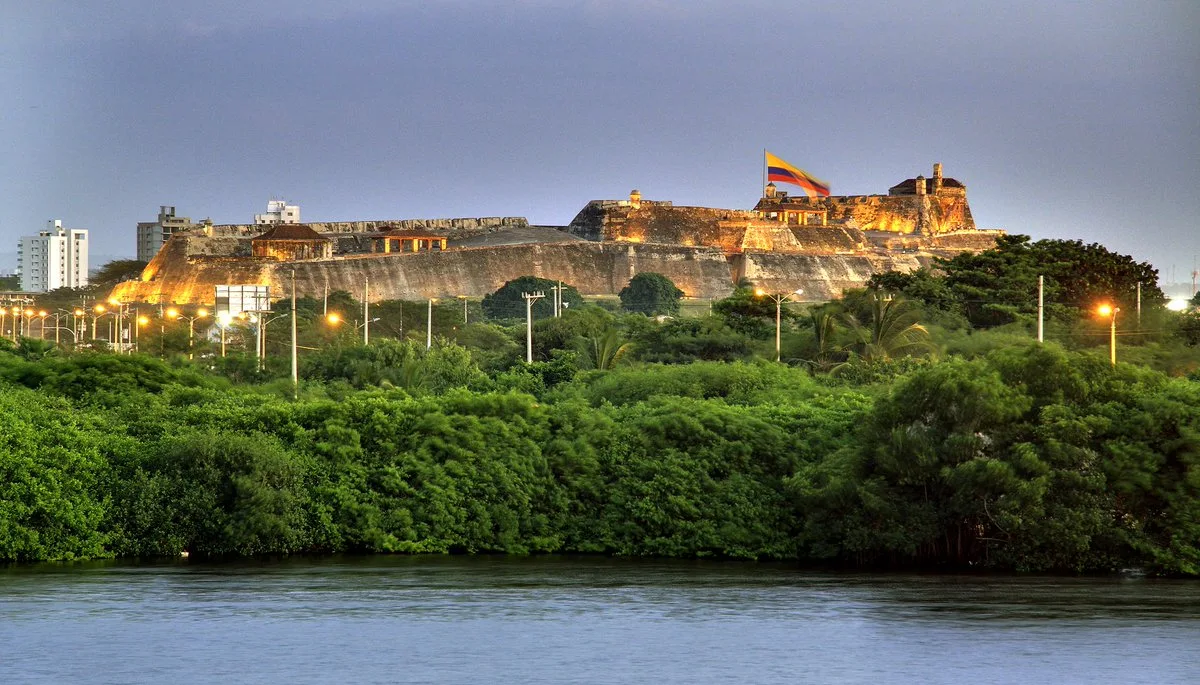
Perched atop the 40-meter-high San Lázaro Hill in Cartagena de Indias, the San Felipe de Barajas Castle stands not merely as a historical monument but as a formidable testament to Spanish military engineering in the Americas. This imposing stone structure, a UNESCO World Heritage Site since 1984, was the key defensive bulwark for the vital Spanish colonial port, a place where history was forged in cannon fire and unyielding resistance. Its strategic location offered an unparalleled vantage point, maximizing reaction time against any encroaching enemy fleet.
The Dawn of Construction: A Military Imperative
The castle's construction began in 1536, though the major fortifications, including the original "bonete" shaped fort, commenced in 1656 under the governorship of Francisco de Murga, who secured the necessary funds. Governor Pedro Zapata de Mendoza oversaw the project and christened the castle in honor of King Philip IV. The initial plans were drafted by engineer Ricardo Carr, employing local materials like cement and rock, often transported and assembled by African slaves.
The initial structure, completed in 1657, was primitive but essential. It housed a small garrison of twenty soldiers and was equipped with eight cannons. However, the true test of the castle's resilience came swiftly. In 1697, the fort suffered significant damage during an attack led by the French commander, Baron de Pointis, who managed to seize the castle temporarily.
The Genius of Antonio de Arévalo and the Geometry of Defense
The fort’s current, massive, and intricate design, which cemented its reputation as virtually impregnable, is largely the work of the Spanish military engineer Antonio de Arévalo. Beginning his extensive remodelings and additions around 1762, Arévalo transformed the structure into a formidable geometric bunker. The castle’s revolutionary design featured a series of broad-based walls that narrowed toward the parapets, creating slopes that were nearly impossible to scale and designed to make enemy cannonballs ricochet harmlessly.
Crucially, the castle's batteries and parapets were not aimed outward toward the plaza but were configured to cover one another. This interlocking system ensured that taking one battery was nearly impossible without overcoming the entire defensive network.
The ingenuity extended to covert systems designed for internal logistics and enemy entrapment:
- Tunnels: An extensive network of underground tunnels allowed for the rapid and unseen displacement of troops, weapons, and supplies throughout the complex.
- Underground Barracks: Subterranean quarters had the capacity to house up to 350 men, provisioned to withstand months of external siege.
- Defensive Traps: The slopes were riddled with cárcavas (pitfalls) and deep moats, acting as ingenious traps for any intruder attempting to scale the walls.
With Arévalo's additions, the castle's original eight cannons were expanded to a maximum of sixty-three, all strategically positioned to command a view over the entire bay, ready to target any suspicious vessel.
The Legend of Blas de Lezo and Vernon’s Defeat
The castle’s most celebrated moment came during the War of Jenkins' Ear in 1741, when it faced its greatest threat. The English Admiral Edward Vernon arrived with an overwhelming force: over 27,000 soldiers, 186 ships, and 2,000 cannons. Vernon was so certain of victory that he pre-minted 35 medals depicting the governor of Cartagena kneeling and surrendering his sword.
The city’s defense was orchestrated by the legendary Spanish Admiral Blas de Lezo, a veteran who had already lost an eye, a leg, and an arm in previous battles, earning him the nickname Mediohombre (Half-man). Despite being vastly outnumbered—Lezo commanded only 3,600 men and six ships—his brilliant, tenacious defense from within the castle and city walls ultimately repelled Vernon’s massive invasion. Humiliated and defeated, Vernon retreated from the site, allegedly exclaiming, “God damn you, Lezo!” The pre-minted medals became an enduring symbol of his premature boast and devastating failure.
Stone, Blood, and Legend
The sheer scale of the castle required enormous blocks of porous limestone, quarried from the nearby coral reefs and transported by enslaved laborers. The binding mortar, calicanto, was a mix of lime and sand, traditionally waterproofed with ox blood. A pervasive, darker legend claims that the blood of enslaved people was also used in the mix. Modern engineers, however, confirm that while blood was indeed used, it was primarily to enhance the waterproofing properties of the cisterns and other subterranean structures.
Visiting the Landmark
Today, the San Felipe de Barajas Castle is not only a historical site but a vibrant cultural landmark. It is officially recognized as one of the Seven Wonders of Colombia following a national survey by El Tiempo newspaper.
Visitor Information:
- Location: Situated on San Lázaro Hill, east of the historic city center.
- Schedule: Monday to Sunday, 7 a.m. to 6 p.m.
- Full Rate: Approximately $9.58 USD ($36,000 Colombian Pesos). The ticket includes a map but does not include guided or audio guide services, which can be hired separately.
The exterior gardens are home to two significant monuments:
- The Statue of Blas de Lezo: A tribute to the admiral who heroically defended the city in 1741.
- Los Zapatos Viejos (The Old Shoes): A large bronze sculpture erected in 1943 in honor of the Colombian poet Luis Carlos López, inspired by the final verse of his poem A mi ciudad nativa: "Más hoy, plena de rancio desaliño,/bien puedes inspirar ese cariño/que uno les tiene a sus zapatos viejos" (But today, full of ancient untidiness,/you can indeed inspire that affection/that one has for one's old shoes).
A visit to the castle allows one to wander through its unusual inclines, ramps, tunnels, and strategic artillery posts, offering a tangible connection to the heroic, complex, and sometimes dark history of Cartagena de Indias.
The San Felipe de Barajas Castle remains a powerful symbol of defense, a fortress built against the tide of history that ultimately secured the fate of one of the most important colonial cities in the New World.