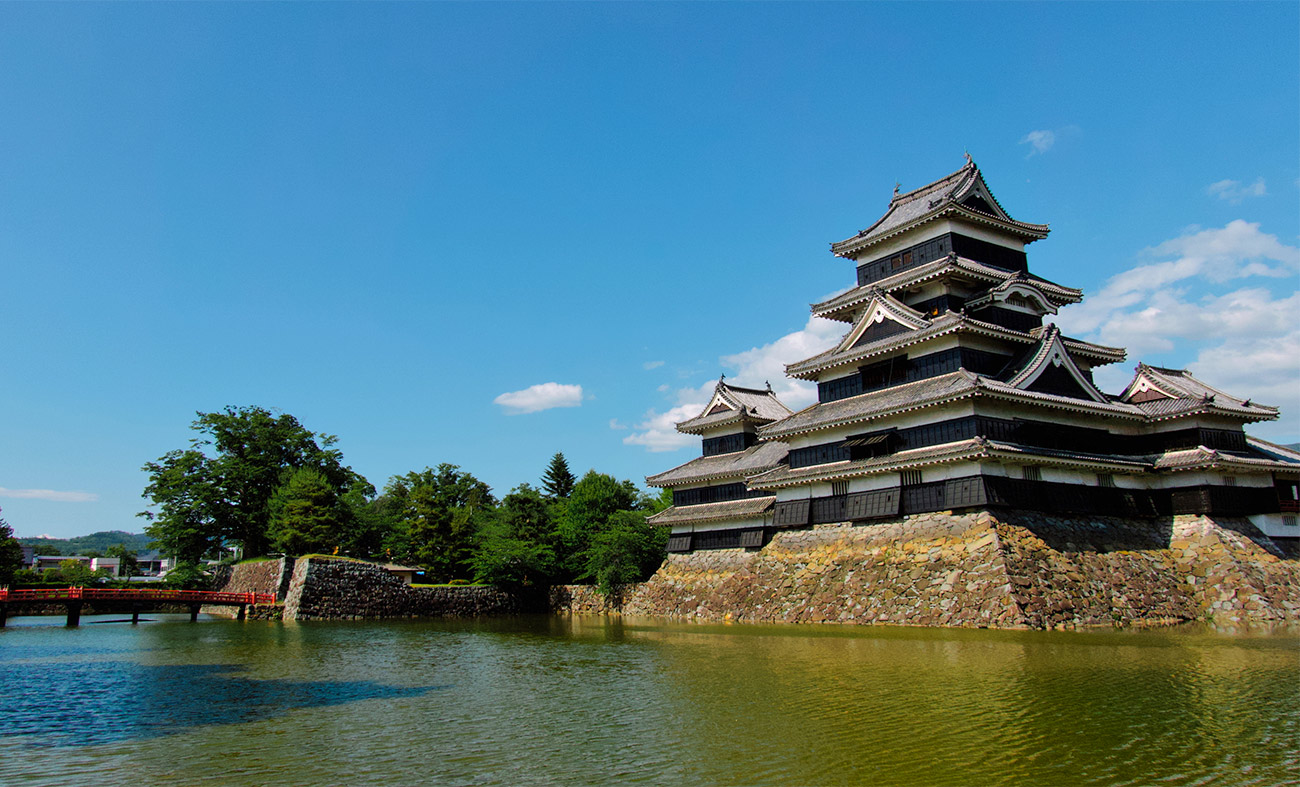
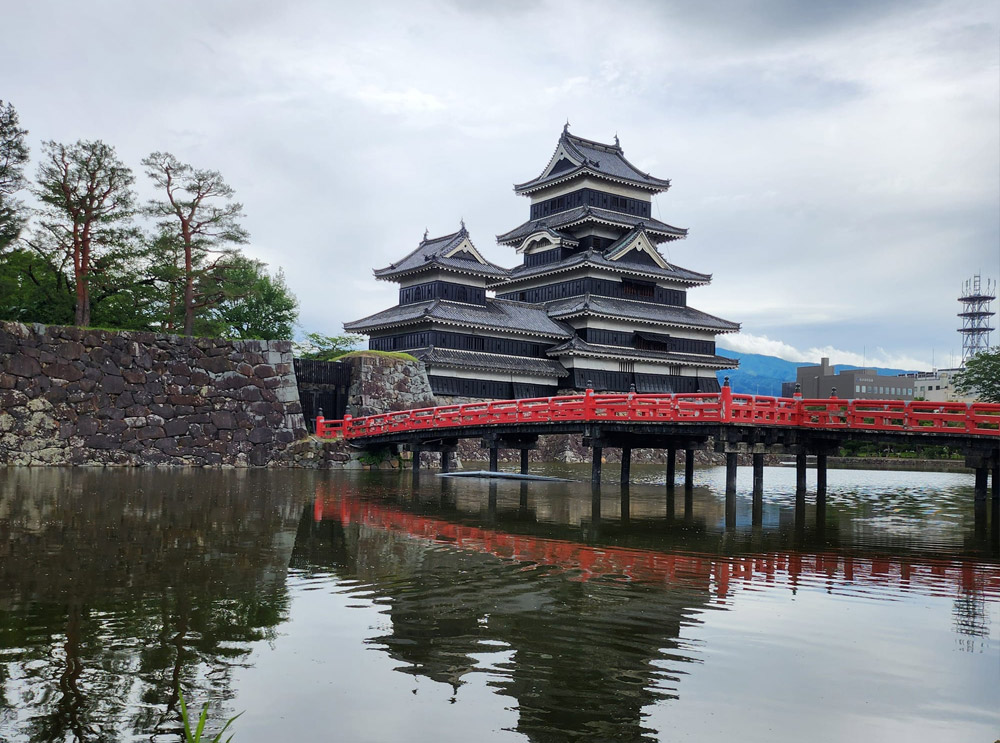
In the sharp, thin air of the Japanese Alps, where the peaks of the Hida Mountains remain dusted with snow well into spring, a structure of imposing darkness commands the valley. It is a silhouette that has defined the landscape of Nagano Prefecture for over four centuries: Matsumoto Castle. Known affectionately and ominously as Karasu-jo, or the "Crow Castle", its black-lacquered wainscoting stands in stark, deliberate contrast to the white-plastered elegance of Himeji Castle to the west.
While Himeji is often compared to a startled heron taking flight, Matsumoto is a brooding sentinel. It is one of Japan's twelve remaining original castle keeps—structures that have survived fires, earthquakes, wars, and the modernization of the Meiji era without being rebuilt in concrete. Among these twelve, it holds the prestigious title of a National Treasure, a designation reserved for the most significant cultural assets in the nation. Yet, the true story of this fortress is not merely one of samurai warlords and feudal strategy; it is a narrative of architectural deception, shifting political tides, and a local citizenry that refused to let their history be sold for scrap.
A Masterpiece of Deception and Defense
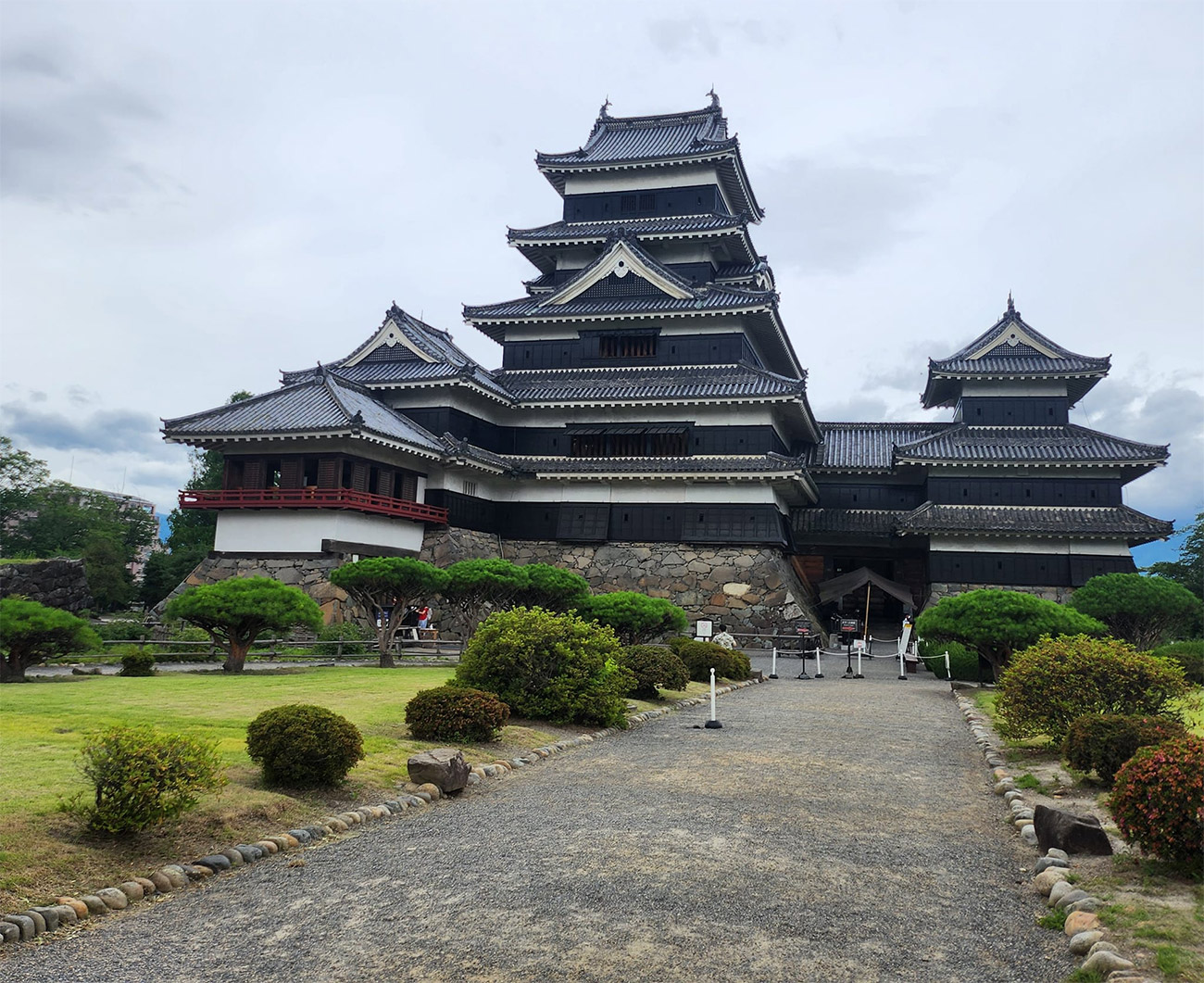
To the casual observer standing on the edge of the wide, stillness of the moat, Matsumoto Castle appears to be a five-story structure. The rooflines suggest a logical progression from the broad base to the smaller watchtower at the summit. This, however, is a calculated illusion of feudal military architecture.
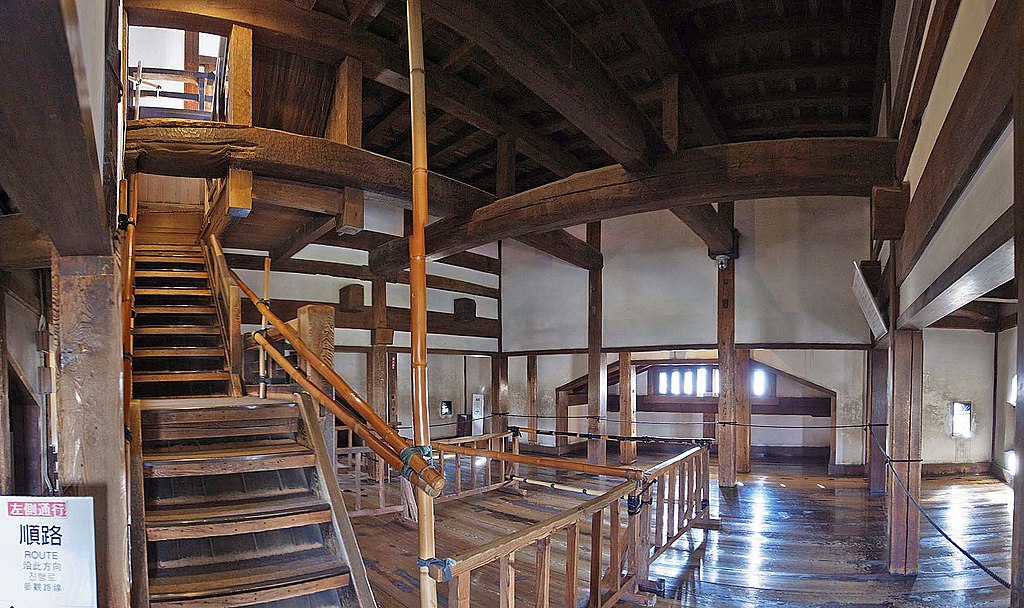
Stepping inside the keep reveals the truth: the castle actually possesses six floors. Tucked between the visible second and third stories is a hidden level, windowless and secure from the outside world. In the heat of the Sengoku period—the Warring States era—this concealed space served a vital tactical purpose. Known as the "dark floor," it was safe from enemy fire and provided storage for gunpowder and provisions, while simultaneously confusing attackers about the true capacity of the garrison within.
The interior of the castle remains unapologetically authentic. There are no elevators or modern comforts here. Visitors must navigate a series of steep, polished wooden staircases, some inclining at severe angles of up to 61 degrees. These were designed not for ease of movement, but to hinder armored invaders trying to storm the upper levels. The walls are lined with sama, small openings for archers and musketeers to fire upon enemies crossing the moat, a reminder that before it was a cultural icon, this was a machine of war.
The castle's distinctive black color, which gives it its avian nickname, serves a practical function. The lower walls are clad in black lacquered weatherboarding. While today this is achieved with durable lacquer, historical analysis suggests that in the early days, a墨 (sumi) ink mixture was used. This dark cladding protected the plaster from the harsh alpine winters and rain, ensuring the longevity that has allowed the structure to stand for centuries.
A Timeline Rewritten by Science
For decades, historians and archaeologists debated the precise origins of the current keep. Theories regarding its construction date ranged widely, from 1591 to as late as 1615. However, a breakthrough study conducted in 2025 has finally settled the dust on this academic dispute.
Using advanced dendrochronology—the science of dating events by analyzing tree rings—researchers examined the massive timber pillars that support the Great Keep. The analysis pinpointed the felling of the trees to the year 1596. This revelation confirmed that the construction of the main keep and the smaller Inui Kotenshu tower took place around 1596 to 1597.
This places the castle’s genesis squarely in the era of the Ishikawa clan. Ishikawa Kazumasa and his son Yasunaga, former retainers of the great unifier Tokugawa Ieyasu who defected to Toyotomi Hideyoshi, were the masterminds behind this formidable expansion. They built the keep not just as a residence, but as a military statement—a check against the powerful Tokugawa influence in the neighboring Kanto region. The complex arrangement of the towers, connected by roofed corridors, represents the peak of defensive technology at the close of the 16th century.
The Union of War and Peace
What makes Matsumoto Castle truly unique among its peers is a peculiar architectural appendage that speaks to the changing nature of Japanese society in the early 17th century. Attached to the main, heavily fortified tower is a structure that seems entirely out of place: the Tsukimi Yagura, or Moon Viewing Turret.
Constructed in 1633 by the castle lord Matsudaira Naomasa, this wing was added in anticipation of a visit by the Third Shogun, Tokugawa Iemitsu. The turret features vermilion-lacquered railings and open sides, designed solely for the leisure of viewing the moon and enjoying the cool evening breeze. It is indefensible, a vulnerability that would have been unthinkable a few decades prior.
Although the Shogun’s visit was eventually cancelled, the turret remained. Its existence creates a rare visual timeline: the main keep represents the grim necessity of the Warring States period, while the Moon Viewing Turret embodies the dawn of the Edo period, a time of bureaucracy, peace, and cultural refinement. Matsumoto is the only castle in Japan where a dedicated pavilion for leisure is directly integrated into the main defensive keep.
The Citizens Who Saved History
While the samurai built Matsumoto Castle, it was the common people of the city who ensured its survival. Following the Meiji Restoration of 1868, Japan rushed to modernize, often viewing its feudal heritage as an embarrassment or an obstacle to progress. In 1872, the new government auctioned off the castle. The magnificent keep was sold for a pittance, destined to be demolished for its timber and iron fittings.
The impending destruction sparked a grassroots movement led by a local influential figure, Ichikawa Ryozo. Understanding the cultural loss this would represent, Ichikawa rallied the community. He organized a series of expositions within the castle grounds to raise funds, successfully buying back the tower and saving it from the wrecking ball. It was a rare triumph of civic pride over government policy.
However, the castle faced another existential threat in the early 20th century. Due to the soft, swampy ground on which it was built and the rotting of support posts, the great keep began to tilt dangerously. Local folklore attributed this lean to the "Curse of Tada Kasuke," a peasant leader executed in 1686 for leading a tax revolt. Legend held that Kasuke glared at the castle in his final moments, cursing the structure.
While the legend added a supernatural allure, the reality was a structural crisis. Once again, the citizens stepped in. Kobayashi Unari, a local school principal, established a preservation society. Between 1903 and 1913, in what is known as the "Meiji Restoration" of the castle, significant funds were raised to correct the tilt and reinforce the foundation, securing the castle's silhouette against the skyline for another century.
A Modern Legacy
Today, Matsumoto Castle is the beating heart of the city’s cultural identity. It is no longer a fortress of exclusion but a gathering place. The grounds play host to events that bridge the past and present, from gunnery demonstrations by the Matsumoto Castle Gun Corps to the "Yozakura" festivals, where the cherry blossoms are illuminated against the black walls of the keep.
The city continues to invest in the castle's integrity. Recent years have seen ambitious urban planning projects aimed at restoring the outer moats, known as the Sou-bori. These historic waterways were filled in during the modern era to create residential land, but the city has been acquiring properties and conducting excavations to recreate the castle's original island-like defensive posture.
There is also a concerted effort to have Matsumoto Castle inscribed as a UNESCO World Heritage site. While it already stands as a National Treasure, the city aims to join Himeji Castle on the global list, arguing that the "Crow Castle" offers a unique and complementary narrative to Himeji's "White Heron."
As the sun sets over the Japanese Alps, casting long shadows across the valley, the black walls of Matsumoto Castle seem to absorb the fading light. It stands as a monument to the duality of Japan’s history—a place where the brutality of war meets the elegance of peace, and where the ambition of warlords was ultimately preserved by the dedication of the people.