Chavín de Huántar: Where Mountains, Rivers, and Ancient Deities Converge
Chavín de Huántar, nestled high in the Andean highlands of Peru, stands as a monument to one of the earliest and most influential pre-Inca cultures. Far from being the literal "mother culture" once theorized, modern archaeological understanding points to this site as a powerful crucible where diverse cultural expressions achieved their full, forceful zenith. The profound visual and religious legacy of Chavín traveled extensively, persisting in motifs and stylistic elements that influenced the southern highlands and the coast long after the site’s own decline around 200 B.C.E.
A Sacred Nexus: Geography and Spiritual Power
The strategic location of Chavín de Huántar was integral to its spiritual and political importance, transforming it into a vital pilgrimage site. Situated at a staggering 10,330 feet (3150 meters) in elevation, the site is framed dramatically between the snowless Cordillera Negra to the east and the snow-capped Cordillera Blanca to the west. This position is significant, as it lies near critical mountain passes connecting the desert coast to the Amazon jungle—a crucial ancient corridor for the circulation of goods, ideas, and people.
Furthermore, the temple complex sits precisely at the confluence of the Huachesca and Mosna Rivers. This natural phenomenon, where two forces join into one, likely held a profound spiritual significance for the ancient Chavín people.
The Architecture of Awe: The Temple Complex
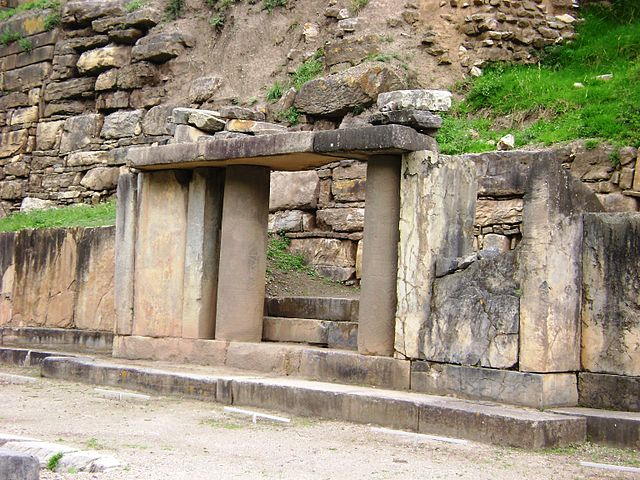
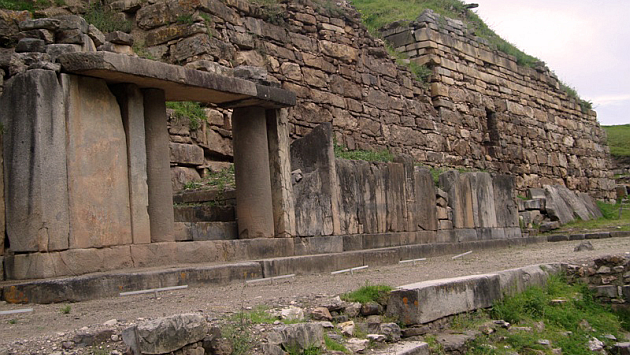
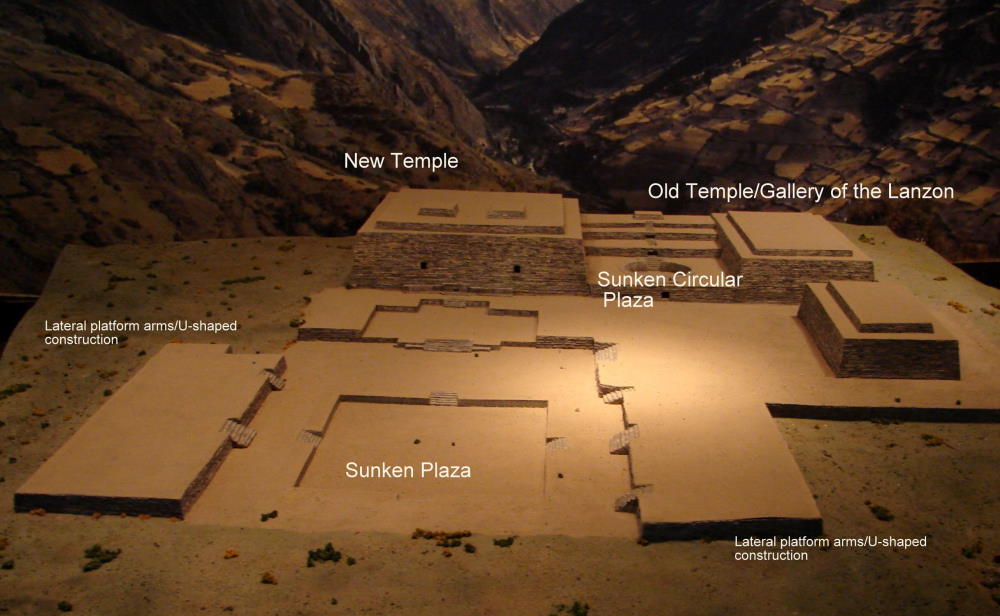
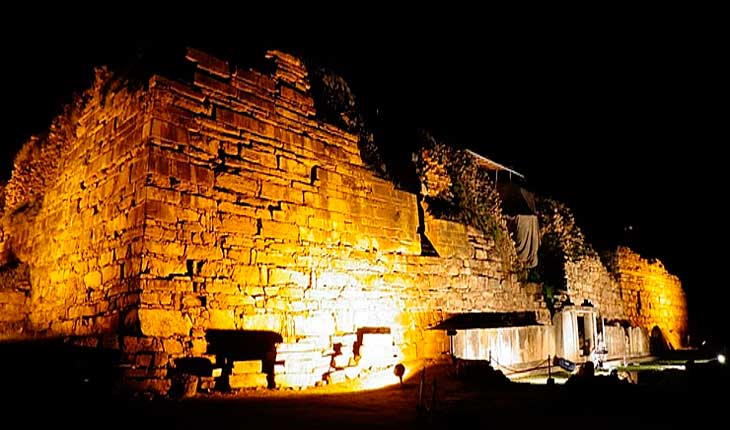
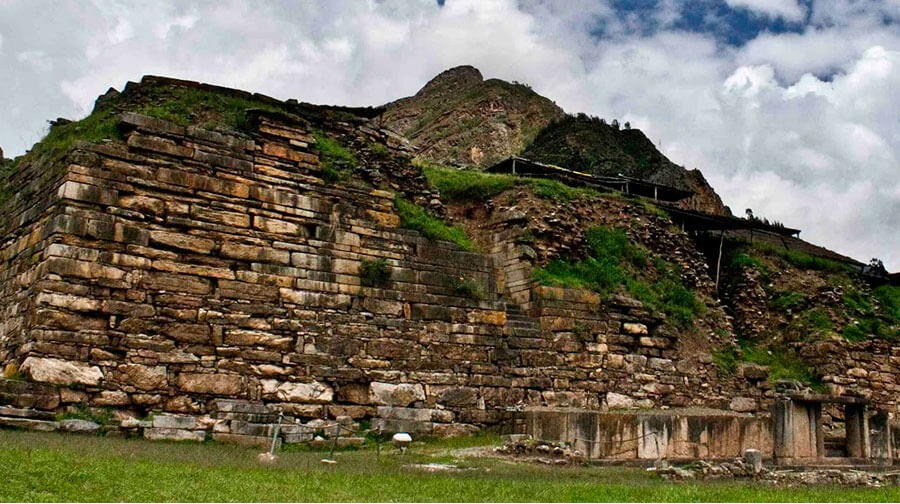
The temple complex itself is a testament to the Chavín’s engineering and architectural prowess. Over a period of some 700 years, the site expanded, drawing worshipers who carried its artistic style—transported on ceramics, textiles, and other portable objects—throughout highland and coastal Peru.
The complex is defined by two major construction phases:
- The Old Temple (c. 900 B.C.E.): An initial U-shaped structure.
- The New Temple (c. 500 B.C.E.): An expansion that enveloped the Old Temple and incorporated a rectangular sunken court.
While the majority of the construction utilized roughly-shaped stones for walls and floors, finer, smoothed stone was reserved for the complex carved elements.
The Labyrinthine Galleries: A Voice in the Darkness
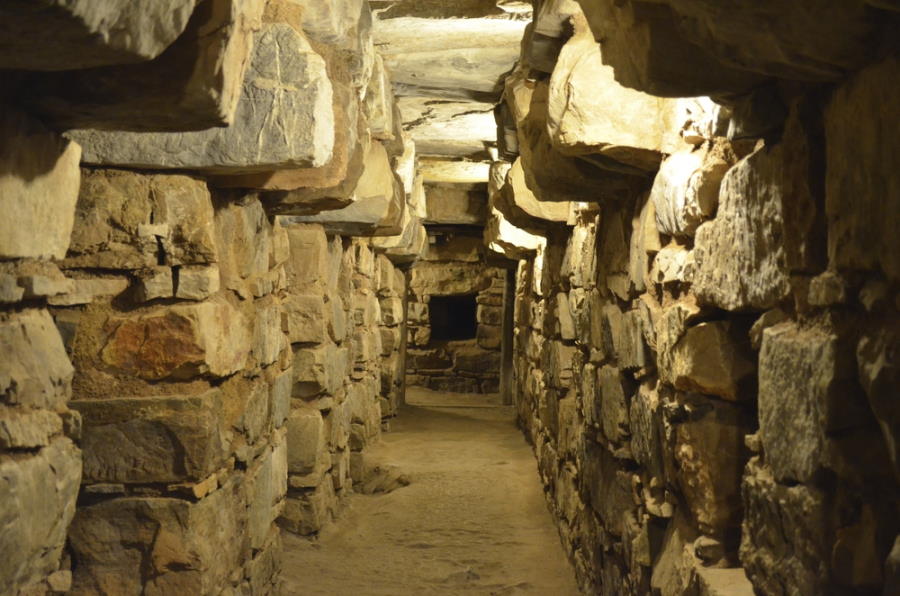
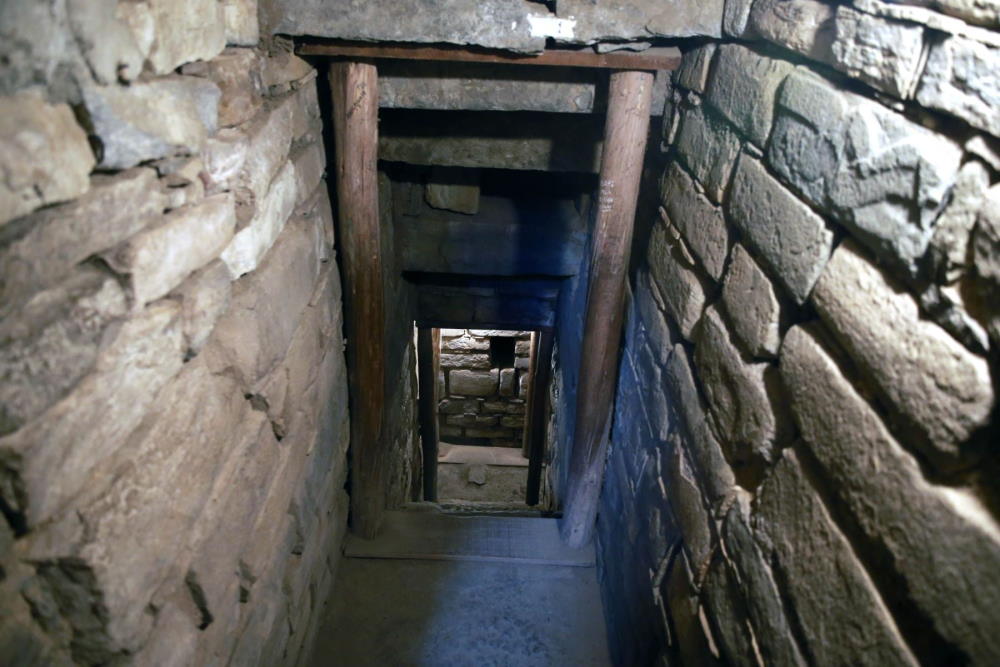
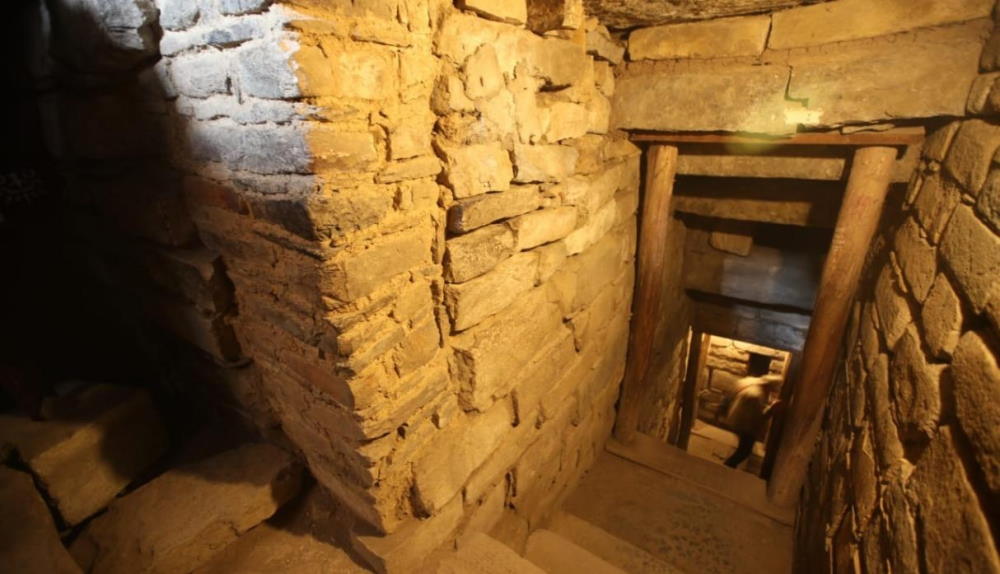
Perhaps the most enigmatic feature of the temple is its extensive, maze-like network of interior tunnels, known as galleries. From its earliest construction, the temple was riddled with these passageways, existing in perpetual darkness—they possess no windows, relying on smaller vents for air circulation.
Recent explorations have focused on the acoustics of these structures. It is hypothesized that the galleries, acting as sophisticated sound chambers, could have projected amplified, roaring sounds from the temple’s interior to the pilgrims gathered in the plazas outside. The chilling possibility is that the entire building "spoke" with the voice of its god, enhancing the profound, transformative nature of the pilgrimage.
The Deity Within: The Lanzón Monolith
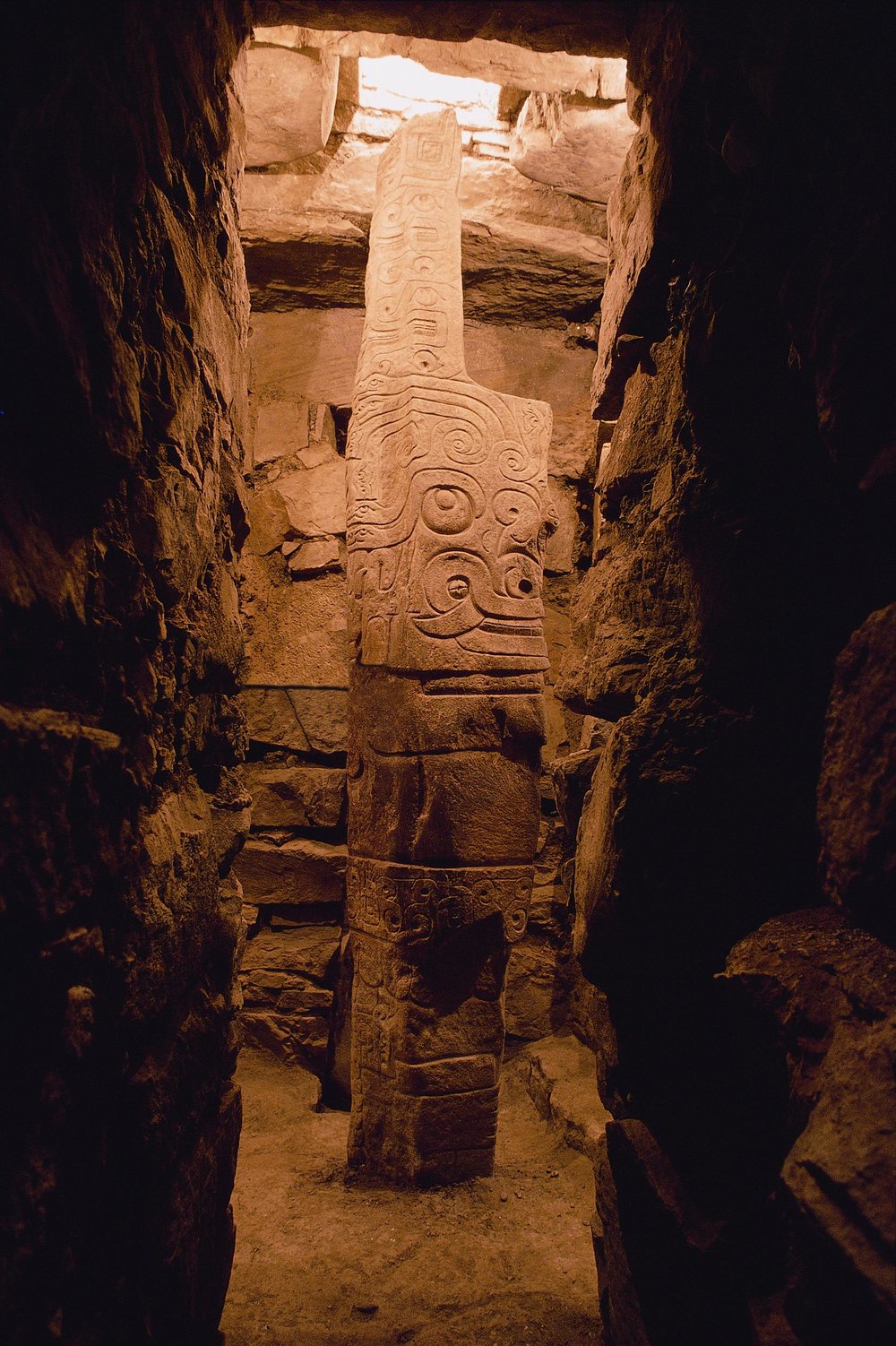
Deep within the interconnected galleries of the Old Temple, intersecting several tunnels, stands the Lanzón. This formidable, notched wedge-shaped stone, over 15 feet tall, represents the primary god for whom the temple was built.
While its Spanish name, Lanzón ("great spear"), refers to its shape, a more culturally relevant comparison is the shape of the traditional digging stick used in highland agriculture. This association suggests the deity’s power was intrinsically linked to ensuring successful planting and harvest, a fundamental concern for the community.
The figure carved on the Lanzón is a fearsome and intricate supernatural being:
- Eyes and Mouth: Large, round eyes gaze upward, complemented by a large mouth with bared teeth and protruding fangs.
- Gestures: The figure’s right hand is raised upward, and the left rests pointing down—a pose that encompasses the heavens and the earth. Both hands end in long, talon-like fingernails.
- Ritual Channel: A carved channel runs from the top to the figure’s forehead, believed to have been a conduit for liquid offerings poured from one of the intersecting galleries above.
A Mixture of Beasts and Man: Contour Rivalry
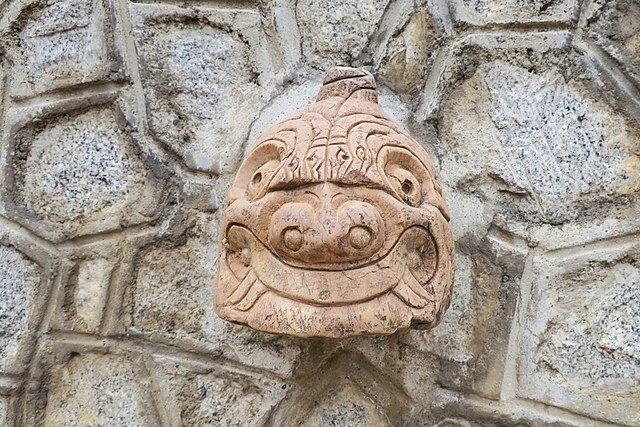
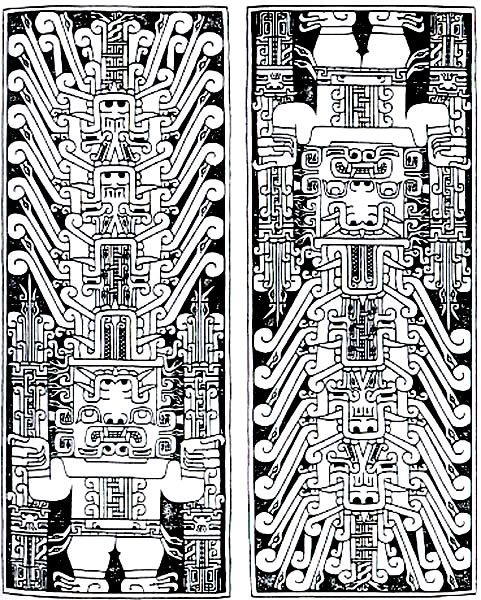
The Lanzón deity is characterized by a deliberate mixture of human and animal features. The fangs and talons strongly link the god to the jaguar and the caiman, apex predators from the jungle lowlands, signifying immense power. Even the figure’s hair and eyebrows are rendered as snakes, merging bodily features and animals.
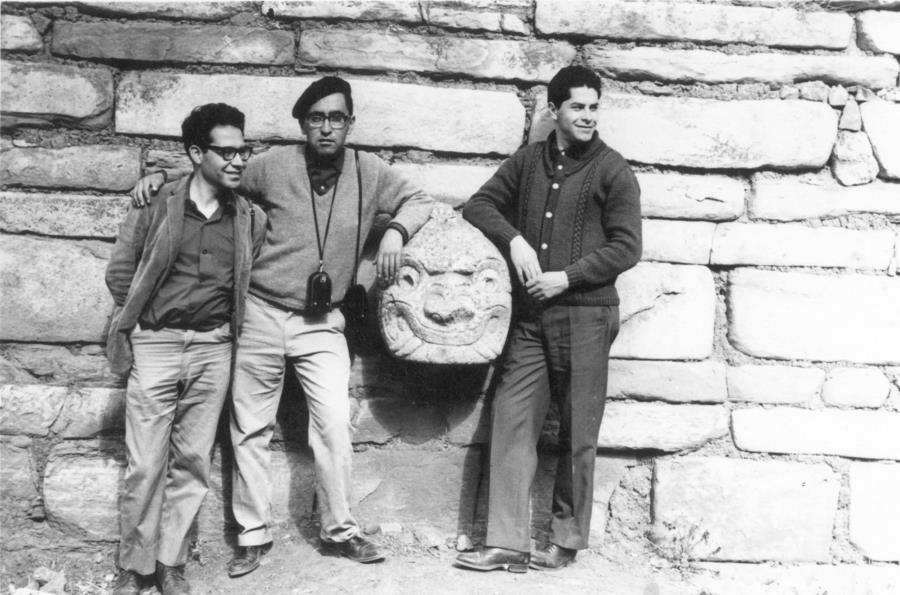
This complex, visually confusing style is known as contour rivalry, a technique where two images share parts or outlines (such as two animal heads sharing a single fanged mouth on the tunic). This artistic choice was no accident; it was a deliberate barrier that separated the initiated—those who could discern the deity’s true form—from those outside the cult. While the Lanzón itself was hidden, its iconography and the technique of contour rivalry were widely used on the exterior of the temple and on portable art found across Peru.
The Ritual Transformation: Hallucinogenic Drugs and Power
In 2017, a remarkable discovery by archaeologist John Rick provided concrete evidence of the transformative rituals suspected at Chavín. Excavating an underground chamber, his team found nearly two dozen cigarette-sized bone tubes, later confirmed through chemical analysis to have been ancient drug paraphernalia.
The analysis revealed residues of tobacco and the hallucinogenic plant vilca (or Anadenanthera colubrina), confirming that ancient people used the tubes to inhale snuffs. These findings, published in the Proceedings of the National Academy of Sciences, provided the first direct evidence of psychoactive drug use at Chavín, a practice long suspected due to the site’s "trippy art," which depicts vilca pods and human heads with liquid (likely mucus from snuffing) pouring from their noses.
A Ritual of Power and Consolidation
The hallucinogenic rituals, which ethnographic accounts suggest could induce flowing, black-and-white hallucinations, are thought to have been integral to Chavín’s burgeoning social and political hierarchy. The bone tubes were found in a sealed chamber next to a major plaza, suggesting an area reserved for elite ceremonies.
Experts hypothesize that Chavín’s leaders carefully controlled access and guided the interpretation of the hallucinogenic experiences. This was not a solitary vision quest, but an organized, collective ritual, "something more analogous to wine at communion." The induced visions, often requiring training and knowledge to interpret, cemented the authority of the Chavín elite, consolidating their power and influence.
The rituals likely served as powerful initiation rites for a nascent rulership class emerging across the Andes. By inducting these chosen few into a higher religious status, Chavín ensured their prestige back home, guaranteeing a steady flow of tribute and pilgrims. The addition of hallucinogenic drugs would have made "the entire experience even more potent, even more real, even more transformative—and therefore could have helped to sustain this system."
Chavín de Huántar was designated a UNESCO World Heritage Site in 1985 for its striking complex of terraces, squares, dressed stone structures, and predominantly zoomorphic ornamentation, recognizing its profound importance as one of the most celebrated and ancient pre-Columbian sites. Its legacy continues to illuminate the earliest chapters of civilization in the Andean world.