

On June 9, 2026, Life Biosciences announced that the first participant in its clinical trial had received ER-100. A strategy investigated for changing the state of ageing cells was moving into human research. That development also raised a much larger question: when might humanity regain biological youth?
Available evidence does not establish a date. There are promising experiments and an early trial addressing specific diseases. Turning those developments into a timetable for broad human rejuvenation would require demonstrating effects that the studies have not yet demonstrated. The move from laboratory work to a potentially useful intervention deserves attention precisely because its outcomes remain open.
First, define what would be reversed
The review of ageing mechanisms published in Cell in 2023 describes twelve interconnected processes. They include DNA damage, epigenetic alterations, problems with protein maintenance, mitochondrial dysfunction and chronic inflammation. That range helps explain why changing a single indicator cannot, by itself, establish that an entire organism has been repaired.
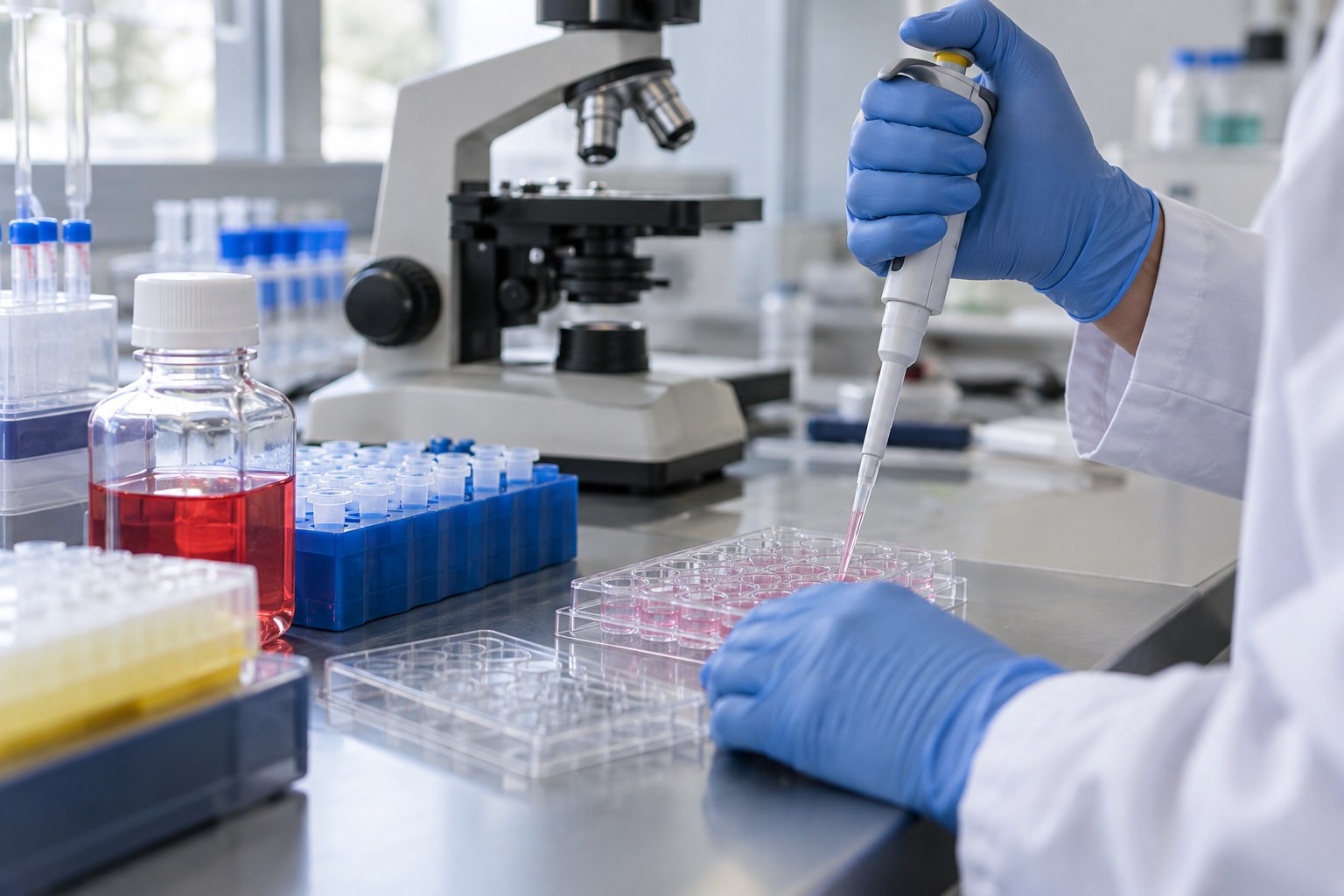
The question also combines different objectives. Slowing a process means reducing its pace. Restoring a function means helping a tissue perform its work better. Extending lifespan requires observing how long people live. Broad reversal of ageing would need consistent evidence of recovery and safety across the organism. Applying the same word to all these outcomes can make an experimental conclusion appear larger than the evidence supports.
Epigenetic clocks offer another perspective. The US National Institute on Aging explains that these tools examine chemical marks associated with gene activity to estimate biological age. Calendar age counts years; the instruments describe cellular patterns. Their readings are research measurements that need interpretation alongside what happens to tissues and health.
What research has already achieved
In 2020, a team led by David Sinclair published a Nature study on reprogramming retinal cells in mice. Using three factors known as OSK, researchers obtained axon regeneration and recovery of visual function in models involving injury, glaucoma and ageing. The findings included a functional outcome beyond a molecular marker, but remained findings in animals and in a particular system.
In 2022, Diljeet Gill and colleagues reported transient reprogramming of cultured human fibroblasts in eLife. Some molecular measurements corresponded to cells about thirty years younger. The cells recovered their specialised identity after the procedure and showed improvements in laboratory tests. These were human cells outside the body: the experiment did not make a person thirty years younger.
That distinction matters when reading headlines. A culture dish allows researchers to observe a cellular response; a living organism requires them to consider interactions among tissues, diseases and treatments. Interpreting these studies, their achievements justify investigating whether functions can be restored. They cannot yet establish that an intervention will extend the same effect safely to every part of a person.
A human trial with a defined purpose
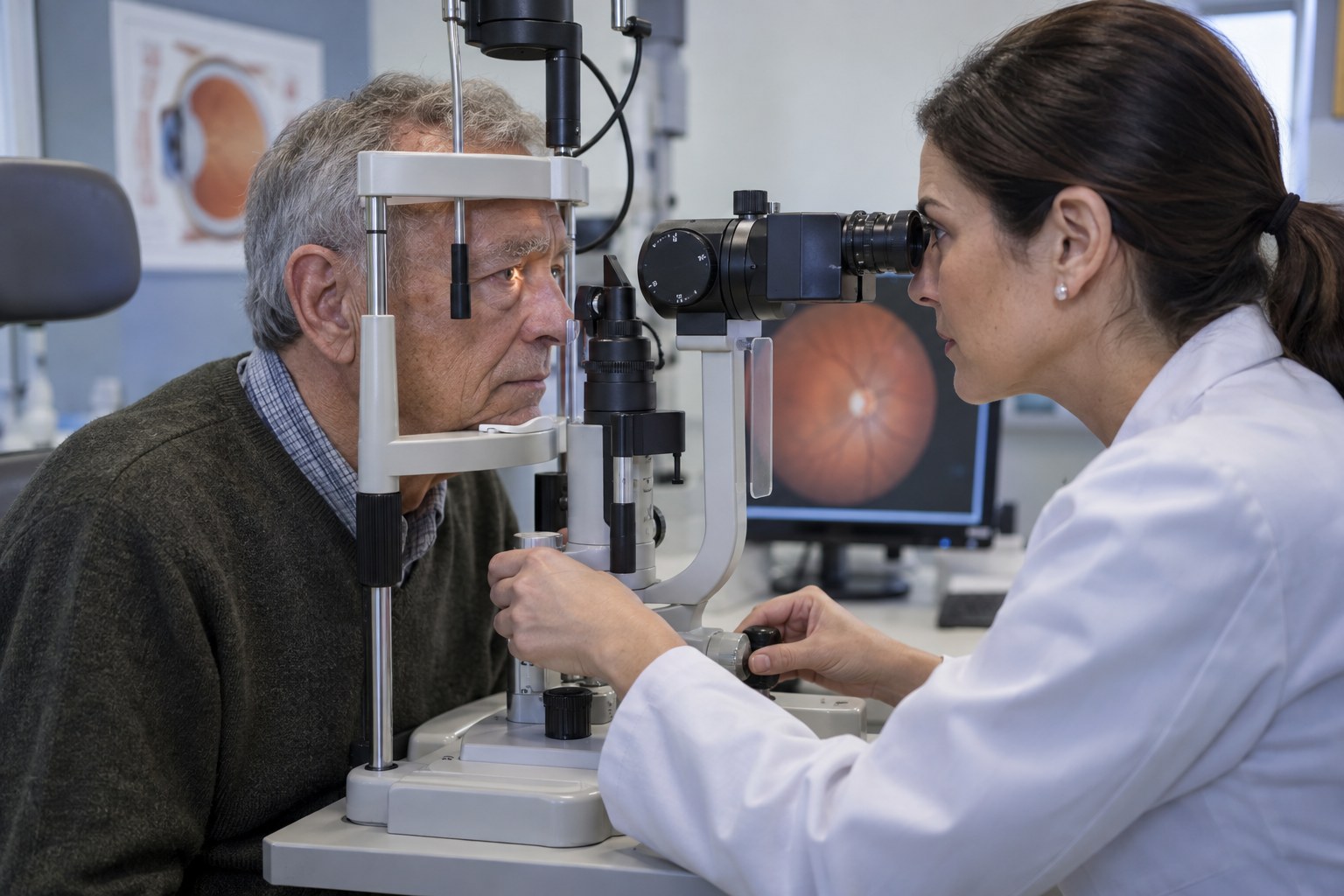
ClinicalTrials.gov identifies the ER-100 trial as NCT07290244. It is a phase 1 study for people with open-angle glaucoma or non-arteritic anterior ischaemic optic neuropathy. Its primary purpose is to assess safety and tolerability. It is not designed to demonstrate whole-body rejuvenation or measure an extension of human lifespan.
On October 1, Life Biosciences announced plans to present preliminary trial data at Eyecelerator on October 8, 2026. When this research closed on October 4, that presentation had not happened. The announcement comes from the treatment's developer: it identifies a planned communication, but cannot replace complete data or independent assessment of the findings.
Permission to investigate also differs from permission to market a treatment. The FDA explains that clinical research progresses from initial safety and dosage studies towards broader evaluation of efficacy and adverse effects. Reaching human participants does not mean an intervention is already an approved treatment for readers following its development.
Evidence that could change the answer
A precedent illustrates why controlling reprogramming matters. In 2013, María Abad and colleagues described in Nature how activation of four reprogramming factors in mice produced teratomas, a type of tumour, in different organs. That experiment is not the ER-100 protocol, but demonstrates that deeply altering cellular identity can have dangerous consequences.
Reprogramming is not the only research approach. A preliminary 2019 study in EBioMedicine examined dasatinib and quercetin in nine people with diabetic kidney disease. It observed reduced indicators of senescent cells in tissue samples. Given the study's size, design and purpose, this finding does not demonstrate general reversal of human ageing.
Other evidence comes from CALERIE. The analysis published in Nature Aging in 2023 examined DNA methylation measures in 220 adults without obesity assigned to calorie restriction or their usual diet for two years. It found a small slowing in DunedinPACE, but no significant changes in PhenoAge or GrimAge. The authors noted that long-term health implications still needed to be established.
These differing results suggest a useful reading rule: ask what was measured, in whom, and for how long. A reproducible effect on a particular measure can be valuable while leaving other questions unanswered. Caution does not require dismissing it. It requires describing its scope, avoiding promises of additional years, and distinguishing hypotheses from demonstrated benefits.
For readers, that means following an evidence trail rather than treating every development as a final answer. A paper's actual outcome provides the starting point. Its experimental setting explains the boundaries. The next question is whether a subsequent study addresses those boundaries, rather than simply repeating an attractive phrase. That approach leaves room for a meaningful advance without assigning it an unsupported arrival date.
Those distinctions also explain why the next experiment should be judged by its stated objective, rather than by the broadest promise attached to rejuvenation.
A younger clock and a better life
The National Institute on Aging has also reported associations between DNA-based age estimates and health outcomes or mortality. Such relationships help researchers study risk. They do not, by themselves, prove that any treatment reducing a clock reading will deliver the expected benefit: predicting an outcome and changing it are different questions.
Another investigation publicised by the institute found that estimated biological age could rise during stresses such as surgery and subsequently recover. This shows that certain measures are dynamic. It does not demonstrate that every consequence of accumulated ageing has disappeared. A number needs the context of the intervention and the changes actually observed.

The World Health Organization offers a goal understandable beyond the laboratory: maintaining the functional ability that enables wellbeing in older age. That includes mobility, learning, decisions and relationships. This framework helps explain what progress could mean to someone hoping to keep living independently, beyond a laboratory value or a youthful appearance.
Why humanity has no arrival date
Drawing these sources together, no year for universal availability can be deduced. Research still has to establish which interventions work, for which problems, and with what safety. WHO also emphasises that environments and access to services influence healthy ageing. Achieving a clinical benefit and making it available across different populations would be related but separate accomplishments.
The next important development could be a verifiable human result involving a particular function. If it arrives, its sample size, follow-up and limitations will matter. What can be stated now is that researchers are testing ways to modify components of ageing. The date of broad, safe and accessible human rejuvenation remains a research question, rather than an appointment that can be entered on a calendar.
Sources: López-Otín and colleagues, Cell (2023), Lu and colleagues, Nature (2020), Gill and colleagues, eLife (2022), ClinicalTrials.gov: ER-100, CALERIE, Nature Aging (2023)
Books and resources
- Healthy ageing and functional ability — World Health Organization
Free explanation of functional ability and wellbeing in older age.
Free resource