On September 8, an alarm sounded at the Musée Renoir in Cagnes-sur-Mer before dawn. Five minutes later, municipal police were at the scene, according to the town’s mayor. By then, four paintings had been taken from the walls. Two were abandoned in the garden as the intruders fled; two others were gone.
On October 9, Mayor Bryan Masson announced that the missing works had been recovered. The news ended a month of uncertainty over two paintings that are not simply Renoir signatures on a museum checklist: they are works entrusted to Cagnes-sur-Mer by the Musée d’Orsay. But the recovery announcement did not answer every question about where the paintings had been kept, how investigators located them or when they would return to public view.
A break-in measured in minutes
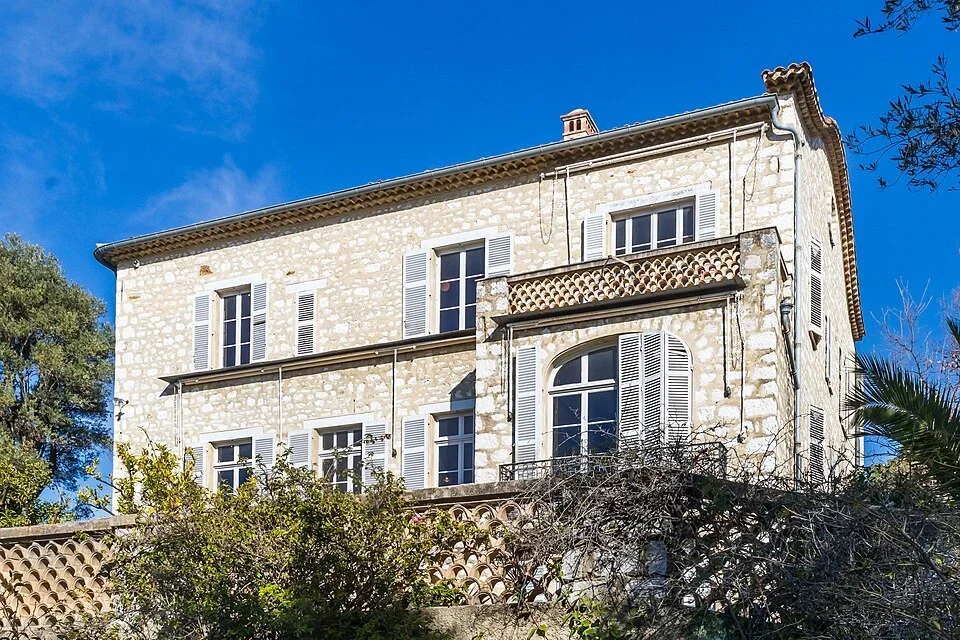
The theft took place at the former home of Pierre-Auguste Renoir, now the Musée Renoir, in the Domaine des Collettes. Investigators said two intruders cut through an exterior fence, entered through a ground-floor window and removed four paintings. The alarm was triggered at 5:48 a.m.; the mayor said municipal police arrived at 5:53. The whole operation lasted less than three minutes, according to the prosecutor’s office as cited by The Associated Press.
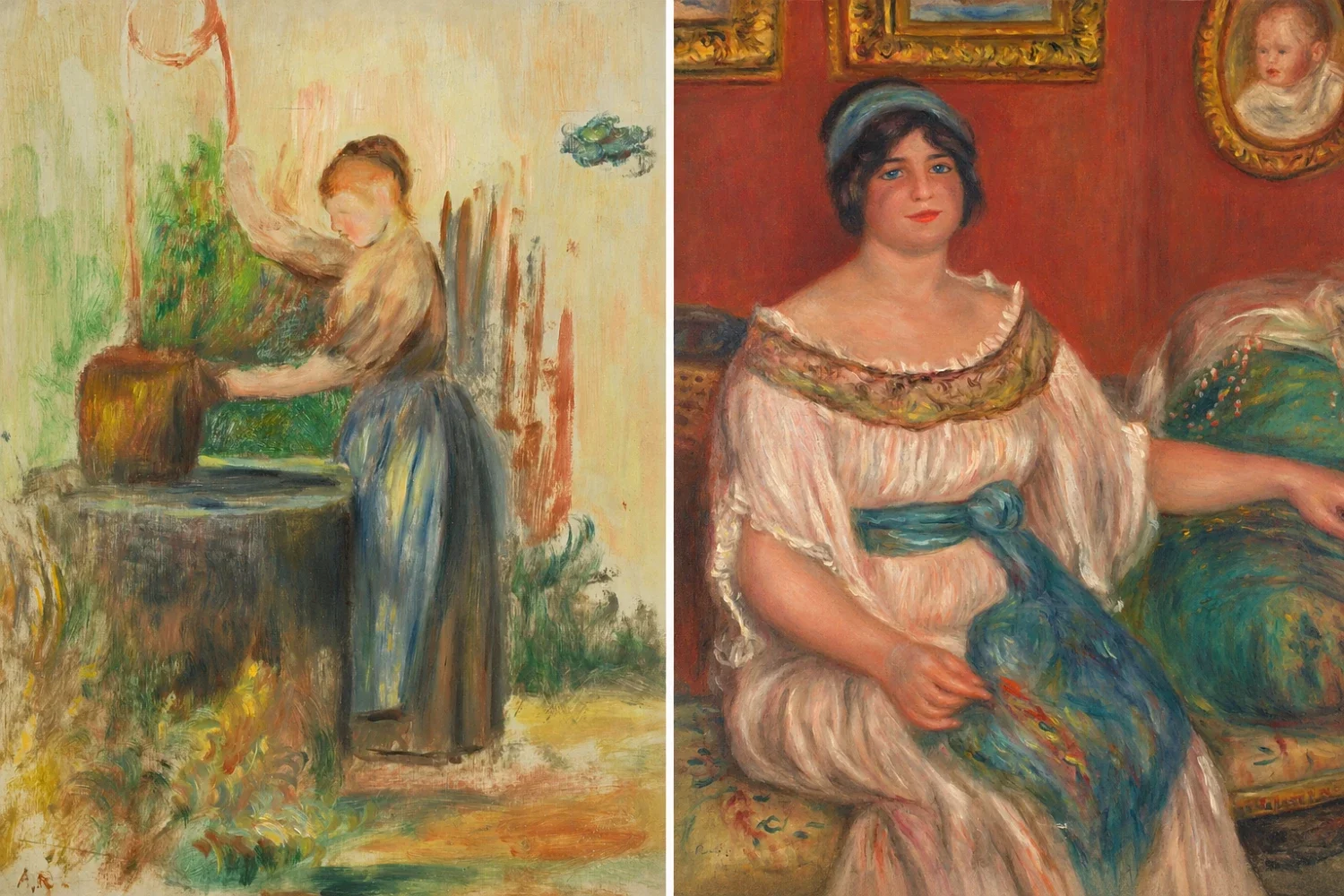
The two works left behind were found in the museum garden. The two that remained missing were Madame Colonna Romano and Jeune femme au puits. Their titles had already become familiar from the first reports, but their physical details tell a quieter story. The museum’s catalogue dates Madame Colonna Romano to about 1910: an oil painting on canvas, inventory number MNR 204. Jeune femme au puits is dated to around 1886, painted in oil on wood, inventory number MNR 579. Both are listed as deposits from the Musée d’Orsay.
That status matters. The paintings were displayed and cared for in Cagnes-sur-Mer, but the catalogue identifies them as deposits from a national museum. The case therefore concerns not only a local collection and a town’s attachment to Renoir, but also the safeguarding of works entrusted between public institutions.
What French reports say about the recovery
The mayor’s October 9 announcement confirmed the central fact: the paintings had been found. The first Associated Press report said the statement did not explain how investigators traced them. French coverage added more detail the following day. TF1 reported that the paintings were found at the home of one of the suspected burglars, while a local report by NiceMag, citing Nice-Matin, said they had been located in a garage outside the region. Those accounts point in a similar direction, but neither public report identifies a town or department where the works were recovered.
That distinction is worth keeping. A precise address has not been made public in the reporting reviewed for this article, and the mayor’s announcement itself did not name a recovery site. The French reports also described the works as apparently in good condition, but an official conservation assessment was not included in the public statements reviewed here. Recovery is a major development; it is not yet the same thing as a complete account of the paintings’ condition or the investigation.
Reports on arrests have varied slightly as the news emerged. The Associated Press said six people had been arrested. TF1, citing AFP, reported at least five people had been detained. In both accounts, two people were suspected of carrying out the break-in. Those are allegations under investigation, not findings of guilt. No conviction follows from an arrest, and the public information available so far does not describe a completed trial.
Two paintings, two different moments in Renoir’s career
The museum’s dates place the works far apart in Renoir’s long career. Jeune femme au puits, from around 1886, belongs to a period when the painter was moving beyond the fractured brushwork associated with early Impressionism and studying firmer contours and structure. Madame Colonna Romano, dated about 1910, comes from his later years, when he continued to paint despite severe rheumatoid arthritis. These broad dates do not tell us the circumstances of the theft, but they help explain why the pair mattered to the museum: together they represented different stages of an artist whose final home became the collection’s setting.
The break-in also exposed the difficulty of protecting art whose fame can make it hard to sell openly. The first reports said the thieves appeared to target valuable paintings and that four were taken from their frames. The mayor estimated the combined value of the four works involved at about €9 million; that figure was for all four, not an independently established price for the recovered pair. Specialists have noted that recognizable works by a celebrated artist are difficult to move through legitimate markets without attracting attention. The public record, however, does not establish a motive or say what the suspects intended to do with these paintings.
Recovery is a beginning, not an ending
For Cagnes-sur-Mer, the recovery brings two paintings back from a disappearance that lasted just over a month. The next questions are practical and institutional: what examination the works need, when they can safely be displayed, and what the investigation can establish about planning, roles and custody. None should be answered by inference from the fact that the paintings were found.
The alarm and the five-minute police response mark the first chapter of the case; the recovery announced on October 9 marks another. Between them lies a question museums and the public will keep asking: how did two works removed in a three-minute theft travel from a house museum on the Riviera to a place investigators could find, and what can be learned from the route? For now, the paintings are recovered. The full story of their disappearance is still being assembled.
Sources: Musées de Cagnes-sur-Mer: Madame Colonna Romano, Musées de Cagnes-sur-Mer: Jeune femme au puits, TF1 Info: recovery and arrests, NiceMag, citing Nice-Matin, The Associated Press