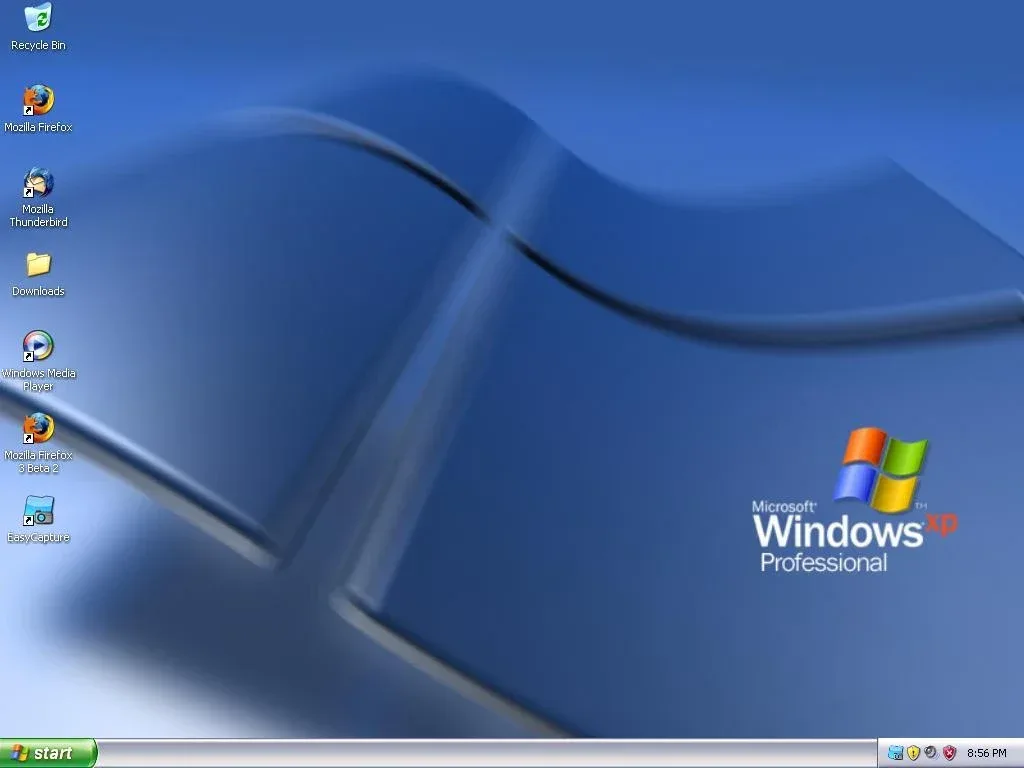
On October 25, 2001, Microsoft introduced Windows XP to the public at a theater near Times Square. New York was still living with the aftermath of the September 11 attacks. A month earlier, the company had confirmed that it would keep the launch in the city; Bill Gates and Mayor Rudy Giuliani both described the event as a sign that New York remained open for business. That context gave a software debut a public meaning it would not have carried in an ordinary year. Twenty-five years later, the day is easier to remember for its green hillside and blue desktop. At the time, Microsoft was also asking people to trust a new foundation for everyday computing.
Two kinds of Windows become one
Before XP, Microsoft's home and office customers were often using different branches of Windows. Windows Me served consumers, while Windows 2000 Professional belonged to the line built on the Windows NT architecture, used heavily in workplaces. XP succeeded both. It brought the Windows 2000 foundation to a consumer version, a change more consequential than the color of a taskbar. A family could get the more robust technical lineage previously associated with business machines, while companies could buy a system with a more approachable interface. That did not make every computer identical, but it narrowed a longstanding division in the PC market.
The name was part of the campaign. Microsoft said “XP” stood for “experience,” a word broad enough to cover working, watching video, organizing photographs and getting online. On launch day the company sold Home Edition for households and Professional for businesses and more demanding users. Professional added features such as remote access, security and management tools. In its announcement, Microsoft presented both editions as a way to connect the personal computer to an expanding digital world. That was a commercial argument, not a neutral description of what every customer would be able to do on a 2001 machine.
The launch was designed to be visible well beyond the theater. Gates delivered the main address; Giuliani offered a welcome; the company assembled industry partners and arranged a free Sting concert in Bryant Park. Microsoft said more than 50 related events were taking place around the world. These are details from its own launch records, which naturally emphasize celebration. They also show the scale of the bet. An operating system was no longer simply software in a box: it was the platform through which people might view photographs, listen to music, join home networks and use the internet.
The hardware behind the promise
One small detail in the launch announcement captures the computers XP had to run on. Retail promotions offered memory upgrades of 128 or 256 megabytes with certain purchases. Some packages bundled antivirus software. These offers were sales incentives, but they also place the product in its technical moment. A faster processor and a larger memory module could make the difference between a smooth new experience and a sluggish old computer. And the mention of antivirus software, already prominent in 2001, complicates any memory of the period as a carefree age before online threats.
Microsoft promised support for digital photos, music and video, home networking, messaging and communication. Those capabilities mattered because the PC was becoming a household archive as well as a tool for documents. XP did not invent these activities. It gathered them within a system intended to feel less divided between work and home. Even people who never read the product specifications encountered that ambition every time they opened the desktop: a bright interface made the machine look less like office equipment and more like a place to keep personal things.
The image that came to stand for the system was not computer-generated scenery. In 1996, photographer Charles O'Rear photographed a grassy hillside in California's Los Carneros wine region. Microsoft later bought rights to the picture, named “Bliss,” and made it XP's default wallpaper. A landscape photograph became the first view millions saw when they started a computer. Its familiarity can distort the history: the image was a powerful piece of presentation, while the less visible change lay in the code underneath it.
Security catches up with the connected PC
The internet-facing computer that Microsoft celebrated also created a harder engineering problem. In 2004, the company issued Windows XP Service Pack 2, a large free update that it explicitly framed as a response to hackers, viruses and other threats. The package strengthened default security settings and introduced Windows Security Center, which showed users the status of firewall protection, automatic updates and antivirus software. Microsoft also added defenses against certain kinds of malicious code. These were not decorative improvements. They changed how the system presented security to ordinary users.
Service Pack 2 is a reminder that a successful release can need substantial rebuilding after it reaches the public. Microsoft's 2001 announcement emphasized reliability and an inviting digital experience; by 2004 its language centered on protection and resilience. That shift reflects the changing environment in which XP operated, as well as the limits of its original design. The update did not make threats disappear. It made security settings, patches and user warnings a more visible part of using a personal computer.
XP's long life gave these decisions unusual weight. Windows Vista reached the public in 2007, according to the Computer History Museum, yet XP continued to receive Microsoft support for years afterward. The company finally set April 8, 2014, as the end of support for ordinary XP users. From then on, it said, they would no longer receive operating-system security updates or technical help. The operating system could still start; the safety promise attached to an actively maintained system had ended. That distinction matters whenever an old but functioning computer seems to need no change.
Looking back across those years, it is tempting to treat XP as one enduring object. It was also a sequence of decisions: to merge consumer and professional computing onto a shared foundation, to make the interface welcoming, to market the PC as a center for personal media, and later to revise security as exposure to the internet deepened. The product sold in October 2001 was not quite the same experience as the updated system people used in 2004 or the unsupported one left behind in 2014.
The hillside remains an efficient shorthand for that era, but it cannot tell the whole story. Windows XP arrived in a wounded New York with an ambitious idea of what the personal computer would become. Its afterlife shows what happens when a widely used technology becomes familiar enough that people expect it to stay. The photographs, files and habits may endure; the work of protecting the machines that hold them cannot be frozen in 2001.
Sources: Microsoft's October 25, 2001, launch account; Microsoft's decision to launch in New York; Computer History Museum on Windows XP; Microsoft's 2001 announcement of XP and its editions; Microsoft on Charles O'Rear's “Bliss”; Microsoft's August 2004 Service Pack 2 announcement; Microsoft on the April 2014 end of support.