Three years before João Havelange defeated Stanley Rous, Teófilo Salinas Fuller was preparing to carry the Brazilian's candidacy to Africa and Asia. The Peruvian president of South American football had a delegation, a dispute over World Cup places and a challenger to promote. Havelange would become the public face of the campaign. Salinas helped build the alliance behind him.
The plan appeared in an ANSA dispatch from Lima dated June 24, 1971, published the following morning in Santiago's La Nación. Salinas would lead a commission through Africa, Asia and Germany, accompanied by Uruguay's Washington Cataldi and Argentina's Raúl D'Onofrio. Its tasks included defending South America's representation at the 1974 World Cup and promoting Havelange to replace Rous. Colombian official Alfonso Senior announced the mission. Alongside the electoral campaign, the commission would argue for three South American qualifiers in addition to Brazil, the reigning champion.
The Peruvian who put Havelange forward
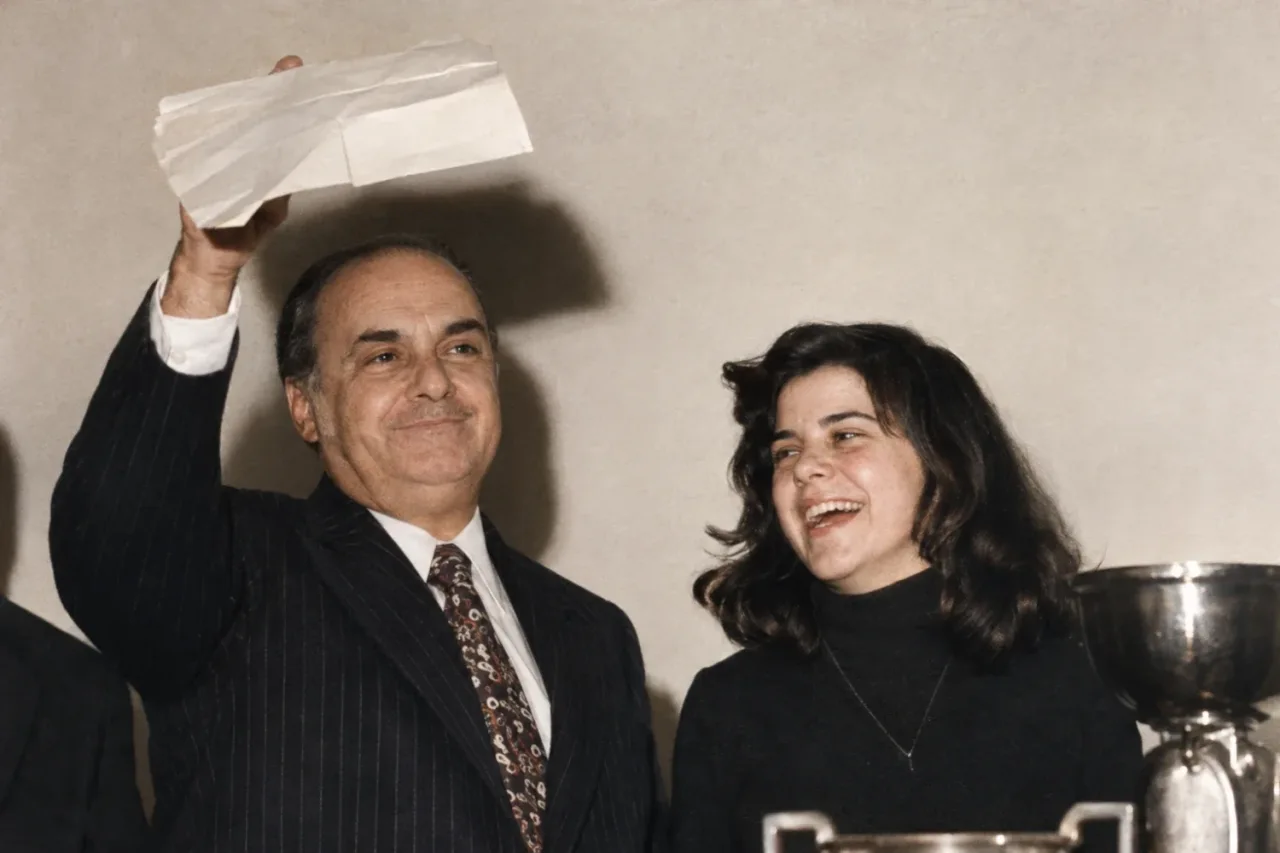
Salinas had headed the South American confederation since 1966. He could speak for a region whose national teams commanded international prestige but whose ten member associations supplied only a small share of FIFA's electorate. Securing their backing gave Havelange a base. Winning the presidency required partners elsewhere.
Havelange later recalled the candidacy emerging around a South American congress in Rio de Janeiro. After the meeting, he entertained the delegates at a barbecue restaurant in Tijuca. The confederation's president stood and proposed him for FIFA's 1974 election. In the interview, recorded by University of São Paulo researchers in 2012, Havelange remembered writing to ask to be released from the commitment. The answer was that the congress had decided. South American officials had chosen their candidate; he would have to campaign.
He brought a formidable calling card. President of Brazil's multisport governing body, the Confederação Brasileira de Desportos, since 1958, Havelange had presided over the organization during Brazil's World Cup victories in 1958, 1962 and 1970. The latest triumph, with Pelé at the center of an exceptional team, had made Brazilian football an international attraction. Salinas offered political organization; Havelange arrived with the prestige of the world champions.
The votes beyond Europe
Inside FIFA's congress, each member association had one vote. Newly independent countries entering the organization could therefore influence a presidential election even while their teams struggled to reach the World Cup. Decolonization had enlarged the electorate across Africa and Asia. The established European leadership faced an expanding membership with demands of its own.
Havelange pursued those associations in person. In his 2012 interview, he recalled extensive travel through Africa and Asia, alongside visits to Oceania and Central America. The contacts accumulated beyond the familiar circuit of Europe's major football capitals. Administrators who rarely occupied the center of FIFA's attention now had a presidential candidate asking what they needed. More World Cup places and practical assistance gave those conversations a common purpose.
Rous, FIFA president since 1961, carried a particularly damaging political burden in Africa: his handling of apartheid South Africa. FIFA suspended the white-controlled South African association in 1961, then temporarily restored it in 1963 with his support. The congress imposed suspension again in 1964. For opponents of racial segregation, the incumbent's willingness to accommodate that association had undermined his authority.
South African officials had even proposed sending an all-white team to the 1966 World Cup and an all-black team to the 1970 tournament. Such arrangements preserved racial separation within international competition. African opposition hardened. As football historian Paul Darby's research on the election shows, the South African question became central to the contest between Rous and Havelange. The challenger sought votes among officials who had already spent years fighting the incumbent's approach.
Brazil turns hospitality into diplomacy
Brazil also brought prospective allies onto its own ground. In 1972, the country staged the Taça Independência, an international tournament marking 150 years of independence. Known as the Minicopa, it served the military government's celebrations while providing Havelange with a gathering of foreign teams and officials.
The invitations brought together a revealing group. Historian Bruno Duarte Rei documents plans announced in July 1971 for Salinas, Rous, other FIFA officials and African football executive Tessema to inspect stadiums. The proposed itinerary included meetings in Brasília and a visit to the Furnas hydroelectric complex. Football hospitality came wrapped in a showcase of Brazilian development.
The tournament strengthened Havelange's international network. A November 22, 1973 report in O Estado de Mato Grosso credited the Minicopa with improving his standing and helping attract support from Central America and part of Africa. The same report identified Salinas as the official who had launched the candidacy and announced that South America's coming congress in Rio, opening November 30, would formalize it. By then, Havelange's repeated journeys abroad and Salinas's regional organizing were converging on the election.
Salinas still had to conduct business with the man they were challenging. In February 1973, he told Lima's La Crónica that Havelange's candidacy did not mean South America was against Rous. The confederation was promoting a successor while continuing to negotiate with the incumbent over its teams' interests.
A larger World Cup, and help to reach it
The platform offered football associations more than recognition. Havelange proposed financial and technical assistance, training for coaches and referees, subsidies for stadiums, youth competition and stronger club tournaments in Africa and Asia. These were tools for officials trying to develop leagues, prepare national teams and make international participation sustainable.
The World Cup was the most powerful promise. The program described in Sérgio Settani Giglio's research envisaged 20 finalists in 1978 and 24 in 1982, up from the existing 16. Extra places would give associations a better chance of qualifying for the tournament at the center of international football.
Salinas used that offer in his negotiations with African and Asian representatives. South America sought to protect its own representation while the campaign offered other regions room to grow. Expansion made those ambitions easier to reconcile. Havelange could appeal to established football powers and associations seeking their first realistic opening on the world stage within the same coalition.
Salinas at the decisive congress
When the election reached Frankfurt on June 11, 1974, the alliance still needed tending. In a 2015 account, Roberto Mejía Alarcón, the South American confederation's press secretary, described Salinas working to hold its African and Asian support together. His recollection appears in El otro partido, a history of Peruvian football governance by Aldo Panfichi and colleagues.
According to Mejía's account, uncertainty persisted because Rous had also made promises to those delegates. Salinas approached Havelange and spoke into his ear; the Brazilian requested a recess. During the break, Salinas spoke again with African and Asian officials, with Havelange present, seeking their commitment. The episode captures the Peruvian's work at the point where years of meetings had to become votes.
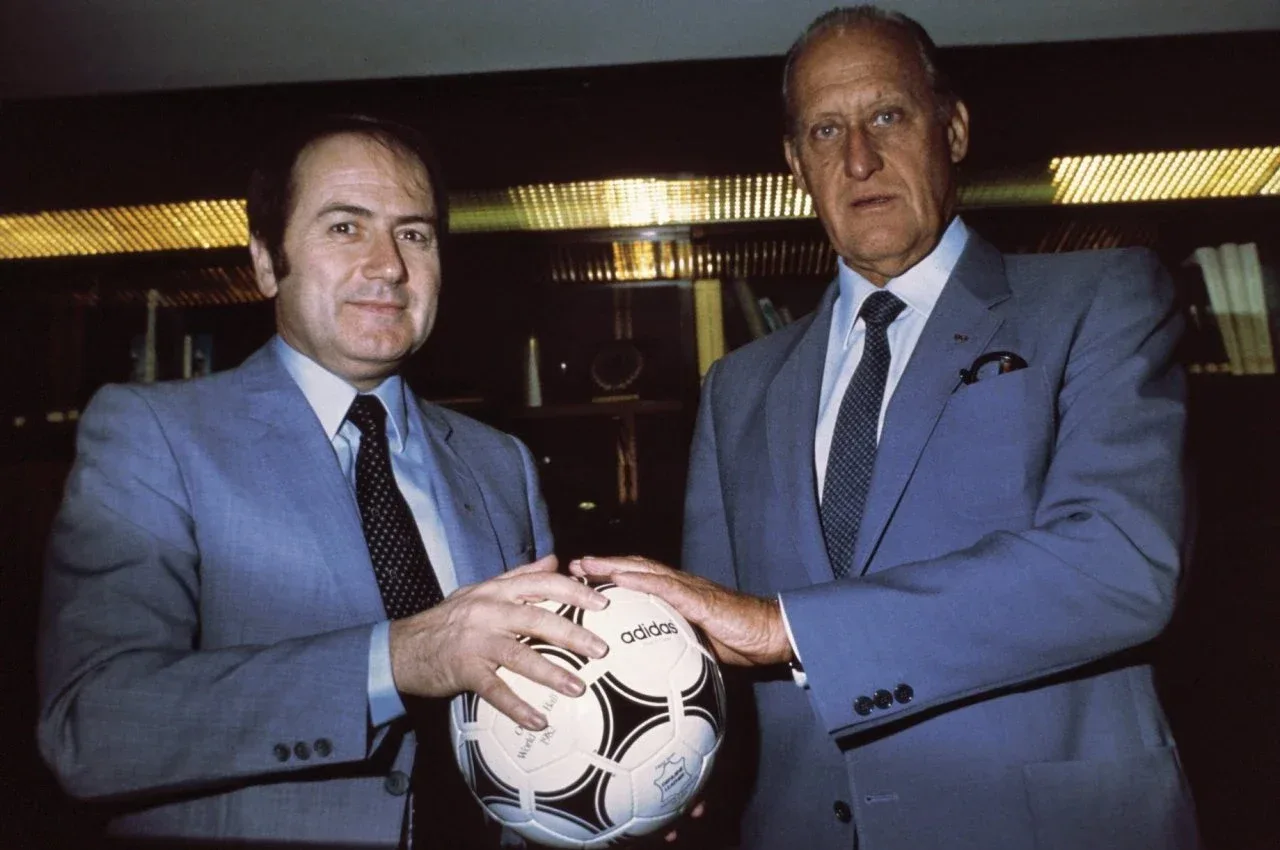
Havelange led the first ballot by 62 votes to 56. Under the election rules, that lead did not settle the contest. On the second ballot he won 68–52. Contemporary reporting in Le Monde recorded 122 associations represented and two blank ballots in the decisive round. Rous's thirteen years in office were over. FIFA had elected its first president from outside Europe.
The alliance after victory
Expansion took longer than the proposed timetable. Argentina's 1978 World Cup retained 16 teams; Spain 1982 admitted 24. Cameroon and Algeria represented Africa, while Kuwait, Honduras and New Zealand also made their first appearances. The wider tournament gave concrete form to the promise on which Havelange had sought support.
His partnership with Salinas eventually broke apart. In 1986, Nicolás Leoz succeeded the Peruvian at the head of South American football with Havelange's backing. Interviewed by La Nación that April, Salinas accused the FIFA president of intervening against him. He said Chilean official Miguel Nasur had told him that Havelange pressed Chile to support Leoz. The former campaign partners had become adversaries.
Havelange remained FIFA president until 1998. The campaign that brought him to office had begun in South American meetings and reached across Africa and Asia, with Salinas helping organize the support. The presidency went to Havelange, but it was the joint work of the South American confederation, African football leaders and allied associations in Asia and Central America that had carried him there.
Sources: Panfichi et al.: Salinas and the 1974 election, João Havelange: the 2012 interview, Bruno Duarte Rei: Brazil’s 1972 tournament, Sérgio Settani Giglio: the reform program, Associated Press: the election results