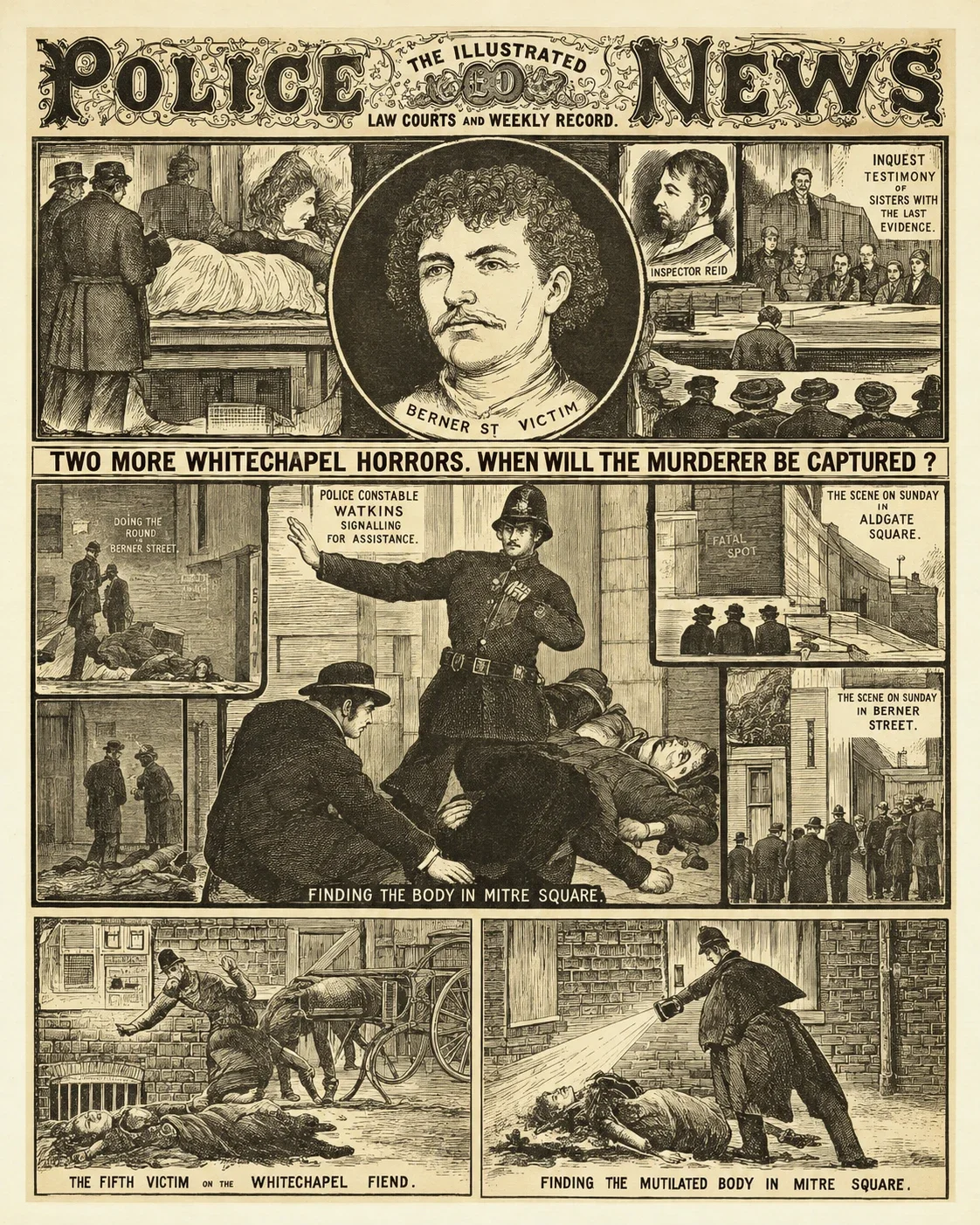
On the morning of August 31, 1888, a passerby found Mary Ann Nichols dead in Buck’s Row, a narrow street in Whitechapel. The discovery began the sequence of killings that would become one of Victorian London’s most notorious mysteries. Ten weeks later, another woman, Mary Jane Kelly, was found dead in a small room off Dorset Street. Between those dates, police connected five women’s deaths to a single murderer. They never identified or charged anyone. The case that the world came to call Jack the Ripper remains unsolved; its victims do not have to remain anonymous.
Five deaths, one investigation
The five women were Nichols, Annie Chapman, Elizabeth Stride, Catherine Eddowes and Kelly. Chapman was found on September 8; Stride and Eddowes were killed on September 30, within hours of one another; Kelly was found on November 9. The police linked the crimes because of similarities in the attacks and their geography, not because a suspect confessed. Other women were murdered in the wider Whitechapel district, and later writers have argued over which cases belonged in the same file. The phrase “the five” is a useful shorthand, not proof that every uncertainty has been settled.
Newspapers gave the unknown killer a marketable name. A letter sent to the Central News Agency in September, signed “Jack the Ripper,” helped popularize the label. Its authorship was never verified. The National Archives describes it as one of hundreds of letters in Metropolitan Police files that claimed to come from the murderer. In a city hungry for clues, a signature could travel farther than evidence. The nickname offered a character readers could follow, while the women became a repeated list of names attached to scenes of violence.
The East End beyond the headlines
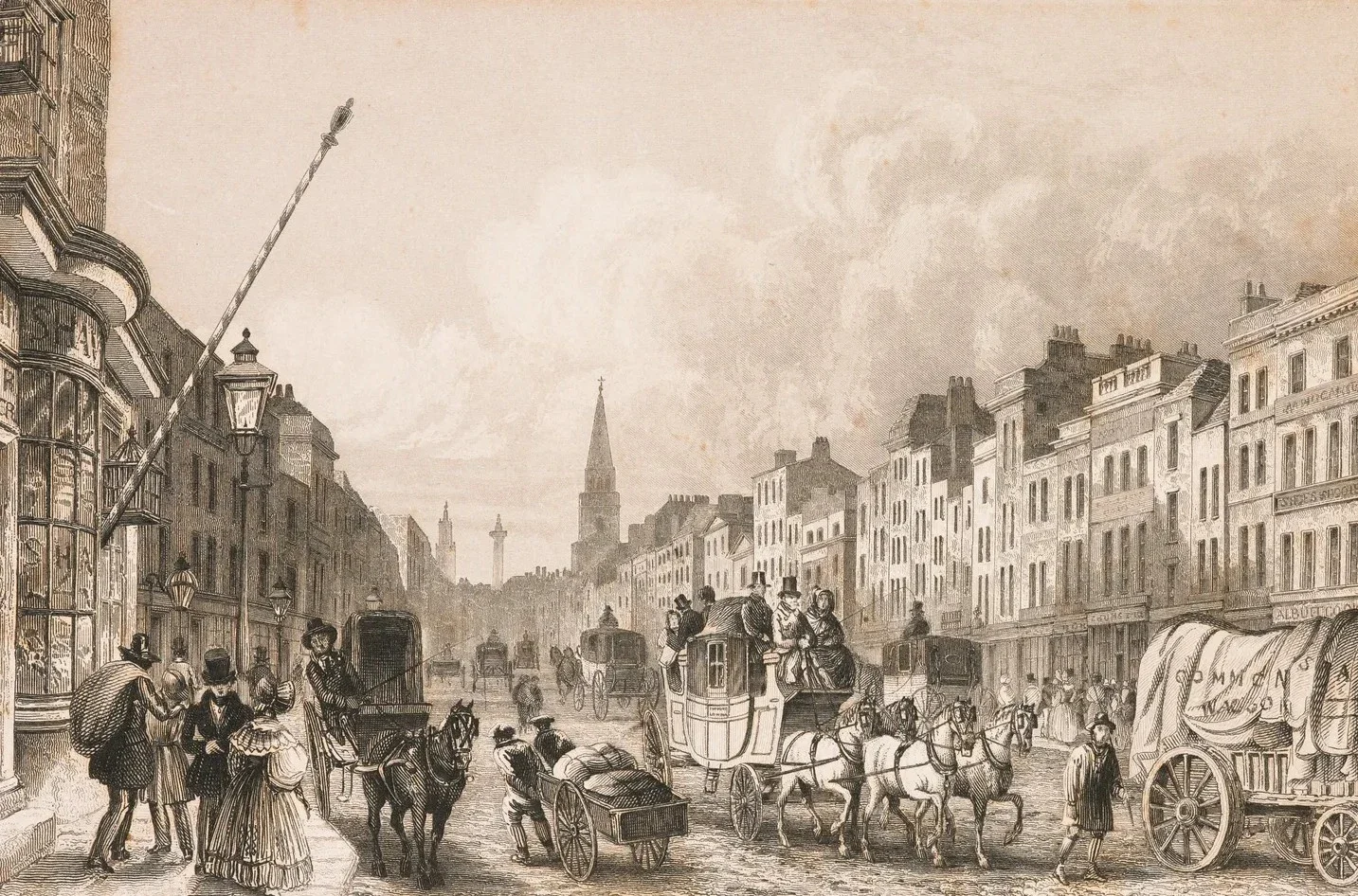
Whitechapel was not a stage built for a crime story. In the 1880s, it was a crowded district of London’s East End, shaped by low-paid and irregular work, inadequate housing, migration and the clothing trade. Families could share one room; people without a stable home moved between cheap lodging houses and the street. Charles Booth’s poverty map, assembled around the same period, marked many nearby streets in colors for the poorest categories. The map is a record of hardship, not a portrait of every resident—and the district was also a neighborhood of work, family, worship and community.
Jewish refugees arriving from Eastern Europe were changing the area’s languages and streets. Many found work in tailoring and related trades. That diversity did not protect them from suspicion. During the killings, rumor and newspaper speculation often cast Jewish residents as outsiders and potential culprits, without evidence. The London Museum notes that antisemitic assumptions shaped the search for the murderer. This detail matters because the investigation did not unfold in a social vacuum: fear about violence merged with older prejudices about immigration, poverty and who belonged in London.
The women’s own histories have often been compressed into a single label. Contemporary reporters and later accounts described all five as prostitutes, a claim that made the story simpler and the victims easier to blame. The London Museum’s review says only Kelly is known to have been working in the sex trade at the time of her murder. The others were poor women whose means of survival, relationships and housing varied; some had children. The surviving record is incomplete, and it would be wrong to invent private thoughts or tidy biographies where the documents fall silent.
A case made for a mass audience
The Metropolitan Police were still building the modern detective service. Investigators patrolled, interviewed witnesses and pursued suspects, but they never brought a defendant to trial for these murders. The National Archives preserves police correspondence and records about efforts to trace the killer. Those files offer something more valuable than a roster of suspects: they show a real investigation, with gaps, uncertainty and the limits of the tools available at the time. No later theory can turn a name repeated in a memo or newspaper into a proven murderer.
The press, meanwhile, could move the story across oceans. The transatlantic cable had made rapid overseas news possible, and American papers were printing reports about Whitechapel by the end of 1888. The Library of Congress’s newspaper guide lists articles published in cities from Salt Lake City to San Francisco. The coverage did more than relay police updates. It circulated speculation, vivid descriptions and claims that could not always be checked. Each republication gave the mystery a wider audience, while the distance from London made it easier for rumor to harden into fact.
The police’s silence about investigative details intensified the competition for explanations. The London Museum records how newspapers filled the gap with theories and sensational language; the historical scholarship on the London press shows that the reporting drew on a growing mass newspaper culture. The result was a feedback loop: public anxiety demanded updates, editors competed for attention, and stories about a shadowy killer grew more dramatic. The archive today can correct some of that narrative, but it cannot supply a verdict that investigators never obtained.
What the mystery leaves behind
The killings stopped after November 1888. No one knows why. The absence of another linked murder did not end the case; it created room for a century of suspects, books and screen adaptations. Some theories rest on records, others on conjecture, and a confident tone is not a substitute for proof. The most responsible account leaves the killer unnamed. It also resists turning every dead woman in East London into a Ripper victim simply because the label makes for a cleaner plot.
A century later, the enduring story is not only about a murderer who escaped identification. It is about how a city saw its poorest streets, how sensational reporting magnified fear and prejudice, and how women’s lives were reduced to the violence done to them. Nichols, Chapman, Stride, Eddowes and Kelly were people who worked, formed relationships and tried to make lives under severe constraints. We cannot recover everything the records failed to preserve. We can at least refuse to let the killer’s invented name become the only one readers remember.
Sources: London Museum: Jack the Ripper, The National Archives: Whitechapel teaching pack, The National Archives: Metropolitan Police report catalogue, Library of Congress: contemporary newspaper guide, Yale University Press: Jack the Ripper and the London Press