On November 12, 1954, Ellis Island's last detainee left the immigration station in New York Harbor. Arne Peterssen was a Norwegian merchant seaman held after overstaying his permitted time ashore. The National Park Service says he was released on parole to return to Norway. His departure was an ending, but not the one familiar from photographs of crowded arrival halls. The station that closed that day had spent decades becoming a place of detention and possible removal from the United States.
The distinction changes how the anniversary reads. Ellis Island had once handled about 12 million immigrants, many beginning new lives after an inspection lasting only hours. Yet the sailor who marked its final day had already been in the country. His case belonged to the island's later history, shaped by immigration quotas, overseas visas, war and the political fears of the Cold War. The famous gateway and the detention station were the same place at different moments.
A gateway with conditions
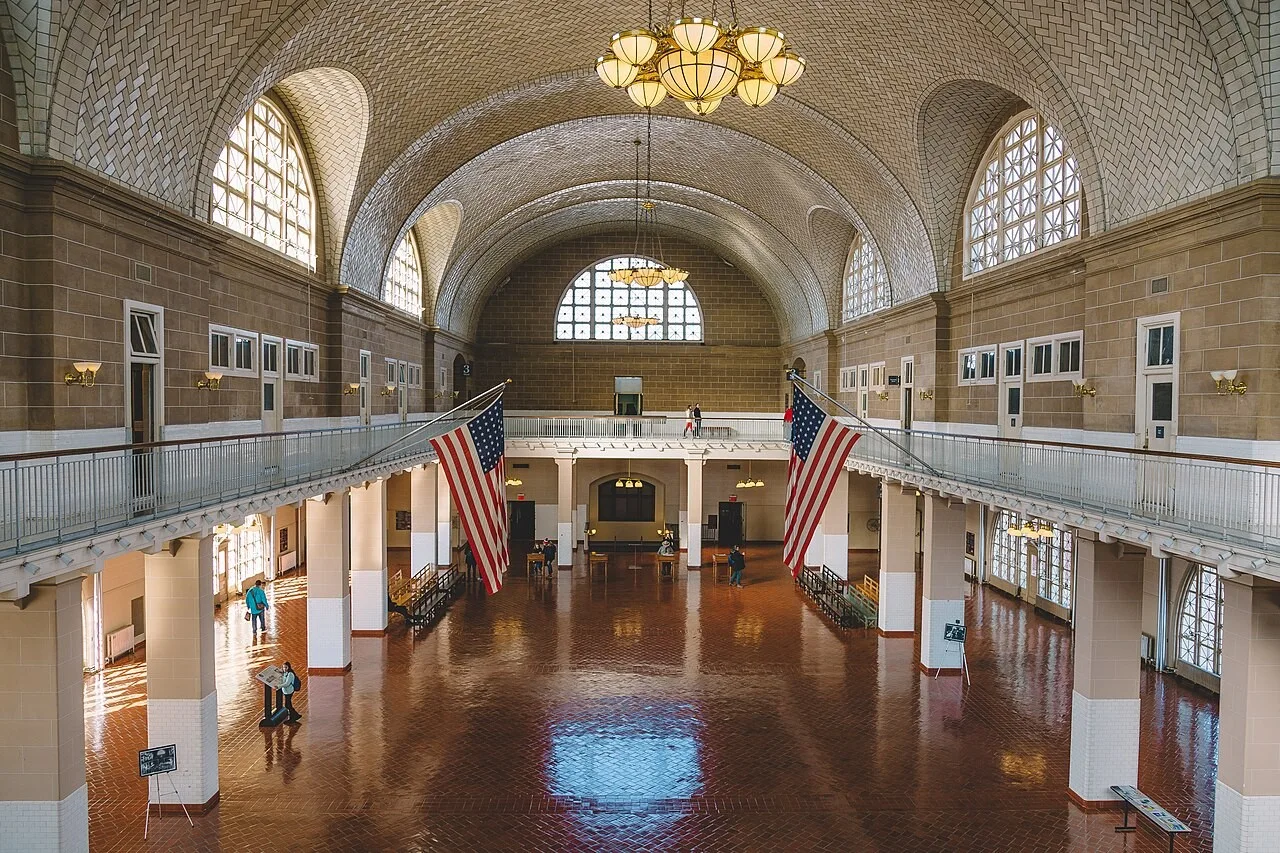
The federal station opened in 1892. Annie Moore, a teenage girl from Ireland traveling with her younger brothers, was the first immigrant processed there. A fire destroyed the original wooden buildings in 1897; the replacement main building opened in December 1900. Its Registry Room became the image most often used to represent immigration through New York Harbor. In 1907, the station examined about 1.2 million people, its busiest year. That scale helps explain the building's place in family memory, but it can make the rules behind every admission harder to see.
Arrival did not mean the same procedure for everyone. First- and second-class passengers were generally inspected aboard ship; third-class travelers were brought to the island. Doctors looked for illness, while immigration inspectors compared answers with passenger lists and asked where people came from, where they were going and how they would support themselves. Interpreters helped conduct the questioning. Most passed through in a few hours; those needing further examination could be held for a hearing. The island offered entry to many, but it also gave officials the power to delay or refuse it.
The surviving oral histories keep that distinction from becoming an abstraction. The National Park Service records the case of Josephine Garzieri, who arrived from Italy with trachoma, a contagious eye disease. Faced with deportation, she spent 11 months undergoing treatment at the island's hospital after her father found money to pay for it. She was eventually admitted. Her story has a hopeful outcome, but it depended on a long hospital stay and on resources her family managed to obtain. A quick passage through the Registry Room was never everyone's experience.
The law moved the line
Congress changed the terms of entry after the First World War. The 1921 quota law imposed numerical limits; the 1924 Immigration Act tightened them and favored countries whose people were already represented in the United States according to an older census. The National Park Service notes that the rules were designed to restrict immigration from southern and eastern Europe. Applicants also needed visas issued by American consulates before departure. Decisions once associated with the island were increasingly made across the ocean, while the number of people admitted through the station fell sharply.
Ellis Island remained in use, but its work changed. People with disputed papers, health concerns or deportation cases were more likely to end up there. During the Second World War, the Coast Guard used parts of the complex for training, while people classified by the government as enemy aliens, including Japanese, German and Italian nationals, were detained. In 1943, most immigration-service functions moved to Manhattan; detention stayed on the island. The busy hall of the early twentieth century had become only one chapter in the building's history.
Two other accounts in the Park Service's oral-history collection show what those later years could mean. Nelly Ratner Myers, a Jewish woman who was deaf, escaped Nazi-controlled Vienna with her mother and sister. U.S. officials considered their deafness a possible reason to refuse entry, and they spent months at Ellis Island. Gem Hoy “Harry” Lew arrived by airplane at New York's Idlewild Airport, yet was confined on the island for two months while officials tested his claim to be the son of a U.S. citizen. Neither story fits an easy picture of passengers simply stepping off a ship and into a new country.
The island's final years
The Cold War prolonged the island's detention role. After the 1950 Internal Security Act, which restricted entry for people associated with totalitarian organizations, detentions increased. The Park Service describes a 1951 roundup of people living in the New York area without legal immigration status; sailors and stowaways were also held. By 1953 the numbers had fallen again. Immigration director Edward J. Shaughnessy observed 237 detainees and 250 employees on a visit that year. Maintaining the complex for a shrinking population no longer made administrative sense.
The November 1954 closure was therefore the end of a long transition, not a sudden disappearance of immigration. The Park Service identifies Peterssen as the last person processed there and says he was released on parole on November 12. It records a separate last trip by the Ellis Island ferry on November 29, after the immigration station had shut. Processing immigrants elsewhere continued; the island's buildings, rather than the country's border system, went quiet.
What the restored halls remember
The abandoned complex deteriorated. In 1965, President Lyndon Johnson made Ellis Island part of the Statue of Liberty National Monument. Restoration followed in the 1980s, and the immigration museum opened in the main building in September 1990. Former immigrants and their families contributed recorded memories and objects. The renewed rooms could now tell stories that official totals alone could not: of arrival, inspection, waiting, exclusion, detention and, for some, deportation.
On the seventy-second anniversary of its closure, Ellis Island is more revealing when those histories are kept together. Annie Moore's arrival and Arne Peterssen's release frame 62 years of changing American policy, but neither stands for every person who passed through. The island's great hall recalls opportunity; its hospital and detention rooms recall how conditional that opportunity could be. The final departure on November 12, 1954, closed a building. The questions it posed about who was allowed in, and on what terms, did not close with it.
Sources: National Park Service, November chronology, National Park Service, Ellis Island chronology, Statue of Liberty and Ellis Island Foundation, station history, National Park Service, immigration restriction history, National Park Service, post-peak years, National Park Service, oral history collection, National Park Service, legal inspection room, National Park Service, restoration history.