The paper announcing streptomycin carried three names: Albert Schatz, Elizabeth Bugie and Selman A. Waksman. The Nobel Prize would carry one. Between those two records lay an antibiotic that changed the prospects of people with tuberculosis, a legal dispute over royalties and recognition, and a question familiar far beyond science: who gets remembered when a team makes a discovery?
Rutgers dates the breakthrough to October 19, 1943. Schatz, a graduate student working in Waksman's laboratory at the New Jersey Agricultural Experiment Station, isolated the antibiotic during research on microbes. Eighty-three years later, that date marks the beginning of a medical transformation. It does not mark a finished treatment, a successful clinical trial or the disappearance of tuberculosis. Those developments required further work, and the disease did not disappear.
A search in the soil
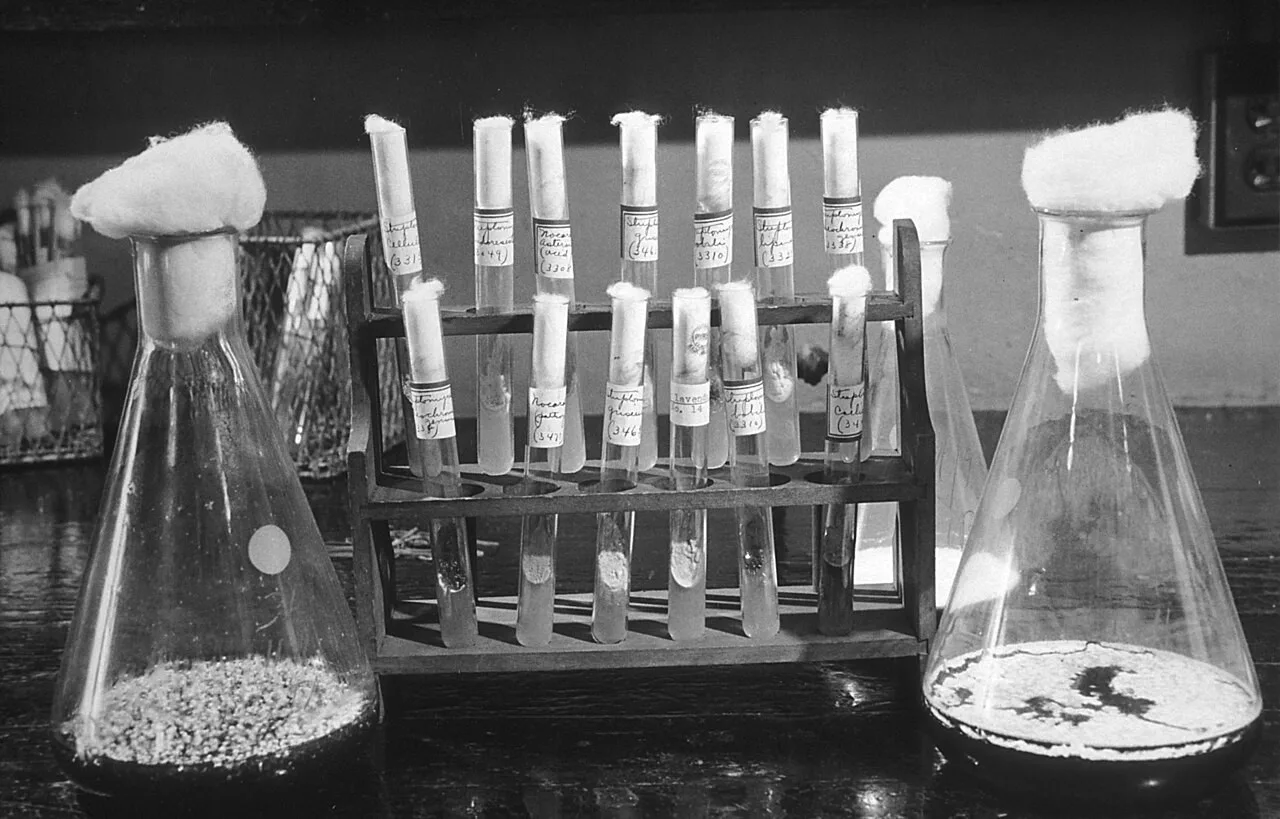
Waksman had made soil microbiology his scientific territory. By the late 1930s, his group was developing methods to screen microorganisms for their ability to inhibit other microbes. The logic was practical: competition among organisms might yield substances useful against infection. Earlier discoveries in the laboratory had demonstrated both the promise and the difficulty of the approach. A substance could attack bacteria and still be too toxic to become a useful medicine.
Streptomycin emerged from cultures of the microorganism now called Streptomyces griseus. The report published in January 1944 described an antibacterial substance isolated from two strains and compared its properties with those of streptothricin, another product of the laboratory's research. Its language was experimental, concerned with solubility, isolation and activity against bacteria. The later fame of a drug can obscure that stage: researchers first have to establish what they have found and what it can do.
Bugie's presence in the author list matters. Rutgers' account of the discovery identifies her work on streptomycin and other antibiotics within a collaborative research programme supported by Merck. Schatz performed the crucial isolation work; Waksman's laboratory supplied a sustained programme and methods. The discovery grew out of contributions that were connected without being identical. The subsequent conflict between student and supervisor would make those distinctions unusually public.
From cultures to patients
Tuberculosis gave the finding its greatest urgency. Penicillin, despite its extraordinary importance against other infections, did not provide the answer to this disease. Waksman's team worked with William Feldman and H. Corwin Hinshaw at the Mayo Clinic in Minnesota on animal and human investigations. Large-scale manufacture was another necessary step. Merck developed production capacity so that the substance could move beyond the quantities available from research cultures and reach patients.
In Britain, the Medical Research Council investigated streptomycin in pulmonary tuberculosis. The report appeared in the British Medical Journal on October 30, 1948. Participants were assigned to streptomycin with bed rest or bed rest alone using a system based on random numbers, with allocation concealed before a patient was accepted. The James Lind Library identifies the trial as a methodological landmark, especially for explaining the safeguards against foreknowledge of who would receive which treatment.
The published results made the comparison concrete. By six months, four of the 55 patients in the streptomycin group and 14 of the 52 people assigned bed rest alone had died. The results applied to the patients and the form of tuberculosis studied. Their importance lay in being able to compare outcomes in groups assembled at the same time instead of trying to infer the effect of the new drug from a series of individual cases.
The antibiotic brought a new possibility, along with limits that would shape its history. Resistance could develop during treatment, and toxicity affected its use. The history of tuberculosis therapy consequently moved towards combinations of drugs. Streptomycin's importance is not diminished by those qualifications: it opened a therapeutic route against an infection that had defeated penicillin. The laboratory discovery and the construction of reliable treatment were successive achievements, involving different people and different kinds of evidence.
The discovery goes to court
As the drug acquired commercial importance and Waksman received public recognition, Schatz challenged the account of his own contribution. In March 1950, he sued Waksman and the Rutgers Research and Endowment Foundation. The dispute involved both credit for discovering streptomycin and income from the patents. The recognition at issue was a public account of who had performed the work. The financial claim concerned the income the patented discovery was generating. Rutgers' archives preserve the litigation files, including the background to the agreement that ended the case. A scientific disagreement had become a dispute over the legal and financial ownership of an achievement.
The settlement came in December 1950. All parties recognised Schatz as a co-discoverer, according to the American Chemical Society's historical account. He was allocated three percent of the royalties paid to the foundation. The agreement addressed recognition and money; it did not eliminate the differences in how the scientists understood their respective roles. Waksman defended the importance of the laboratory's established methods and the broader programme from which the isolation had emerged.
In 1952, the Nobel Prize in Physiology or Medicine went to Waksman alone for the discovery of streptomycin, the first antibiotic effective against tuberculosis. Schatz and Bugie did not share it. The award and the 1944 author list preserve different forms of recognition. Bugie’s name is part of the earliest public record of the discovery. The later court dispute, focused on Schatz and Waksman, did not change who had signed the original paper. Neither document, read alone, gives the full history of the laboratory work, the clinical research or the industrial effort that turned an antibacterial substance into a medicine.
At Rutgers, the original laboratory is now part of the Waksman Microbiology Museum in Martin Hall. The university's account names Schatz as a co-discoverer and records Bugie's contribution alongside Waksman's. The site preserves a scientific success and the people behind it, including those whose names did not reach Stockholm. Returning to October 19 means returning to that collective work: a discovery in an agricultural laboratory whose consequences extended into hospitals, court records and the way scientific achievement is remembered.
Sources: Rutgers: October 19, 1943; Rutgers: laboratory and team; Rutgers: Waksman’s research programme; Schatz, Bugie, Waksman: original report, 1944; James Lind Library: MRC trial, 1948; American Chemical Society: discovery and dispute; Rutgers Archives: litigation records; Nobel Prize in Medicine, 1952; Streptomycin: resistance and toxicity, British Medical Journal: results of the 1948 trial.