At 4:40 p.m. on March 25, 1911, a fire broke out on the eighth floor of the Asch Building in Manhattan. The Triangle Waist Company occupied its upper floors; hundreds of garment workers were finishing a Saturday shift. Within minutes, smoke and flames had cut off routes out of the building. When firefighters arrived, they found a crowd below and workers at windows high above the street. The fire killed 146 people. The prosecution would ultimately have to argue the circumstances of one worker’s death, a narrower task than accounting for all 146 victims.
The catastrophe became a turning point in New York’s labor history, but the route from fire to reform was neither immediate nor simple. The court record shows a criminal case focused on a narrow question about the owners’ knowledge of a locked exit. Survivors’ accounts, public investigations and organized labor pressed a larger question: why could a factory employing so many people leave them with so few safe ways out?
A factory built around production
The Triangle factory occupied the eighth, ninth and tenth floors of the Asch Building, now known as the Brown Building and part of New York University. About 500 people worked there, most of them young immigrant women and girls from Southern and Eastern Europe. They sewed shirtwaists, the fashionable women’s blouses of the period, in a city garment industry shaped by long hours, low pay and crowded workshops.
These workers were not new to collective action. In 1909, Triangle employees joined the citywide garment strike known as the Uprising of the 20,000. The National Park Service says the strike lasted three months and brought higher wages and some improvements in working conditions. It did not make the factory safe. The fire exposed how much power remained with employers and how weakly the city enforced protections.
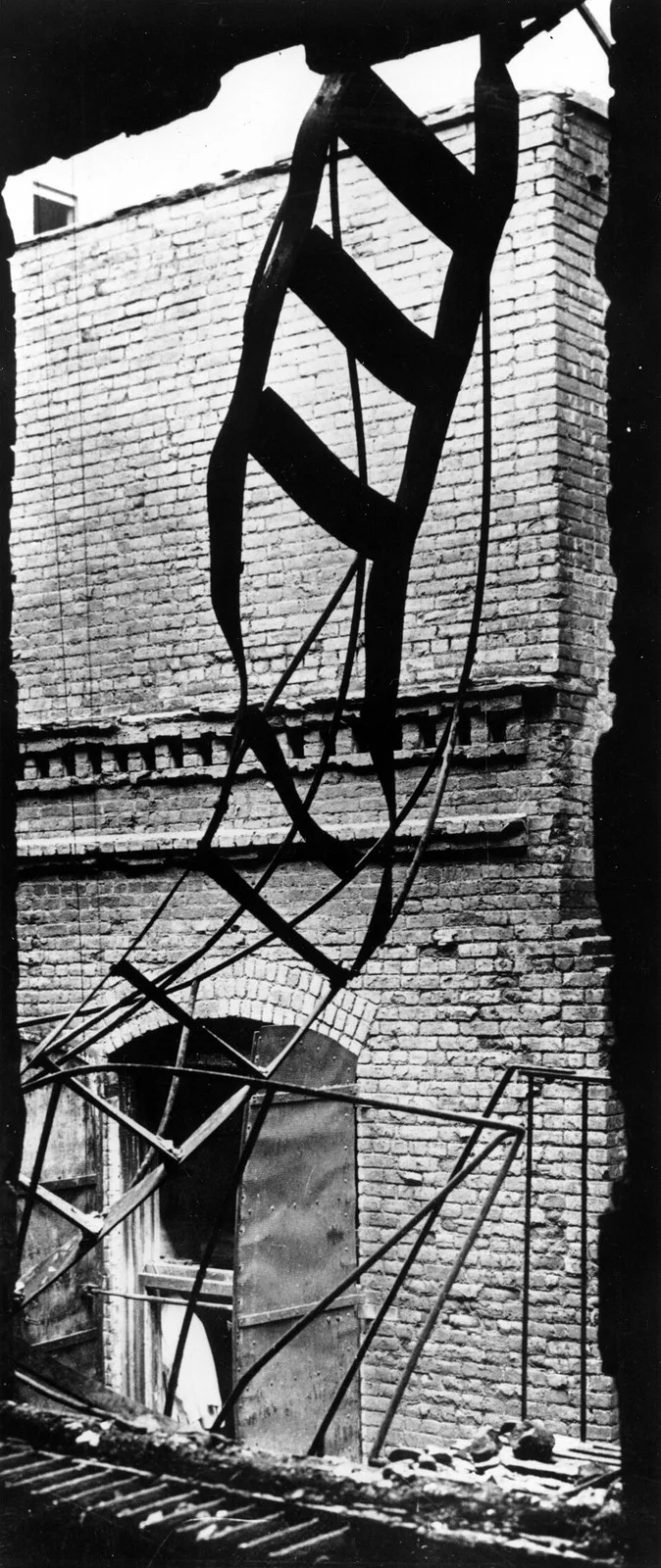
The exact origin of the fire was never settled beyond doubt. The National Park Service describes sparks from a discarded match or cigarette igniting fabric scraps. What followed is clearer in the surviving trial testimony. The fire spread through flammable material. Workers on the eighth floor could move toward the stairs; people on the tenth floor received a warning and some escaped to the roof. Workers on the ninth floor had no working alarm to alert them in time.
The testimony in the courtroom
The Kheel Center at Cornell University preserves a substantial portion of the criminal trial transcript, including verbatim testimony from roughly 100 witnesses. Survivors, firefighters, police officers, engineers, elevator operators and factory employees described what they saw and how the building worked. Many witnesses spoke Yiddish or Italian as their first language, and the court record itself shows how testimony passed through interpreters and lawyers.
One recurring detail was the Washington Place stairway door on the ninth floor. The National Park Service says workers found it locked, a practice managers used to prevent unauthorized breaks. The prosecution argued that the owners, Isaac Harris and Max Blanck, knew the door was locked and that this prevented workers from escaping. The case did not ask jurors to decide every failure of fire safety in the building. The prosecution had to establish the owners’ knowledge of a particular locked door and its connection to the death of Margaret Schwartz.
That focus left a distinction between seeing a closed door and proving that it was locked with the owners’ knowledge. The prosecutor presented the lock as a violation of factory law that had led to Schwartz’s death. To convict on that theory, the jury had to find both the violation and the link to her death proved under the rules for a criminal case.
On December 27, 1911, the jury acquitted Harris and Blanck. That verdict answered the criminal charge before it; it did not establish that the factory was safe or erase the testimony about locked access and failed protections. In 1914, Harris and Blanck settled civil claims. Cornell’s account records a payment of $75 per life lost under the settlement. The distinction between a criminal acquittal and civil responsibility is essential to understanding why the trial’s outcome did not close the argument.
Reform after the fire
Public anger led New York to investigate workplace conditions and building safety. The National Park Service credits state and city commissions with helping produce 38 laws, including measures on fire protection, working hours for women and children, and facilities for workers. Those changes mattered, but the fire should not be described as the single cause of every labor reform. Organizing, investigations and legislative campaigns had begun before March 25 and continued after it.
The trial also revealed a limit of criminal law. A prosecution built around whether two owners knew that a door was locked could not, by itself, answer why a factory with hundreds of workers had inadequate exits, no alarm reaching the ninth floor and a fire escape that failed. The surviving record carries the voices of people who lived through the fire, while the legal process translated their experience into a much narrower test.
Some transcripts are lost, and the pages that survive are imperfect scans of deteriorating documents. Cornell notes that the digitized text required substantial correction after optical recognition achieved limited accuracy. Those limits do not make the record useless. They make careful reading more important: one must distinguish testimony from a lawyer’s framing, a jury’s verdict from a broader historical judgment, and laws passed afterward from measures that had already been under debate.
The Triangle fire is remembered through its dead, its trial and the reforms that followed. The courtroom did not deliver the sweeping accountability survivors and families might have wanted. Yet the testimony preserved there keeps the factory’s everyday arrangements in view: who could leave, who was warned, whose word counted and how a company’s routines shaped the chance of escape. The history matters because those questions were argued in court and then carried into the politics of workplace safety.
Sources: Cornell Kheel Center trial transcript introduction, Cornell trial record and testimony, National Park Service history of the Brown Building, Cornell account of the investigation and trial, New York Courts historical account