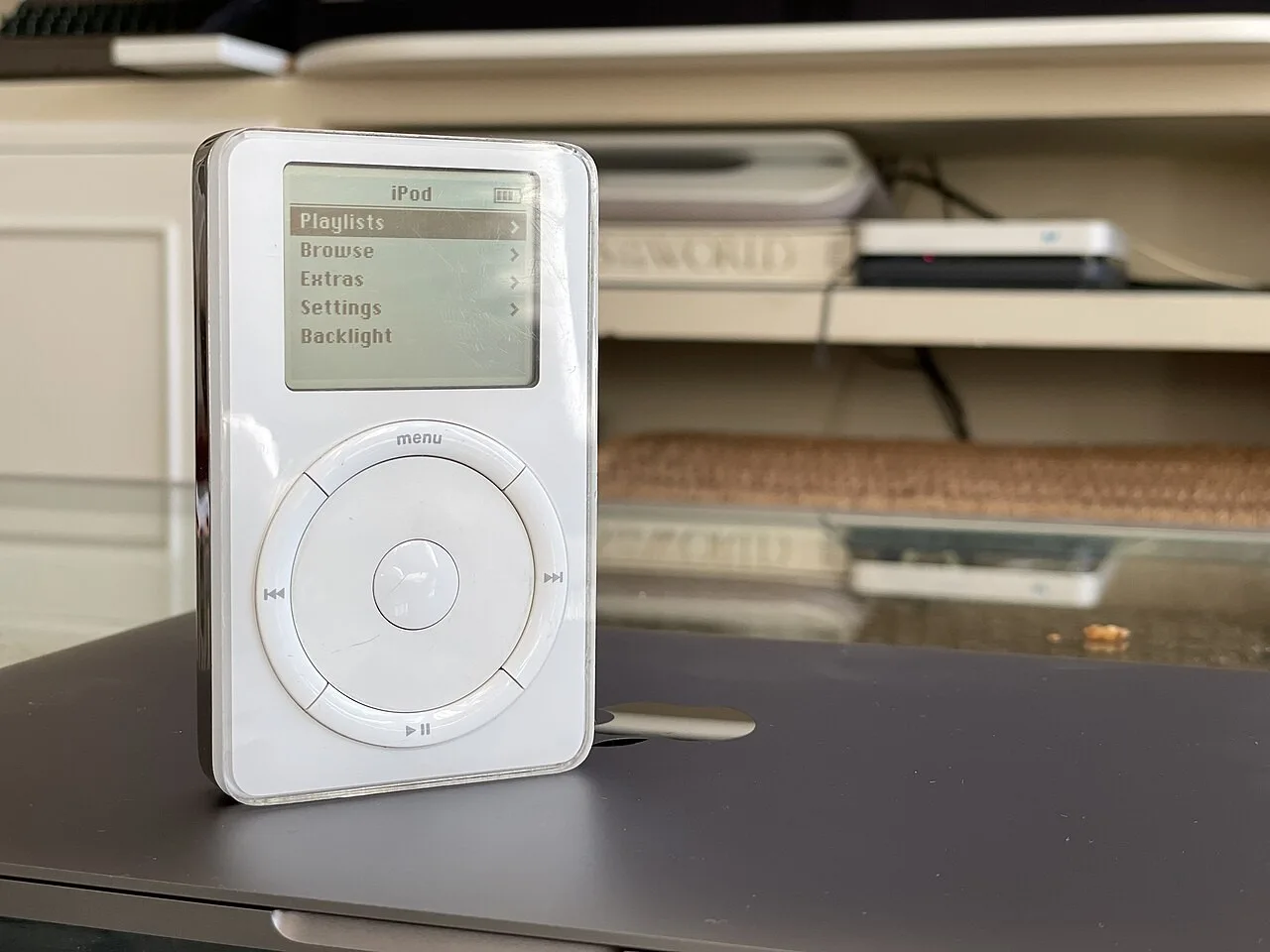
A thousand songs sounded like a storage specification. It was also an invitation to stop choosing which music to leave at home. On October 23, 2001, Apple announced the iPod, a portable player whose promise would become more memorable than its five-gigabyte hard drive. Twenty-five years later, that promise describes a particular moment in listening: a personal collection, carried around rather than called up from a remote service.
The Computer History Museum makes an essential qualification: the iPod was not the first handheld digital music player. Its importance lay in what happened when the player, the computer software and eventually a music shop worked together. The familiar story of a single invention changing everything is less revealing than the sequence of connections Apple built over the following years.
A collection within reach
Steve Jobs, Apple's chief executive, presented portability as freedom to take an entire collection along. Yet that freedom initially had conditions. The original player worked with a Mac, and its suggested American price was $399. October 23 was the announcement; Apple's release specified November 10 for availability. The anniversary celebrates the public introduction, not the first day shoppers could buy it.
There was a practical problem behind the promise. A large collection needed a way to navigate it. The scroll wheel let a thumb or finger move through lists; automatic synchronization transferred songs and playlists from iTunes on the computer. FireWire, the wired connection used for transfer, also supplied power. The design made the computer responsible for organizing the collection and the handheld device responsible for carrying it.
The device came with earbuds, a FireWire cable and a power adapter. Apple advertised up to ten hours of playback and said a thousand songs could be transferred from a Mac in under ten minutes. Those were the company’s claims, but they show how it defined the problem in 2001. Storage mattered only if people could fill the player quickly and listen for hours without being tethered to the computer. Its hard drive could also carry documents or other files, a reminder of how closely the first iPod was tied to the Mac.
The door opens to Windows
That arrangement could reach only so far while it depended on a Mac. On July 17, 2002, Apple announced iPods for Windows customers, with availability scheduled for late August. They used MUSICMATCH Jukebox rather than iTunes. Remembering that intermediate step matters: Windows support arrived before Apple's own music software for Windows, and before its download store.
The same announcement expanded the range to five-, ten- and twenty-gigabyte models, with the entry price falling to $299 in the United States. The two larger models featured a solid-state touch wheel. The object was already changing, as was the number of people who could use it. Its later ubiquity was not contained fully formed in the original Mac-only machine.
A shop joins the player
On April 28, 2003, the iTunes Music Store opened with more than 200,000 songs from five major music companies. A track cost 99 US cents, without a subscription. The service initially required a Mac and a credit card with a United States billing address. It offered a commercial route from browsing to buying to listening within one application, although geography and computer ownership still limited access.
The original store allowed shoppers to search by song, artist or album and to hear a short preview before paying. Apple also allowed songs to be played on up to three Macs and burned to audio CDs for personal use. That last option connected the new store to equipment customers already owned. They could buy a download online and still listen to it on a home CD player.
The early figures suggest that customers did not simply abandon albums for individual tracks. On June 23, Apple reported more than five million downloads in eight weeks, with over 46 percent purchased as albums. It also said more than 80 percent of the store's songs had been bought at least once. Alongside the hits, a substantial part of the available catalog was finding purchasers. The tally was an early sign of what a download store could offer the people already using iTunes to organize music from their own CDs.
From a device to a business
In that June announcement, Apple said it would ship its millionth iPod during the week. On October 16, 2003, iTunes itself arrived for Windows, bringing the store and its 99-cent pricing to that platform. The sequence explains the expansion better than a launch-day success story: first a Mac accessory, then Windows-compatible hardware, then Apple's software and shop for both audiences.
The Windows version was a change in what a customer had to own to use the whole system. Apple’s portable player, library software and store could work together without a Mac. The same decision expanded the store’s potential audience beyond buyers of Apple computers. By April 9, 2007, Apple reported 100 million iPods sold. Its announcement also listed more than 4,000 accessories, from cases to speaker systems. Those surrounding objects show how a portable player acquired a life beyond headphones. A purchase could become part of a home sound system, and other businesses could sell ways to protect it, display it or amplify it.
The collection outlives the machine
The product family eventually included the touchscreen iPod touch, introduced in September 2007. On May 10, 2022, Apple announced that the touch would remain available only while supplies lasted. Its farewell placed the music experience across other devices and pointed to Apple Music's streaming catalog. The company's own account traced a migration from a dedicated player toward services and multifunction devices.
The iPod's twenty-fifth anniversary therefore belongs to more than a small machine. It recalls an arrangement between listener and music: select a collection, organize it, transfer it and take it away. Later services changed that arrangement, but the appeal of the 2001 proposition remains easy to understand. The music already mattered. The new promise was that much more of it could come with you.
Sources: Apple: the original announcement; Apple: Windows-compatible iPods, 2002; Apple: the music store opens; Apple: eight weeks of purchases; Apple: iTunes arrives on Windows; Apple: 100 million players; Apple: the end of the iPod line; Computer History Museum: the iPod in context.