The Eruption on Sumbawa
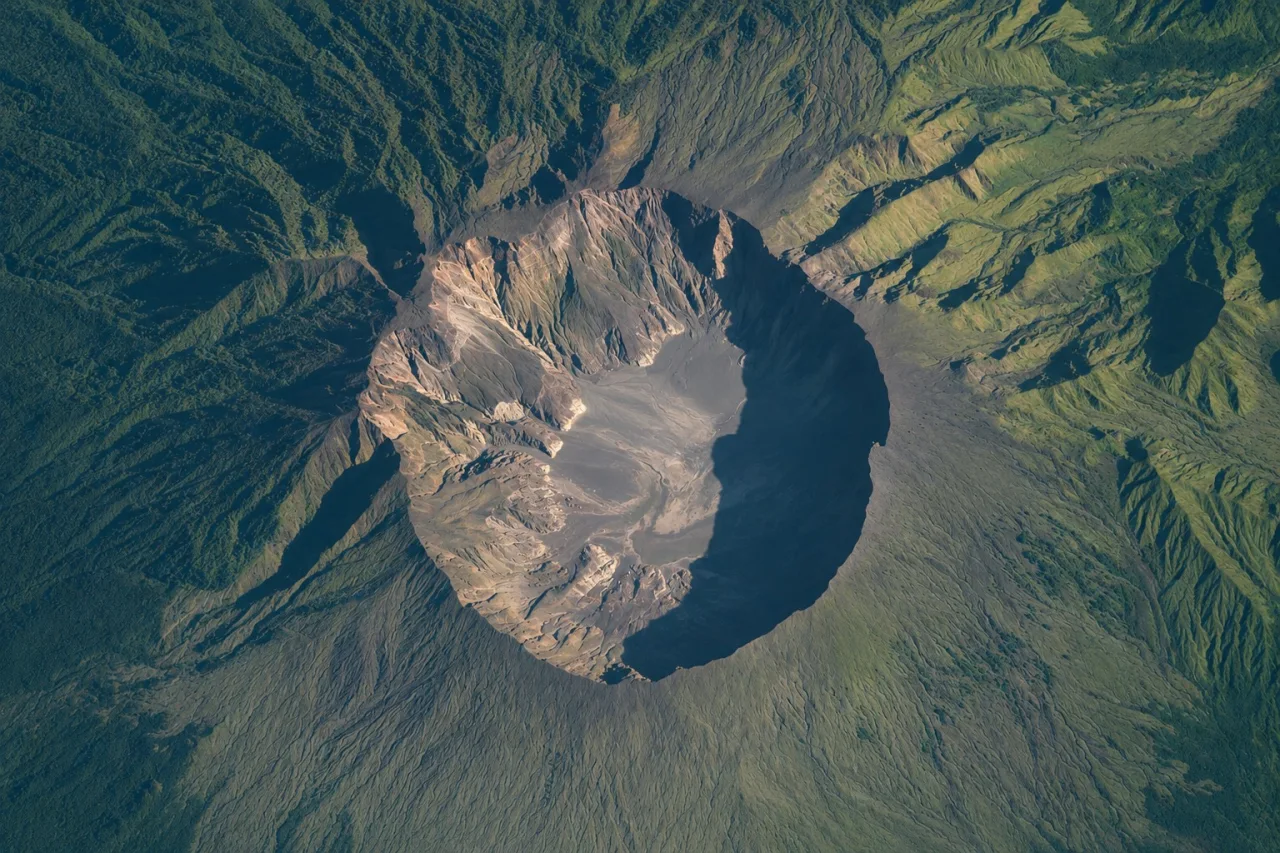
In April 1815, Mount Tambora erupted on Sumbawa, in what is now Indonesia. As the eruption emptied part of its magma chamber, the summit collapsed, leaving a caldera that the Smithsonian Global Volcanism Program says is about six kilometres wide and more than a kilometre deep. Pyroclastic flows swept down the slopes and reached the sea, while ash fell heavily across the peninsula.
The immediate destruction was catastrophic. The Smithsonian Global Volcanism Program puts the death toll at around 60,000. That estimate includes people killed directly by the eruption as well as the many who died during the famine that followed. Ash covered croplands on Sumbawa and contributed to a food crisis. The figure is an estimate for the wider disaster, which affected neighboring islands as well as the communities closest to the mountain.
What made Tambora a global event was what entered the atmosphere. The eruption injected an enormous quantity of sulfur dioxide into the stratosphere, far above the weather systems that normally scrub such gases from the air. This sulfur dioxide converted into sulfate aerosol particles, which spread around the world over the following months. Unlike ash, which falls out quickly, these particles remained aloft for years, scattering incoming sunlight back into space.
A Veil Around the World
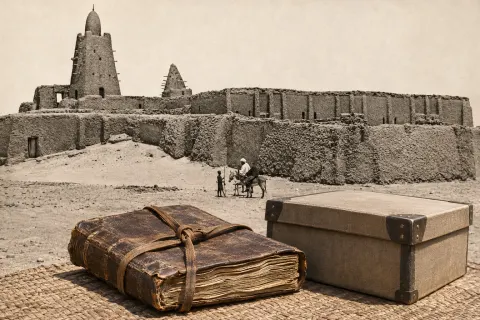
The aerosol layer reduced the amount of sunlight reaching the surface. To find out how the climate responded in particular places, researchers had to reconstruct observations from before national weather networks. Yuri Brugnara and colleagues assembled early records of pressure and temperature, including readings they digitized from diaries and periodicals. The team applied corrections for some errors introduced by mercury barometers.
The cooling was not a single plunge into winter; it appeared as a series of anomalous cold spells, late frosts, and stormy periods that disrupted growing seasons. In regions where agriculture was already marginal, these conditions tipped communities into crisis. But the effects were uneven: some places experienced only modest cooling while others faced repeated crop failures. The pattern emerges clearly when daily records are examined rather than annual averages alone.
The most famous consequences came in 1816, often called the "year without a summer." The records from several parts of Europe can be compared season by season. They provide a way to distinguish an unusual spell of weather from departures that persisted across months and appeared on more than one observing station’s records.
Two Regions, Two Kinds of Crisis
In New England, the summer of 1816 brought repeated frosts and even snow in June. The National Park Service’s account describes damaging May frosts across much of the northeast, followed by heavy June snow in places such as Dennysville, Maine, and Albany, New York. A late frost could kill plants after germination and leave growers with less of the season in which to plant again.
Across Central Europe, the Czech Academy of Sciences studied instrumental and documentary records and found a different pattern: the summer of 1815 was exceptionally wet, and the summer of 1816 was exceptionally cold. The cold contributed to poor grain harvests, and the investigators found widespread price rises in 1817. The study links these outcomes to a combination of weather and existing social vulnerabilities.
In the Czech records, the price history adds a second time scale. The eruption and the poor harvest were separated by a year. The increases in grain prices observed in the study came later still, as communities faced the consequences of a disappointing harvest.
A study by Veale and Endfield on the 1816 summer in the United Kingdom urges caution in linking every spell of bad weather to Tambora. They read accounts of a cool, wet summer against the social, environmental and climatic conditions in which the observers lived. Food prices and agricultural stress had their own histories. Even detailed records of storms or crop failures cannot establish, by themselves, that a volcano produced a particular local event.
The unevenness of Tambora's effects is further demonstrated by annual averages. A single cold year may hide the fact that some months were near normal while others were exceptionally cold. For farmers, a frost in June or a week of rain at harvest could be ruinous even if the year as a whole was only slightly cooler than average. This is why documentary records, with their day-by-day detail, are invaluable for understanding the human experience of climate anomalies.
Evidence and Limits
The evidence for Tambora’s impact comes from records that answer different questions. The Smithsonian’s volcanic record describes the size of the eruption and the damage near the mountain. The observations assembled by Brugnara and colleagues allow comparisons of temperatures and pressures across sites and dates. Records from New England and the Czech lands bring the effects into view on the scale of a farm or a grain market.
Yet the evidence also cautions against monocausal explanations. Research cited by the Smithsonian points to another stratospheric eruption in 1809. Weather also varies naturally from one region to the next. The National Park Service notes that New England's 1816 summer, while extraordinary, was not uniformly freezing; some days were warm, and frosts were intermittent. The Czech study links the cold summer of 1816 to poor harvests and later price rises, and notes that contemporary documentary sources did not connect the weather to the eruption. And the UK study by Veale and Endfield reminds us that social and economic conditions shaped how people experienced the weather.
Tambora changed the climate for several seasons at a time when much of the population depended on local harvests. A farming family might notice a killing frost, while buyers in town encountered a later rise in the price of grain. That difference in timing matters when researchers compare a diary with a price register. One document records the weather as it arrived. The other can show how long its effects took to reach the market.
Legacy of a Cold Year
The "year without a summer" left a lasting imprint on the historical record. The many diaries, newspapers, and institutional logs that survive from the period provide a day-by-day view of the unusual weather. The work of Brugnara and colleagues in digitizing and correcting these early observations allows researchers to compare simulations of volcanic cooling with observations recorded at the time.
Sumbawa still carries the deepest mark, a caldera cut into the summit above slopes the flows reached in 1815. Far away, the record lies in a different set of objects: old pressure readings, reports of a June snow and grain prices entered the following year. Together they show how an eruption recorded in rock left consequences that could also be measured in the length of a growing season.
Sources: Smithsonian Global Volcanism Program, Tambora, Brugnara and colleagues, digitized instrumental records, National Park Service, New England in 1816, Czech Academy of Sciences, weather and harvest records, Veale and Endfield, the 1816 summer in the UK, U.S. Geological Survey, volcanic aerosols and climate